
About Joe Robb
Lived 1937 – 1987 (aged 50). Joe Robb was an American american football player.
Alvis Joe Robb (March 15, 1937 – April 18, 1987) was an American professional football player who was a defensive lineman in the National Football League (NFL) for the Philadelphia Eagles, St. Louis Cardinals, and the Detroit Lions. He played college football for the TCU Horned Frogs, appearing in two Cotton Bowls, and was selected in the 14th round of the 1959 NFL draft by the Chicago Bears. His father had been a professional wrestler. He attended Lufkin High School, where he was a two-way player on the school's football team at offensive and defensive end. He suffered a broken nose during practice in September 1953, but continued to play in the school's games. In 1954, the 6 ft 3 in (1.91 m) 189 lb (85.7 kg) Robb led his team in pass receptions. Robb was selected first-team Class AAA All-State at end. He also was selected first-team All-District 4-AAA at defensive end, and second-team All-District 4-AAA at offensive end.
Robb played forward on the school's basketball team, where he was a leading scorer. In 1955, he was named second-team All-District 4-AAA in basketball, and third-team All-State Class AAA in basketball.
College career Robb attended Texas Christian University (TCU). He played on the TCU Horned Frogs football team, in the Southwest Conference, under head coach Abe Martin. The 208 lb (94.3 kg) Robb was one of the freshman football team's top linemen in 1955, playing right end. He set a record for receptions on the freshman team.
He played tackle on the varsity from 1956 to 1958. TCU defeated Syracuse 28–27 in the January 1, 1957 Cotton Bowl.
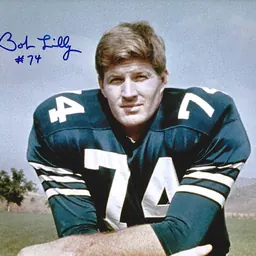
TCU was 5–4–1 in Robb's junior season (1957). The highlight of TCU's season was an 18–14 victory over Ohio State University in TCU's second game of the year. Robb was part of an offensive unit in that game that did an excellent job blocking against Ohio State. It was Ohio State's only loss that year, in which they ended the season 9–1, won the Rose Bowl, and were ranked No. 2 in the Associated Press's final poll. Among others, the team also included two linemen: All-American Don Floyd and future Pro Football Hall of Fame defensive tackle Bob Lilly.
The 1958 Horned Frogs had an 8–2 record during the regular season, winning the Southwest Conference title. They went to the Cotton Bowl for the second time in three years, playing against the United States Air Force Academy. The game ended in a 0–0 tie. The game was hard hitting, and Robb came out of the game after committing a personal found that resulted in a 15-yard penalty. TCU finished the season ranked 10th in the final Associated Press poll.
Professional career
Philadelphia Eagles The Chicago Bears selected Robb in the 14th round of the 1959 NFL draft (164th overall). The Bears waived Robb in September, a week before the season started, and he was acquired by the Philadelphia Eagles. Robb started 10 games at left defensive end for the Eagles in 1959 (in a 12-game season), and had one fumble recovery. He wore uniform No. 66 with the Eagles.
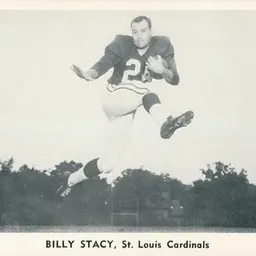
In 1960, the Eagles were NFL champions. Robb started eight games at left defensive end, and had one fumble recovery. He started at left defensive end in the 1960 NFL championship game against the Green Bay Packers, the Eagles winning, 17–13. During his first season with the Cardinals, Robb suffered a dislocated bone, which limited his ability to start during most of the season; though he was able to play on special teams. He still managed an interception, three fumble recoveries and one quarterback sack. In a November 5 game against the Dallas Cowboys, he intercepted an Eddie LeBaron pass that turned the game in the Cardinals favor. In a December 17 game against the Pittsburgh Steelers, Robb recovered a Bobby Layne fumble and handed the ball to teammate Billy Stacy who then ran for a touchdown.
In 1962, he started 12 games at left defensive end, with two fumble recoveries and 1.5 sacks. The Cardinals defense was 10th in the NFL in points allowed (361) and ninth in yards allowed (4,711), among 14 teams. He had a breakout season in 1963, starting all 14 Cardinals' games at left defensive end, with 8.5 sacks (second on the team to Luke Owens's 10.5). In a November 24, 1963 game against the New York Giants, with less than two minutes to go in the game, Robb sacked Hall of Fame quarterback Y. A. Tittle on a fourth down passing attempt from the Cardinals' 16-yard line to preserve a 24–17 Cardinals win. On the preceding play, Robb and defensive tackle Sam Silas had sacked Tittle. The Cardinals finished the season 9–5, their first winning season since 1960, and their best season winning percentage since 1948. The Cardinals defense improved to sixth best in points allowed (283) and fifth best in yards allowed (3,954).
The Cardinals were 9–3–2 in 1964. Robb started 13 games with one fumble recovery and one sack on the season. Robb suffered from injured and re-injured stomach muscles during the season. In 1965, he started all 14 games at left end, with 8.5 sacks and one fumble recovery. In a December 1965 game against the Cleveland Browns, Robb tried to clothesline running back Jim Brown early in the game, and Brown later threw an elbow at Robb just before halftime. A fight erupted and both Brown and Robb were ejected. Because this cost Brown an opportunity to win the NFL scoring title, "Robb was flooded with hate mail from Cleveland". He was selected to play in the Pro Bowl for the only time in his career. He was named second-team All-Pro by the Associated Press and the Newspaper Enterprise Association. The Cardinals' defense was first in the NFL in fewest yards allowed (3,492), and sixth in fewest points (265).
Robb's final season with the Cardinals was 1967. He was injured in a preseason game, and had knee surgery. He did not start until the fourth game of the 1967 season, against the Minnesota Vikings. He started 11 games that season, with only one sack.
Over his seven-year career in St. Louis, Robb started 82 games, with 31 sacks, eight fumble recoveries and one interception. Robb went on to play his final four NFL seasons for the Lions. Robb suffered ligament damage to his right knee in a November 10 game against the Baltimore Colts, that required surgery; and he missed the remainder of the season. He had 1.5 sacks and a fumble recovery in eight starts. He had two sacks in an October 19 win against the Chicago Bears.
For the third time in four years, in 1970 Robb suffered a serious knee injury. Robb had started six games at left defensive end in 1970, when he suffered torn ligaments in his left knee during a game against the Chicago Bears on October 25. The injury required surgery and ended his regular season. He had one fumble recovery and one sack before his regular season ended. The Lions activated Robb on December 23, 1970, so he could be available to play as a backup to starter Jim Mitchell in the Lions' divisional round playoff game against the Dallas Cowboys on December 26; a 5–0 Cowboys win.
Robb started six games with the Lions in 1971, his final NFL season; with one sack. Jim Mitchell started the other eight games at left defensive end that season for the Lions. Lions' teammate Chuck Hughes died of a heart attack during the final minutes of an October 1971 game with the Bears. Robb was one of the pallbearers at Hughes funeral in San Antonio, which was attended by the entire Lions team.
Over his 13-year NFL career, Robb played in 159 games, starting 134, with 39 quarterback sacks, 16 fumble recoveries and one interception.
In 1967, Lukfin honored Robb with a King for a Day celebration.
Don’t just read it —
keep it.
Full-length biographies made to live with: read them, listen on the way to work, watch them tonight.
- E-book
- Audio
- Video
Instant download · yours to keep · every purchase keeps this site free
Important facts
People in Joe Robb's life
Named in this biography and alive at the same time




Related people
Same field, nearest in time


Contemporaries
People whose lives overlapped Joe Robb's


Frequently asked questions
Who was Joe Robb?
American football player (1937-1987)
When was Joe Robb born?
Joe Robb was born on 15 March 1937 in Lufkin.
When did Joe Robb die?
Joe Robb died on 18 April 1987.
What was Joe Robb's occupation?
Joe Robb was an american football player.
What nationality was Joe Robb?
Joe Robb was American.
Sources & further reading
Cite this page
APA: Biography.guide. (2026). Joe Robb. https://biography.guide/joe-robb/
MLA: "Joe Robb." Biography.guide, https://biography.guide/joe-robb/.
Chicago: "Joe Robb." Biography.guide. https://biography.guide/joe-robb/.
Data last updated: 2026-09-20 · Spot an error? Report a correction.
Page generated 2026-09-27 05:18 UTC