
About Joe Carollo
Born 1955. Joe Carollo is a Cuban and American politician.
Political feuding Carollo quickly gained a reputation for making enemies,
It became clear from the start of his tenure on the City Commission, that Carollo was independent of other politicians in the city and willing to be combative with them. In his first meeting as a commissioner, he voted six times against Mayor Ferré's preferred positions.
While Carollo had originally played a role in facilitating the appointment of Howard Gary as Miami's city manager, after Gary took office Carollo fought with him relentlessly and played a role in pressuring the controversial firing of Gary (the city's first black city manager).
Anti-communism Carollo frequently postured against communism. He blocked a Sister Cities convention from being hosted in the city, citing opposition to the fact that it would include delegates from communist nations.
In 1986, Carollo attacked a plan to build a major waterfront development on Watson Island by alleging it was funded by communists. He instead sought re-election for a third term in his seat on the city commission. He lost re-election, being defeated by lawyer Victor De Yurre, losing by a broad margin in a runoff election. Leading black figures in the city's politics had come out in opposition to Carollo's re-election, as had Mayor Suarez, the Cuban American National Foundation, the Latin Builders Association, and the editorial board of the Miami Herald. The Miami Herald wrote that, in the first round, "Black and Anglo voters teamed up against Carollo, but scattered their votes among seven challengers," with the divided vote enabling a politically-weakened Carollo to still advance to a runoff. The newspaper described the race as "the fiercest, most expensive campaign" in Miami that year, as well as the "toughest campaign of 10-year political career", leaving Carollo both exhausted and with a runoff still to campaign for. Analysis of voter behavior in the election indicated that, in the runoff, De Yurre won a majority of the hispanic vote for the seat, and won even more strongly among non-hispanic voters (evidently winning 80% of the non-hispanic participating electorate).
After he left government, his security business lost customers. Political opponents alleged this was because city government influence peddling had been driving business when he was in office, while Carollo alleged this was untrue and that he lost business because prior investigations into his business (which he alleged were driven by his political rivals) had spooked customers away. Recalling the high Asian-market demand for seafood he noticed during his 1987 trip to Taiwan, Carollo founded the Stone Crab Company. This company purchased crabs and other seafood delicacies at cheap prices from nations in Latin America and exported them to Japan and other Far Eastern nations at a profit. (who won). Gort received the Miami Herald editorial board's endorsement, but the editorial board did not that it believed that Carollo had made personal improvement during his years out of office and that the ditorial board might have endorsed him "against a less-qualified opponent . De Yurre had faced controversies during his own two terms, including various federal investigations into possible financial crimes. The Miami Herald editorial board initially endorsed Humberto Hernandez in the election, but after some allegations of possible impropriety were surfaced against Hernandez they shifted their endorsement to Carollo. In the first round of the election, Carollo led the vote. De Yurre narrowly surpassed Hernandez's vote share in order to advance to the runoff election. Ahead of the runoff, Carollo received heavy amounts of contributions. Carollo highlighted De Yurre's representation of several drug dealers as a lawyer., and the race turned incredibly ugly. Carollo was able to, for the first time in his political career, receive significant backing from black voters, with Miller Dawkins (the city commission's sole black commissioner) and Art Teele (a black member of the Metro Dade Commission) endorsing him against De Yurre in literature which read, "Corollo is not great, but we must demand respect! Let's change City Hall". Carollo won 63% of the vote in the runoff. As with his earlier time on the city commission, he was considered a polarizing figure while mayor. By early 1996, it had been widely known that Mayor Steve C. Clark was dying of cancer. Rumors emerged that Carollo, who had been undertaking many public appearances across the city resembling those of a candidate for mayor, was already gearing up to run in the instance of a special election to fill his seat. However, he refused to validate these rumors, and argued that these public appearances were "just grass-roots work that any good official should do. After Clark's death on June 4, 1996, Carollo attended the funeral. However, Clark's widow was upset at Carollo over his recent political battle with her late husband regarding the golf course management deal, as well as his removal of several of her husband's allies from the sports authority. Carollo was asked to leave the funeral, and complied with this request.
Aftermath of Operation Greenpalm; government fiscal crisis recovery plan Not long after the start of Carollo's first mayoralty, the city's politics was shaken after several city commissioners and others were arrested in Operation Greenpalm, an FBI-led bribery sting during which it came to light that the City of Miami was $68 million in debt. Among those indicted and removed from office by the sting was a key political adversary of Carollo's: City Manager Cesar Odio In December 1996, Governor Lawton Chiles established a five-member financial oversight board to oversee the implementation of the city's recovery plan, a move that Carollo strongly supported. However, after the board's creation, Carollo and the board regularly fought over measures recommended by the board.
1997 election
In 1997, with a referendum to potentially adopt a strong-mayor system also on the ballot, Carollo lost re-election to Xavier Suarez in a runoff election Although Carollo alleged ballot fraud in the first voting round, Suarez took office.
Carollo continued his lawsuit alleging ballot fraud in the first round of voting of the 1997 mayoral race. On March 5, 1998, Thomas S. Wilson Jr., a judge in the Florida circuit court voided the first round of the election writing "this scheme to defraud, literally and figuratively, stole the ballot from the hands of every honest voter in the city of Miami."
A Miami Herald investigation of the mayoral race found that campaign workers for Xavier Suarez and city commissioner Humberto Hernandez were registering voters where they didn't live, punched absentee ballots for voters without permission, casting ballots for voters who did not vote, and signed absentee ballots as witnesses that they did not witness, including for dead people.
Second mayoralty (1998–2001)
On March 13, 1998, Joe Carollo was sworn in as Miami mayor after the 3rd District Court of Appeals threw out 5,100 fraudulent absentee ballots.
Carollo's second mayorship was marked from the beginning with struggles with the City Commission. After City Commissioner Humberto Hernandez was removed from his office by Governor Lawton Chiles, Carollo fired the City Manager Jose Garcia-Pedroza, who had been appointed by his predecessor, Mayor Xavier Suarez. The City Commission voted to reinstate Garcia-Pedroza and Carollo fired him again, a back-and-forth that led to Garcia-Pedroza being fired three times before asking the City Commission to let his dismissal stand.
Miami Circle
Real estate developer Michael Baumann tore down an existing apartment building in the summer of 1998 and after being pushed to do a required archaeological survey, discovered an ancient 2,000 year old, 38-foot-wide circle beneath the soil at the mouth of the Miami River. Carollo and the developer first attempted to move the site away from its historical location. Carollo opposed preserving the site as it stood because of the possibility of significant tax revenue from Baumann's planned apartment building. However, Miami-Dade County Mayor Alex Penelas took up the cause of preserving the site after pressure from Native American groups, schoolchildren, archaeologists, the Smithsonian Institution, as well as international scrutiny.
1999 strong mayoralty referendum On Election Day, November 3, 1999, Miami voters voted to change their system of government to a strong-mayor model. As a result, city manager Donald Warshaw was fired and Carollo was forced to run for re-election the following March, effectively cutting his term in half. After the election, Carollo sued to overturn the results of the election, arguing that it constitutes an illegal recall vote.
The results of the election found defenders with City Commissioners Arthur Teele, Tomás Regalado, and Joe Sanchez, whose attorneys asked the Florida Supreme Court to intervene so they could begin to plan and advertise the March election. When the Florida Supreme Court refused to intervene, Carollo successfully defended his seat against the election results.
Elián González affair; ousting of Warshaw as city manager
In November 1999, Elián González and his mother, along with other Cuban migrants, left Cuba for the United States. While at sea, their boat failed, and most of the passengers, including González's mother, died. González and two other survivors were rescued at sea by fishermen. After arriving, González's family in Miami sued to retain custody of Elián while his father in Cuba, Juan Miguel González Quintana in Cuba, demanded that Elián be returned to Cuba.
The cause to keep Elián González in the United States was taken up by Miami's Cuban community. On March 29, Miami-Dade County Mayor Alex Penelas held a press conference where he announced that the county police department would not assist federal police in removing Elián González from Little Havana.
At that point Joe Carollo began a media blitz where he appeared on television more than 50 times, including on Rivera Live, Nightline, Hannity. During this media blitz, he also made frequent appearances on Miami-area Spanish-language talk radio station Radio Mambi. In the days leading up to the April 21 federal raid, City Manager Donald Warshaw wrote memos saying that Carollo was attempting to direct the police to defend the González's home. After Elián was taken by federal agents and reunited with his father, Carollo was one of the first to say that photos of Elián with his father were faked, and said that any supporters of Elián in Little Havana with guns were agents of Fidel Castro. After firing Warshaw, Carollo successfully appointed Carlos A. Giménez as the new city manager.
Domestic violence arrest, political fallout In February 2001, Carollo was arrested on charges of domestic violence against his wife. The charges were dropped by the Office of the Miami-Dade State Attorney after Carollo agreed to take anger management courses. The arrest harmed Carollo's political standing.
2001 re-election loss
Facing a field of nine opponents and the pressure of a public domestic violence scandal, Carollo failed to make the runoff in the November 2001 election for mayor. Outperforming him and advancing to the runoff were former mayor Maurice Ferré and attorney Manny Diaz. Diaz won the runoff.
Doral city manager (2013–14) After the resignation of Doral City Manager Yvonne Soler-McKinley, Carollo was appointed 3 as city manager without a search being held for a new manager. He was nominated by Mayor Luigi Boria, and was confirmed by the Doral City Council by unanimous vote on January 9, 2013. Interim City Manager Merrett R. Stierheim, who had originally been brought in to lead a search, called the appointment "a terrible decision."
After several months, Carollo and Mayor Boria came into disagreement, with Carollo publicly criticizing Boria in late 2013 over concerns about a real estate project on land owned by Boria's own children. This precipitated a feud between the two. Boria twice attempted to pass motions through the City Council that would fire Carollo. The first attempt failed, but the second attempt succeeded. Fifteen months after he was appointed, Carollo was fired by the City Council in a 3-2 vote on April 21, 2014. According to Vice Mayor Christi Fraga, the firing was motivated by Carollo " escalated to nonsense, untrue allegations, insubordination, intimidation, and bullying by our manager." Carollo had accused several members of the council of taking bribes for votes and predicted his firing in an earlier press conference. The city council members who voted to remove him said that he was creating a toxic work environment leading to high turnover in city staff. Carollo sued the mayor and city council members on first amendment grounds and Florida whistleblower protections. In 2017, Carollo and the city of Doral settled the lawsuit, and as part of the settlement terms Carollo was reinstated as city manager so he could resign. Carollo was reinstated on June 21, 2016, and submitted his formal resignation hours later.
Third tenure on the Miami City Commission (2017-25)
November 21, 2017, Joe Carollo defeated Alfie Leon in a runoff election to take the district 3 seat on the Miami city commission. The seat was presently held by his brother, Frank Carollo, who was term limited. The district represented the neighborhoods and communities of Little Havana, East Shenandoah, West Brickell, as well as parts of Silver Bluff and The Roads. Ahead of the 2017 general campaign, Carollo accused his opponent of being guilty of voter fraud and perjury, and (without providing specifics) alleged that money from the Chavista money was being used to influence his election. He also made vague allegations that a collective of "influence peddlers" were seeking to run the city's government, and that he would thwart them if elected.
A 2017 piece in the Miami New Times opined, "Carollo one of Miami’s most infamous political characters who has somehow kept his political career alive for decades despite acting like a Trumpian lunatic long before Donald Trump ever entered politics."
Carollo's term ended when he resigned on December 10, 2025.
Replacing Viernes Culturales Viernes Culturales (Cultural Fridays) is a festival in the Little Havana neighborhood in Miami held on the last Friday of the month run by a nonprofit made up of area business-owners and community members. In 2018, Carollo applied for permits on the same space and time that would have held Viernes Culturales in a move to force the festival to shut down. Carollo said that he felt the existing event had become "a flea market." One of the Viernes Culturales nonprofit board members, William "Bill" Fuller, said that the actions were taken to attack him personally.
Ouster of police chief In March 2021, Mayor Francis Suarez announced that he had recruited and hired Houston police chief Art Acevedo. Acevedo said he would "not tolerate mediocrity at the Miami Police Department", and would make reforms to improve the department. Acevedo quickly began to follow through with high profile firings of police officers starting in June 2021, which brought controversy to his position, and criticism from the Miami City Commission.
Although Art Acevedo won praise from the Cuban community of Miami for standing with them during rallies to support the 2021 Cuban protests, the relationship soured when, in a statement to staff, he referred to a "Cuban mafia" that controlled the Miami Police Department. Carollo criticized him for the statement, calling it "unbelievable," and pointed out that Fidel Castro used the same language to denigrate Cubans in Miami. Carollo expressed disbelief that Acevedo, himself Cuban, could be unaware of that history.
Acevedo accused Carollo (as well as fellow commissioners Alex Díaz de la Portilla and Manolo Reyes) of repeatedly interfering with the affairs of the police department. Carollo ultimately led an effort to oust Acevedo. During a September 2021 hearing on the future of Acevedo as police chief, commissioners aired grievances against Acevedo, including his "Cuban mafia" comments, the firings of popular officers, and the hiring process by the mayor. Carollo brought in a video of Acevedo impersonating Elvis for a fundraiser. Carollo then proceeded to freeze the video and bring attention to Acevedo's crotch, stating "Do you find it acceptable for your police chief to go out in public with pants like that, with his mid-section and pants so tight?"
Art Acevedo was fired by the city manager in October 2021. At the swearing in of his replacement, Manny Morales, Carollo played the theme from the film The Godfather, referencing the "Cuban mafia" statement.
Homelessness ordinances In October 2021, Carollo sponsored an ordinance criminalizing tent encampments in the city of Miami. Critics said that the ordinance would criminalize being homeless. Carollo and his supporters say that homelessness is a choice, with Carollo himself saying that the homeless are "people that are out there because they want to be out there."
As a result of this action, the city of Miami was sued by the ACLU of Florida in federal court alleging that the city was destroying the property of residents. The plaintiffs in the case reported city workers destroying personal belongings such as clothing, family photos, identification documents, and an urn containing one plaintiff's mother's ashes.
Carollo also pushed a plan to build an encampment on Virginia Key to keep homeless people. The plan drew sharp criticism from many sectors of Miami, including the Miami-Dade County Homeless Trust, Miami-Dade County Mayor Daniella Levine Cava, advocates for the homeless, area historians, environmentalists, and nearby residents. After vocal disagreement from the Virginia Key Beach Park Trust, which manages the beach due to its history as a Black beach during the Jim Crow era, the city commission took over the board.
2024–23 first amendment lawsuit against Carollo While serving as a commissioner, Carollo was sued by two businessmen for actions he took as commissioner that they felt violated their First Amendment rights. They claimed Carollo "weaponized" the code enforcement department against them and their businesses as a result of them supporting one of his political opponents. Carollo claims he exercised his powers as commissioner properly. In June 2023, a jury found Carollo liable for $15.9 million in compensatory damages and an additional $47.6 million in punitive damages. Carollo says he plans to appeal. November 2023 a Federal court ordered the city of Miami to garnish his wages to pay the $63.5 million judgment against him. In January 2024 a Federal court approved a writ of execution for US Marshals to begin seizing $63.5 million in assets.
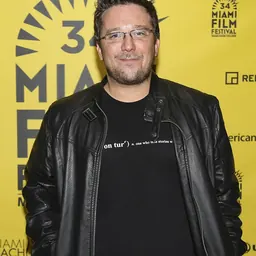
Other matters In 2023, filmmaker Billy Corben accused Carollo of using "an anti-Semitic dog foghorn" (meaning a non-subtle dog whistle) when Carollo teased him repeatedly using his Jewish birth name instead of his professional name during a tense committee meeting.
2025 mayoral campaign
On September 20, 2025, Carollo announced that he would be running for mayor in the 2025 election. He promised that he intended for the effort to be his final campaign for public office. Lifetime term limits ratified by voters in a referendum conducingly with the election's first round helped make this pledge more likely to be realized, as Carollo is now barred from being elected to Miami city office.
In the lead-up to the election's first round, Carollo was considered one of the six leading candidates in the thirteen-candidate field. Despite being one of the later candidates to file their candidacy (launching his campaign near the last available opportunity to do so), by October he had fundraised more money than any other candidate, with his campaign and political committee raising $712,781 during the third quarter of 2025.
During his campaign, Carollo named housing affordability as the city's most pressing concern, and has also cited public safety and the provision of tutoring to school aged children as key priorities he would have if elected to again serve as mayor. During the incident, of his daughters had placed a 911 call during the incident, in which she urged urging the emergency operator "help, my dad is hurting my mom! Please come now, please!" while a woman's screams could be heard in the background. After his marriage to Mari ended, Carollo later remarried to his current wife, Marjorie.
Don’t just read it —
keep it.
Full-length biographies made to live with: read them, listen on the way to work, watch them tonight.
- E-book
- Audio
- Video
Instant download · yours to keep · every purchase keeps this site free
Important facts
People in Joe Carollo's life
Named in this biography and alive at the same time


Related people
Same field, nearest in time





Contemporaries
People whose lives overlapped Joe Carollo's

Frequently asked questions
Who is Joe Carollo?
Cuban-American politician
When was Joe Carollo born?
Joe Carollo was born on 12 March 1955 in Caibarién.
What is Joe Carollo's occupation?
Joe Carollo is a politician.
What nationality is Joe Carollo?
Joe Carollo is Cuban and American.
Sources & further reading
Cite this page
APA: Biography.guide. (2026). Joe Carollo. https://biography.guide/joe-carollo/
MLA: "Joe Carollo." Biography.guide, https://biography.guide/joe-carollo/.
Chicago: "Joe Carollo." Biography.guide. https://biography.guide/joe-carollo/.
Data last updated: 2026-09-20 · Spot an error? Report a correction.
Page generated 2026-09-27 05:18 UTC