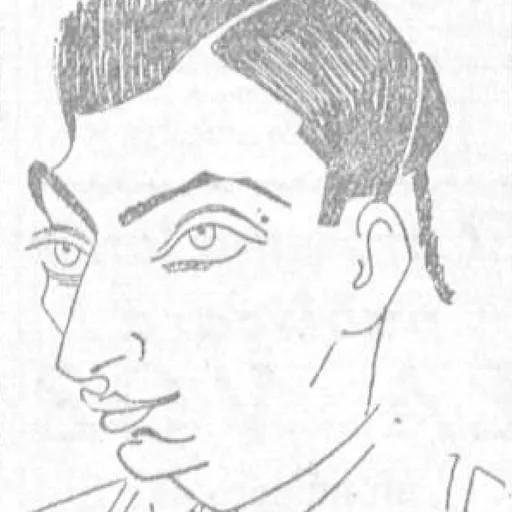
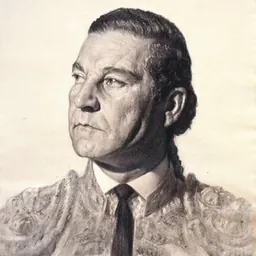
Joaquín Rodríguez Ortega
Mexican torero
About Joaquín Rodríguez Ortega
Lived 1903 – 1984 (aged 80–81). Joaquín Rodríguez Ortega was a Mexican and Spanish bullfighter.
Joaquín Rodríguez Ortega (; 17 February 1903 – 1 January 1984), professionally known as Cagancho , was a Spanish bullfighter much of whose career was spent in Mexico, although he did sometimes perform in his native Spain, and one of his performances there, in Almagro, Ciudad Real in 1927 even gave rise to a now well known expression in the Spanish language. Rodríguez also found himself appraised in English when he and his craft were described by Ernest Hemingway in his non-fiction work Death in the Afternoon, along with many other Spanish bullfighters of the early 20th century. a cigar seller.
Nickname Rodríguez inherited his nickname "Cagancho" from his grandfather Manuel Rodríguez García "Cagancho", who was a flamenco singer of some note. Other interpretations of "Cagancho" have been scatological, with one critic, believing Rodríguez's nickname to be thus derived, refusing to use it in his work because, as he said, such an outlandish bullfighter's way of defecating did not interest him. Other writers, though, were somewhat less respectful, even going as far as to write and publish rhymes that referred to the nickname in this way, like this one, for example: Spanish !! English translation Porque, vamos, francamente, ese apodo impertinente es una ofensa al olfato, por lo nuevo y maloliente, no le cuadra dignamente a un artista de boato. "He was very good at bullfighting and very bad at killing." This he said in reference to a bullfighting event at which Rodríguez had seen his calf sent back to the bullpen (a very poor outcome).
Rodríguez presented himself at the Maestranza in his hometown, Seville, on 25 July 1924, in an evening novillada (novice bullfight at which calves are used) that involved six bullfighters. There is disagreement over whether Rodríguez was the one who won the prize of 200 pesetas that was being offered for whoever performed best, In those days, his apoderado (manager-agent) was Domingo Dominguín, who helped arrange his date in Madrid, which cemented his place among that city's aficionados.
After the war, though, Rodríguez's career never recovered the glory that it had once known. He returned to Spain in 1947 and took part in corridas until 1953. He seldom got as many as ten bullfighting engagements in each of these years, but nonetheless sporadically demonstrated his genius,
Death Rodríguez died on either 31 December 1983 or 1 January 1984 (sources differ) of lung cancer in Mexico City. His son, Joaquín Rodríguez Sánchez, who was also a bullfighter, was with him when he died.
Rodríguez's link with this town in the Province of Cuenca began in 1928 when, despite many people who said that he did not get near enough to his bulls, one bull gored him badly, causing various injuries. The one that he sustained to his chest could have killed him had one of the medallions that he always wore not been there to deflect the bull's horn. It was his "Our Lady of Riánsares" medallion that saved him. This had been given him by the town of Tarancón, and it reduced the wounding to his chest, as Rodríguez himself once explained, to a tear in his skin. Thankful for this "miracle", he made a gift of a mantle to the Virgin of Tarancón. In the book about the history of nursing written by Julián Martínez Fronce one can read about how at "Uncle Jabalera's" bullring, prominent figures from the bullfighting world would perform, foremost among them "the great Gypsy bullfighter Joaquín Rodríguez Cagancho, who reached the top of bullfighting's escalafón (bullfighters' rankings)" (actually, he never did). The book explains that he was a great philanthropist for Tarancón, and that "from his pocket came the money with which the first X-rays were installed at Saint Emily's Hospital". Furthermore, he performed several times at bullfighting festivals to raise funds for the town's poor and for the hospital. The source leaves out the words "en México" that can be seen in the image of the azulejo linked below. "La Cava" refers to a riverside street in Seville once known as a "Gypsy neighbourhood". It was "redeveloped" – with the attendant removal of the Romani population – by the Franco régime in the 1950s. The azulejo can be found at a building entrance at , and an image of it is linked in External links below. one obituary called him "the most determinative [horse] of the modern history of rejoneo", and furthermore says that he faced more than a thousand bulls with his owner-rider in the sadle at bullrings in both Spain and Latin America. Cagancho's career ran from 1991 to 2002, when there was a "farewell tour" of sorts, with the by now very famous horse appearing together with Hermoso de Mendoza at several bullrings in Spain, which even included a trip out through the main gate at Pamplona. Hermoso de Mendoza also took his horse over to Mexico one last time and there, after he and his horse had together faced one last bull, symbolically relieved Cagancho of his tack and let him run free on the bullfighting ground.
Upon Rodríguez's death at New Year's 1984, the poet José Carlos Luna wrote this rhyme by way of bidding him farewell: Spanish English translation¡Cagancho de las marismas canta lo que bien te venga... que entre la tierra y el cielo llanos y cimas alguno habrá que te entienda! Cagancho from the marshes sing whatever suits you... for between earth and heaven, plains and peaks there will be someone who understands you!
Style Aside from the fierce criticism that Rodríguez sometimes received, there were some commentators who had kinder things to say about his style of bullfighting.
Writer Néstor Luján once said of Rodríguez: Hemingway further held Rodríguez to be utterly without honour. Nevertheless, even Hemingway had to say that of the three Romani bullfighters that he had witnessed at the bullring – the others were Andrés Mérida and Rodríguez's cousin Gitanillo de Triana – Rodríguez was the most talented. Mérida, however, was the one that Hemingway liked best. – were thrown down onto the bullfighting ground by the irate spectators. Nonetheless, with his second bull, things got even worse as he avoided facing the bull, which was huge and before Rodríguez came out, had already killed several horses (picadores' horses wore no padding in those days and were often killed by the bull). He came out for the tercio de muerte bearing the biggest muleta that anybody had ever seen, and only showed the bull its outermost point as he passed (Hemingway observed this same behaviour from Rodríguez at other bullfights The bull apparently died of his wounds, which led one of Rodríguez's subalternos to ask a Guardia Civil officer "Does it seem logical to you that they want to put this fellow [Rodríguez] in jail for not having killed a bull, and that they want to do the same to us for killing him?" However, one source gives its meaning, at least in the Mexican bullfighting world, as something very similar to the one that refers to Almagro, saying that it refers to one of Rodríguez's bullfights at Las Ventas in 1927 (the same year as the Almagro fiasco) in which he failed to slay the afternoon's third bull.
Cabaret incident On 7 August 1933, the old Havas news service (a forerunner to Agence France-Presse) reported an unseemly incident that took place in a cabaret in Cádiz involving Rodríguez. The story was published in, among other outlets, a Paris newspaper called Le Journal the next day under the headline "A bullfighter's odious joke": An anonymous artist for the weekly publication L'Illustré du Petit Journal et son supplément agricole deemed the incident worthy of expression in visual art.
Don’t just read it —
keep it.
Full-length biographies made to live with: read them, listen on the way to work, watch them tonight.
- E-book
- Audio
- Video
Instant download · yours to keep · every purchase keeps this site free
Important facts
People in Joaquín Rodríguez Ortega's life
Named in this biography and alive at the same time



Related people
Same field, nearest in time



Contemporaries
People whose lives overlapped Joaquín Rodríguez Ortega's
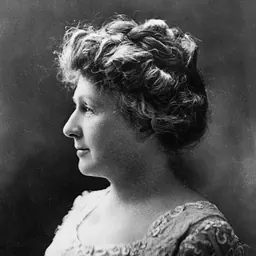
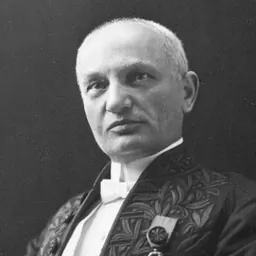
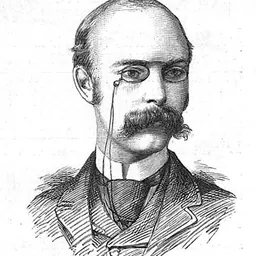
Frequently asked questions
Who was Joaquín Rodríguez Ortega?
Mexican torero (1903-1984)
When was Joaquín Rodríguez Ortega born?
Joaquín Rodríguez Ortega was born on 17 February 1903 in Seville.
When did Joaquín Rodríguez Ortega die?
Joaquín Rodríguez Ortega died in 1984 in Mexico City.
What was Joaquín Rodríguez Ortega's occupation?
Joaquín Rodríguez Ortega was a bullfighter.
What nationality was Joaquín Rodríguez Ortega?
Joaquín Rodríguez Ortega was Mexican and Spanish.
Sources & further reading
· Wikipedia: Joaquín Rodríguez Ortega
· DBpedia: Joaquín Rodríguez Ortega
Cite this page
APA: Biography.guide. (2026). Joaquín Rodríguez Ortega. https://biography.guide/joaquin-rodriguez-ortega/
MLA: "Joaquín Rodríguez Ortega." Biography.guide, https://biography.guide/joaquin-rodriguez-ortega/.
Chicago: "Joaquín Rodríguez Ortega." Biography.guide. https://biography.guide/joaquin-rodriguez-ortega/.
Data last updated: 2026-09-21 · Spot an error? Report a correction.
Portrait: Wikimedia Commons · author & licence
Page generated 2026-09-27 04:58 UTC