
Joaquín Rodrigo
Spanish composer, best known for his Concierto de Aranjuez
About Joaquín Rodrigo
Lived 1901 – 1999 (aged 97). Joaquín Rodrigo was a Spanish composer, choreographer, pianist, pedagogue, musicologist and guitarist.
Joaquín Rodrigo Vidre, 1st Marquess of the Gardens of Aranjuez (; 22 November 1901 – 6 July 1999), was a Spanish composer and a virtuoso pianist. He is best known for composing the Concierto de Aranjuez, a cornerstone of the classical guitar repertoire.
Life
Rodrigo was born in Sagunto, Province of Valencia. At the age of three, he lost his sight completely after contracting diphtheria. At the age of eight he began to study solfège, piano, and violin and from the age of 16 he studied harmony and composition. He wrote his compositions in Braille and they were transcribed for publication. Although distinguished by having raised the Spanish guitar to dignity as a universal concert instrument and being best known for his guitar music, he never mastered playing the instrument.
Rodrigo studied music under Francisco Antich in Valencia and under Paul Dukas at the École Normale de Musique in Paris. After briefly returning to Spain, he returned to Paris to study musicology, first under Maurice Emmanuel, and then under André Pirro. His first published compositions date from 1923. From 1947, Rodrigo was a professor of music history, holding the Manuel de Falla Chair of Music in the Faculty of Philosophy and Letters, at Complutense University of Madrid. Notable students include Yüksel Koptagel, Turkish composer and pianist.
His most famous work, the Concierto de Aranjuez, was composed in 1939 in Paris for the guitarist Regino Sainz de la Maza. In later life, he and his wife, Victoria, declared that the work was written as a response to the miscarriage of their first child. The composition is a concerto for guitar and orchestra. The central adagio movement is one of the most recognizable in twentieth-century classical music, featuring the interplay of guitar with cor anglais.
This movement was later adapted by the jazz arranger Gil Evans for the 1960 album Sketches of Spain by Miles Davis. At the request of Nicanor Zabaleta, Rodrigo adapted the concerto for the 1974 Harp and Orchestra Concerto and he dedicated the adaptation to Zabaleta. Jazz guitarist Jim Hall further adapted the second movement on his recording titled "Concierto" (1975, Creed) which featured performances by Paul Desmond (alto sax), Steve Gadd (drums), Chet Baker (trumpet), Ron Carter (bass guitar) and Roland Hanna 8(piano).
The success of this concerto led to commissions from a number of prominent soloists, including Zabaleta, for whom Rodrigo dedicated his Concierto serenata for Harp and Orchestra. For Julian Lloyd Webber, Rodrigo composed his Concierto como un divertimento for cello and orchestra. For flutist James Galway, Rodrigo composed his Concierto pastoral for flute and orchestra.
In 1954, Rodrigo composed Fantasía para un gentilhombre at the request of Andrés Segovia. His Concierto Andaluz, for four guitars and orchestra, was commissioned by Celedonio Romero for him and his three sons.
Of Rodrigo's works, those that have achieved the greatest popular and critical success are his Concierto de Aranjuez and Fantasia para un gentilhombre. These two works are very often paired in recordings.
Honors
He was awarded Spain's highest award for composition, the Premio Nacional de Música, in 1983. On 30 December 1991, Rodrigo was raised into the Spanish nobility by King Juan Carlos I with the hereditary title of Marqués de los Jardines de Aranjuez (English: Marquess of the Gardens of Aranjuez). He received the prestigious Prince of Asturias Award – Spain's highest civilian honor – in 1996. He was named Commander of the Order of Arts and Letters by the French government in 1998.
Personal life
He married Victoria Kamhi in 1933. She was a Turkish-born pianist whom he had met in Paris. They shared professional interests and she documented their life together in Hand in Hand With Joaquín Rodrigo: My Life at the Maestro's Side (1992). Their marriage lasted until her death in 1997. Christopher Parkening gave the first public performance, also in Japan). Dos preludios (1976; first performance in 1989 by Celedonio Romero in Los Angeles, and first recording by Wolfgang Lendle) Tríptico (1978; first performance in 1978 by Alexandre Lagoya at the Château de Rougerie in France) Un tiempo fue Itálica famosa (1981; first performance in 1989 by Randy Pile in San Diego) Ecos de Sefarad (1987; first performance in 1989 by Sherri Rottersman at the Círculo Medina in Madrid) ¡Qué buen caminito! (1987; first performance in 1987 by María Esther Guzmán at the Conservatorio de Música de Sevilla) Aranjuez, ma pensée (1988) (arranged by the composer from his Concierto de Aranjuez) Harp Impromptu (1959; first performance by Ana María Martini Gil) Piano (solo), and harpsichord Suite pour piano (1923) Berceuse d'automne (1923) Preludio al Gallo mañanero (1926) Zarabanda lejana (1926) Pastorale (1926) Bagatela (1926) Berceuse de printemps (1928) Air de Ballet sur le nom d'une Jeune Fille (1930) Serenata Española (1931) Sonada de adiós ('Homenaje a Paul Dukas') (1935) Cuatro Piezas (Caleseras, Fandango del ventorrillo, Prayer of the Princess of Castile, Danza Valenciana) (1936–1938) Tres Danzas de España (Rústica, Danza de los tres doncellas, Serrana) (1941) A l'ombre de Torre Bermeja (1945) Cuatro Estampas Andaluzas (1946–1952) El Album de Cecilia (María de los Reyes, Jota de las Palomas, Canción del Hada rubia, Canción del Hada morena, El negrito Pepo, Borriquillos a Belén) (1948) Cinco Sonatas de Castilla, con Toccata a modo de Pregón (1950–1951) Aranjuez, ma pensée (1968) (arranged by the composer from his Concierto de Aranjuez) Danza de la Amapola (1972) Preludio y Ritornello (1979) (for HARPSICHORD) Tres Evocaciones (Tarde en el parque, Noche en el Guadalquivir, Triana) (1980–1981) Preludio de Añoranza (1987) Piano (duet and two pianos) Juglares (1923) (piano duet) (arranged by the composer from his first work for orchestra) Cinco Piezas Infantiles (Son chicos que pasan, Después de un cuento, Mazurka, Plegaria, Gritería) (1924) (TWO PIANOS) (arranged by the composer from his second work for orchestra) Gran Marcha de los Subsecretarios (1941) (piano duet) Atardecer (1975) (piano duet) Sonatina para dos Muñecas (1977) (piano duet) Violin Capriccio (1944; first performance on 8 January 1946 by Enrique Iniesta in Madrid)
Vocal and choral Ave Maria for unaccompanied choir (1923) Ausencias de Dulcinea (1948); First prize, Cervantes Competition Cuatro Madrigales Amatorios (1948) De las doce canciones españolas (Textos populares adaptados por Victoria Kamhi) (1951) Villancicos y canciones de navidad (1952); Ateneo de Madrid Prize Música para un códice salamantino (1953), lyrics by Miguel de Unamuno Cuatro canciones sefardíes (1965) El Hijo Fingido, Zarzuela Porque toco el pandero Cántico de San Francisco de Asís (1982) Tres canciones
Guitar and voice Coplas del Pastor Enamorado (1935) Tres Canciones Españolas (1951) Tres Villancicos (1952) Romance de Durandarte (1955) Folías Canarias (1958) Aranjuez, ma pensée (1988)
Don’t just read it —
keep it.
Full-length biographies made to live with: read them, listen on the way to work, watch them tonight.
- E-book
- Audio
- Video
Instant download · yours to keep · every purchase keeps this site free
Important facts
Family & relationships
People in Joaquín Rodrigo's life
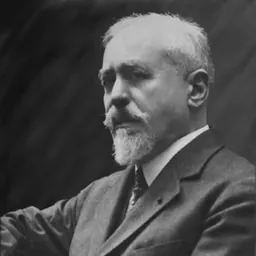
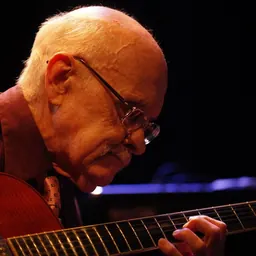
Named in this biography and alive at the same time





Related people
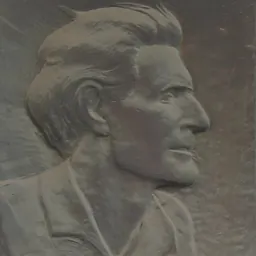
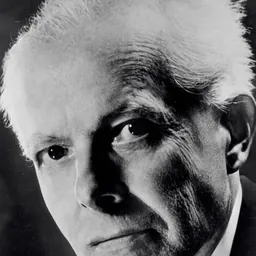
Same field, nearest in time



Contemporaries
People whose lives overlapped Joaquín Rodrigo's


Frequently asked questions
Who was Joaquín Rodrigo?
Spanish composer, best known for his Concierto de Aranjuez (1901–1999)
When was Joaquín Rodrigo born?
Joaquín Rodrigo was born on 22 November 1901 in Sagunto.
When did Joaquín Rodrigo die?
Joaquín Rodrigo died on 6 July 1999 in Madrid.
What was Joaquín Rodrigo's occupation?
Joaquín Rodrigo was a composer, choreographer, pianist, pedagogue, musicologist and guitarist.
What nationality was Joaquín Rodrigo?
Joaquín Rodrigo was Spanish.
Sources & further reading
Cite this page
APA: Biography.guide. (2026). Joaquín Rodrigo. https://biography.guide/joaquin-rodrigo/
MLA: "Joaquín Rodrigo." Biography.guide, https://biography.guide/joaquin-rodrigo/.
Chicago: "Joaquín Rodrigo." Biography.guide. https://biography.guide/joaquin-rodrigo/.
Data last updated: 2026-09-20 · Spot an error? Report a correction.
Page generated 2026-09-27 05:29 UTC