
About Joaquín Clausell
Lived 1866 – 1935 (aged 69). Joaquín Clausell was a Mexican painter and writer.
Joaquín Quirico Marcelino Clausell Traconis (June 16, 1866 – November 28, 1935) was a Mexican lawyer and political activist, who was predominantly known for his Impressionist paintings of Mexican land and seascapes. He was born and raised in the city of Campeche, where he began drawing as a young student. However, he had to flee the city for Mexico's capital after confronting Campeche's governor in public. In the capital, he made his way to law school, despite poverty, but continued his opposition to the political status quo, landing him in jail, interrupting his studies. After he finished his classes he began to work as a journalist in opposition newspapers when in 1893 a series of fictionalized accounts of army campaigns against the Tarahumara people landed him back in jail. Escaping his captors and with help, he fled to the U.S. and Paris. In the latter city, he discovered Impressionism which he admired but did not begin to produce his own paintings until well after he returned to Mexico.
Clausell has two periods of production, during the 1900s and from 1920 until his death, with the break coming during the Mexican Revolution. His canvas works are almost exclusively dedicated to landscapes with some seascapes, mostly sticking to the base of Impressionism with some experimentation in coloring. However he also produced images on the walls of his studio, which are far more varied in theme and style, with elements of Symbolism. While he was not integrated with Mexico's art scene during his lifetime, his work was noticed and appreciated by artists such as Diego Rivera and Dr. Atl. Since 1995, when a tribute to his work took place at the Mexico's National Art Museum, he has been written about and gained more recognition.
Personal life
Clausell is the son of José Clausell from Catalonia (now northeastern Spain) and Marcelina Franconis from Campeche, Mexico. His father immigrated to Mexico initially to work in shipbuilding with his brother Mauro, but later became a businessman in the city of Campeche. Joaquín was born Joaquín Quirico Marcelino in the city of Campeche on June 16, 1866, the only son of the couple. According to family lore, the couple knew they could not have any more children so they put all the names they liked onto this one.
The family was prosperous enough to allow Joaquín to study at a private school called the Instituto Campechano from primary to high school; however, the death of his father meant that Joaquín had to work as well as study to make family ends meet.
Since he was young he had a rebellious nature. When he was an altar boy, he decided to use the red vestment as part of his costume for Carnival, which had him banned from this religious role. This nature pushed him to oppose much of the political status quo of his day, related to the Porfirio Díaz regime. At the age of 16, he confronted the then-governor of Campeche Joaquín Baranda in public, which resulted in the artist's expulsion from school and the state. Clausell went to Mexico City with little money, and started to work cleaning equipment at a pharmacy in order to survive. In the capital, he met many of his generation, rich and poor, with liberal ideas in opposition to the government. Most, if not all, of these were students with no fixed careers.
Clausell briefly attended the National School of Engineers, but since his interest was in law, he did not stay long. Through friends, he found ways to take law books from the National Law School library and other buildings to study at night. Clausell was caught doing this and jailed, but this prompted a visit from the school's dean. The dean was moved by Clausell extreme poverty and desire to learn and gave him admission and a scholarship. However, Clausell still needed to work odd jobs to feed himself and even pawned a medal he won debating in order to buy food.
Admission to law school did not end his political activities. He had oratory and organization skills which he used, to organize students in 1889 to honor the recently deceased political exile Sebastián Lerdo de Tejada when the body was repatriated to Mexico. This pushed the government to have an official reception for the body, which they tried to keep as quiet as possible. However, Clausell disrupted the official event by speaking out for Lerdo de Tejado's policies, wound up being arrested for sedition, and spent several months in the Belem Prison. While Clausell was able to complete all of his law classes in 1892, the jail time prevented him from taking the bar exam and receiving his degree.
Clausell's later work as a journalist got him into political trouble once again, forcing him into exile, first to the United States and then to Paris. He kept in touch with friends and family through letters, at first signed with pseudonyms. This included letters to an early girlfriend named Esther La Chiti, despite the fact that she had married. While in Paris, Clausell was introduced to the Impressionism art movement and he was particularly impressed with the work of Camille Pissarro. Clausell struck up a friendship with the older artist, visiting him several times in his Paris studio and received an invitation to visit Pissarro's hometown of Rouen, but did not go, most likely due to lack of funds. There is also no evidence that Clausell took classes or otherwise began to paint while in Europe.
Clausell returned to Mexico City in 1896, and initially returned to his bohemian lifestyle with the writers, journalists and artists of what was called the Centuria Azul or Modernista generation. Clausell was able to arrange his bar exam and received his law degree, ironically signed by Porfirio Díaz, in 1901.
During this time as well he married Angela Cervantes, the sister of Antonio Cervantes, who had helped Clausell economically during his exile. The family was descended of the Counts of Santiago de Calimaya and Clausell moved into the family residence which today is the Museum of the City of Mexico. The family had managed to conserve enough of their fortune to still live comfortably and eventually Angela inherited the mansion. The couple had four children: Angela, Dolores, Estella and Joaquín.
Angela did not particularly approve his Clausell's painting or many of his acquaintances, so two rooms were constructed for him on the roof of the building, one of which would become his studio. In 1908, Atl created a pastel portrait of Clausell. He also used the walls of the studio to paint, eventually filling them with sketches and paintings in various stages of completion and without an overall plan in mind. These number about 1,300 works in various sizes and are distinct from his canvas landscape works by their wide variety of themes and elements outside of Impressionism.
Political activism and law career Clausell is best known for his painting, although he was also an orator, journalist, politician and lawyer. He continued his rebellion against the Diaz regime after his graduation from law school, moving into journalism. At first he worked for El Universal, writing columns critical of the government under the pseudonym of Juan Pérez, but government pressure soon terminated this job. Afterwards he tried to establish his own publication La Soberanía de los Estados but it failed due to lack of funds. He also collaborated with publications such as El Hijo del Ahuizote and El Monitor Republicano. Soon after Díaz was re-elected for a third time, Clausell co-founded an opposition newspaper called El Demócrata in 1893, which he also directed. Months after the founding, the paper began publishing excerpts of a fictionalized account of the army's offensive against the Tarahumara people in Chihuahua in Tomóchic, under this name. This landed him and co founder Francisco R Blanco back into Belem Prison. A significant number of works are related to Iztacalco and the then existing Santa Anita Canal, as well as the ranch of his wife's family. According to Xavier Moyssen, he was the best among his contemporaries at seascapes. One particular work is Ola verde, which captures the green waves of the Laguna de Cuyutlán.
Most of his canvas works have conventional coloring and topics, possibly because of his profession and social standing. However, the works he created on his studio's walls are different, with more experimentation and a wider variety of themes. The eleventh year of this competition allowed artists to create works between January 2014 and 30 September 2015.
Don’t just read it —
keep it.
Full-length biographies made to live with: read them, listen on the way to work, watch them tonight.
- E-book
- Audio
- Video
Instant download · yours to keep · every purchase keeps this site free
Important facts
People in Joaquín Clausell's life
Named in this biography and alive at the same time
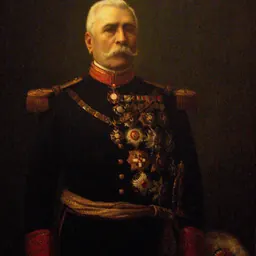

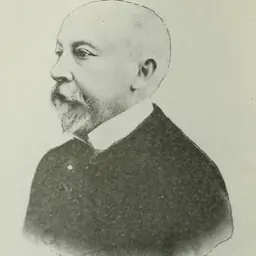
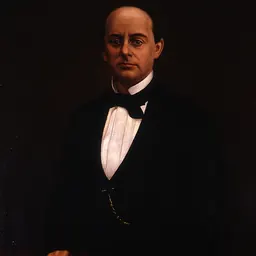


Related people
Same field, nearest in time
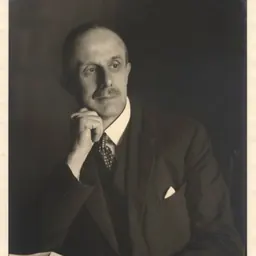
Contemporaries
People whose lives overlapped Joaquín Clausell's



Frequently asked questions
Who was Joaquín Clausell?
Mexican artist (1866-1935)
When was Joaquín Clausell born?
Joaquín Clausell was born on 16 June 1866 in Campeche.
When did Joaquín Clausell die?
Joaquín Clausell died on 28 November 1935.
What was Joaquín Clausell's occupation?
Joaquín Clausell was a painter and writer.
What nationality was Joaquín Clausell?
Joaquín Clausell was Mexican.
Sources & further reading
Cite this page
APA: Biography.guide. (2026). Joaquín Clausell. https://biography.guide/joaquin-clausell/
MLA: "Joaquín Clausell." Biography.guide, https://biography.guide/joaquin-clausell/.
Chicago: "Joaquín Clausell." Biography.guide. https://biography.guide/joaquin-clausell/.
Data last updated: 2026-09-20 · Spot an error? Report a correction.
Page generated 2026-09-27 05:26 UTC