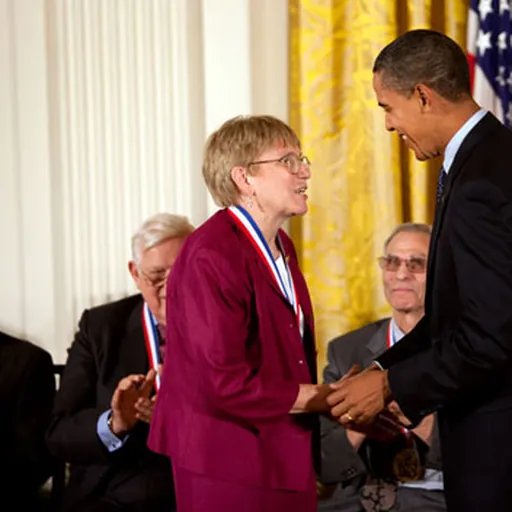
About JoAnne Stubbe
Born 1946. JoAnne Stubbe is an American chemist, biochemist and university teacher.
JoAnne Stubbe (born June 11, 1946) is an American chemist best known for her work on ribonucleotide reductases, for which she was awarded the National Medal of Science in 2009. In 2017, she retired as a professor of chemistry and biology at the Massachusetts Institute of Technology.
Career and education In 1946, Stubbe was born in Champaign, Illinois. In 1968, Stubbe received a B.S. degree in chemistry from the University of Pennsylvania, and worked as an undergraduate in the laboratory of Professor Edward R. Thornton. where she did a second postdoc with Robert Abeles. This is where she learned the art and science of creating mechanism-based enzyme inhibitors. She also taught at Yale School of Medicine (1977–1980) as an assistant professor in the department of pharmacology.
In 1980, she moved to the University of Wisconsin, serving as assistant professor in the Biochemistry Department and rising to full professor in 1985. She received a joint appointment in the MIT Biology Department in 1990.
In 1994, Stubbe was one of 16 women faculty in the School of Science at MIT who drafted and co-signed a letter to the then-Dean of Science (and later Chancellor of Berkeley) Robert Birgeneau, which started a campaign to highlight and challenge gender discrimination at MIT.
Research Stubbe has published over 300 scientific papers and has been frequently recognized for her research achievements. Before Stubbe's work, there were no chemical mechanisms that could be written for certain enzymes. She revolutionized the biochemistry field with her first two scientific papers on enzymes enolase and pyruvate kinase. and has devoted most of her career to elucidating the biochemical mechanisms behind free radicals. In her early work at Yale and then at the University of Wisconsin, Stubbe discovered how enzymes called ribonucleotide reductases use free-radical chemistry to convert nucleotides into deoxynucleotides, an essential process in DNA repair and replication. These enzymes catalyze the rate-determining step in DNA biosynthesis. Her analysis of the nucleotide reduction process shed light on the mechanism of action of the Eli Lilly & Co. anti-cancer drug gemcitabine, which is used to treat various carcinomas, such as pancreatic cancer, breast cancer, and non-small cell lung cancer. Stubbe's other research interests included the design of so-called suicide inhibitors and mechanisms of DNA repair enzymes.
Scientific societies 1991 American Academy of Arts and Sciences 1992 United States National Academy of Sciences (Biochemistry section) 2004 American Philosophical Society American Chemical Society 1992 Myron L. Bender and Muriel S. Bender Distinguished Summer Lecturer, Northwestern University 1993 Arthur C. Cope Scholar Award of the American Chemical Society 1996 Richards Medal from northeastern section of ACS 1997 Alfred Bader Award in Bioinorganic or Bioorganic Chemistry of the American Chemical Society 1998 F.A. Cotton Medal for Excellence in Chemical Research of the American Chemical Society 2004 Repligen Award 2005 John Scott Award 2008 Protein Society Emil Thomas Kaiser Award 2008 National Academy of Sciences Award in Chemical Sciences 2008 Kirkwood Medal 2009 American Chemical Society's Nakanishi Prize for identifying the role of radical intermediates in ribonucleotide reductase functions. 2009 National Medal of Science "for her groundbreaking experiments establishing the mechanisms of ribonucleotide reductases, polyester synthases, and natural product DNA cleavers — compelling demonstrations of the power of chemical investigations to solve problems in biology." 2010 Benjamin Franklin Medal in Chemistry of The Franklin Institute for uncovering the intricate processes by which cells safely use free radicals, for developing new cancer treatments, and for improving the production of environmentally-friendly polymers. 2010 Welch Award for "fundamental research in biochemistry and enzymology." 2010 Murray Goodman Memorial Prize 2013 Honorary doctor of the Harvard University 2014 Penn Chemistry Distinguished Alumni Award 2015 American Chemical Society Remsen Award 2017 Pearl Meister Greengard Prize 2020 American Chemical Society Priestley Medal
Don’t just read it —
keep it.
Full-length biographies made to live with: read them, listen on the way to work, watch them tonight.
- E-book
- Audio
- Video
Instant download · yours to keep · every purchase keeps this site free
Important facts
People in JoAnne Stubbe's life
Named in this biography and alive at the same time
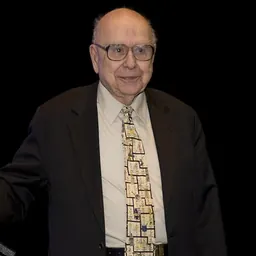



Related people
Same field, nearest in time
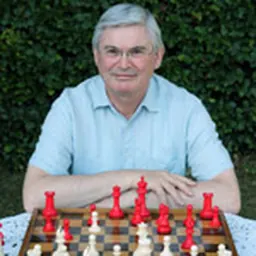



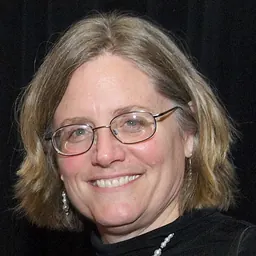

Contemporaries
People whose lives overlapped JoAnne Stubbe's



Frequently asked questions
Who is JoAnne Stubbe?
American chemist
When was JoAnne Stubbe born?
JoAnne Stubbe was born on 11 June 1946 in Champaign.
What is JoAnne Stubbe's occupation?
JoAnne Stubbe is a chemist, biochemist and university teacher.
What nationality is JoAnne Stubbe?
JoAnne Stubbe is American.
Sources & further reading
Cite this page
APA: Biography.guide. (2026). JoAnne Stubbe. https://biography.guide/joanne-stubbe/
MLA: "JoAnne Stubbe." Biography.guide, https://biography.guide/joanne-stubbe/.
Chicago: "JoAnne Stubbe." Biography.guide. https://biography.guide/joanne-stubbe/.
Data last updated: 2026-09-22 · Spot an error? Report a correction.
Portrait: Wikimedia Commons · author & licence
Page generated 2026-09-27 05:04 UTC