
About Joan Terès i Borrull
Lived 1538 – 1603 (aged 64). Joan Terès i Borrull was a Spanish catholic priest, professor, bishop and archbishop.
Joan Terès i Borrull (29 September 1538 – 10 July 1603 ) was presbyter of Vic, auxiliary bishop of Morocco (1575–1579), bishop of Elne (1579–1586) and of Tortosa (1586–1587), and archbishop of Tarragona (1587–1603). He was viceroy of Catalonia (1602–1603) and councillor of King Philip III of Spain.
Early years He was born in Verdú (Lleida, Spain) to a humble Christian family in 1538. Son of Joan Terès Domènech and Magdalena Borrull Carnicer,
During his teenage years, he lived in Reus, where he studied grammar while he begged to pay his studies. In 1554, he went to the School of Tarragona where he studied Latin and humanities, paying his studies with the short salary from delivering letters. the Saint Paul School in Valencia,
Archbishop of Valencia Juan de Ribera appointed Joan Terès as rector of the University of Valencia.
During the 1566–1567 academic year he was permanent professor of the second chair of Logic and for that he received 5 Valencian pounds out of the 500 that Pope Pius IV gave to the Studium generale of Valencia. On 15 March 1567 he was proposed for the second chair of Questions for the 1567–1568 academic year. In 1570-1571 he got the first chair of Questions and in 1571-1572 the first one of Philosophy. Logic, Questions and Philosophy, either in their realist or nominalist perspective, made up the Arts triad at the Faculty of Arts in cycles of three years. Therefore, he would have completed a six-year period as a chair in the Faculty of Arts from 1566 until 1572.
Besides being professor, Joan Terès was examiner at the Faculty of Arts of the University of Valencia as well. In 16 February 1565 he was named assistant professor and substitute for examiner Vicente Montañés, chair at the Faculty of Arts. Usually, the assistant replaced the examiner in case of death or resignation. Nowhere is stated that Terès got the position, but there is evidence that Juan Tomás was proposed as his assistant in 5 July 1571. Two years later, in 4 March 1573, Terès, who was already living in Tarragona, resigned the position and Juan Tomás was replaced by Juan Tomás.
Due to the order of imprisonment of the rector of the University of Valencia for 1568–1571, Pere Joan Monzó, by archbishop of Valencia Juan de Ribera, in 31 March 1570, Terès was appointed new rector, when the archbishop forced Monzó to delegate his position to Terès.
In 22 May 1579, Pope Gregory XIII sent him to the diocese of Elne, since the previous bishop, Pedro Mártir Coma, died. Terès took up the post in 26 July of that year. In 12 December 1582, Maria of Austria, widow of Maximilian II, Holy Roman Emperor, who was going back to Spain, and her daughter Margaret arrived to Collioure. When they stopped in Elne, Terès visited the Empress. In Christmas day, Terès celebrated a mass in the church of Saint John of Perpignan, in the presence of the Holy Roman Empress, the Princess and the whole court. In the second semester of 1585, Terès participated in the Courts of Monzón. In early June 1586, he received the nomination bulls from Pope Sixtus V for the diocese of Tortosa. As bishop of Tortosa, he consecrated the parochial temple of Verdú on 15 June 1586. In 22 May 1587, Pope Sixtus V assigned him to the archdiocese of Tarragona, after the death of archbishop Antonio Agustín.
Archbishop of Tarragona
Archbishop Terès commanded the construction of the chapel of Saint Fructuosus of the Tarragona Cathedral to Pere Blai.
As archbishop, Terès founded the monastery of Saint Dominic in Ciutadilla, in 1588. He collaborated in the improvements of the monastery of Saint Mary of Bovera in Guimerà, and in the hermitage of Saint Magí of Brufaganya, near Santa Coloma de Queralt. The pope commissioned the execution of the bull to the archbishop of Tarragona, the bishop od Urgel Andreu Capella (who was Terès's professor in theology) and the Apostolic Nuncio to Spain Pietro Millino.
The creation of the diocese of Solsona caused serious unrest among the neighbouring dioceses because they saw their possessions diminished, especially in Urgel. Terès, the bishop of Urgell and the new Apostolic Nuncio Camillo Caetani were commissioned to erect the new diocese. After examining the life style and habits of the regular canons and declaring them free of guilt, they sent personal decrees to all of them, granting them the rights and benefice for their lifetime. Finally, Terès took part in the formation of the cathedral chapter, and later, in the delimitation of the new diocese, together with the abbot of Poblet and President of Catalonia Francesc Oliver de Boteller.
On 4 April 1596, Terès proceeded to the recognition ceremony of the sepulcher of the Blessed Raymond of Penyafort, who later Terès promoted his canonization, Terès also promoted the beatification of the founder of the Society of Jesus, Ignatius of Loyola.
Terès alerted the bishops not to tolerate preaching in languages other than their mother tongue. After every session, the agreements achieved were usually printed, but that time there were five articles with which the deputies could not come to an agreement. Among them, the right of the viceroy to make proclamations and the deprivation for nobles and their servants of carrying petronels, in order to suppress banditry in Catalonia. Finally he decided to face the nobles.
The viceroy, without political ambitions and impatient to return to his ecclesiastical tasks, asked for a replacement. King Philip III accepted his petition and on 19 May 1603 he designated the duke of Monteleone, Ettore Pignatelli e Colonna, as the new viceroy. in the Palace of the Lieutenant, in Barcelona, at age 64. Although the causes of his death were not clear, it has been rumored that he had been poisoned.
Archbishop Terès street in Verdú (Spain) is named after him.
Don’t just read it —
keep it.
Full-length biographies made to live with: read them, listen on the way to work, watch them tonight.
- E-book
- Audio
- Video
Instant download · yours to keep · every purchase keeps this site free
Important facts
People in Joan Terès i Borrull's life
Named in this biography and alive at the same time
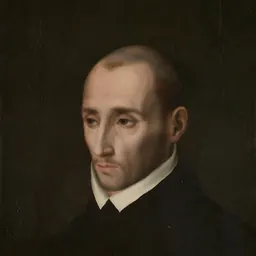
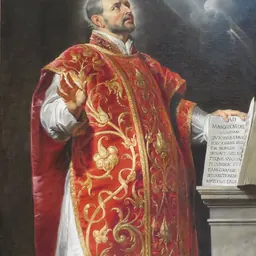

Related people
Same field, nearest in time



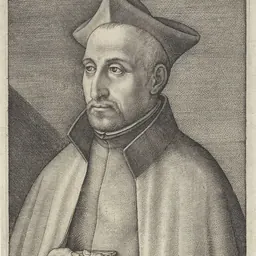
Contemporaries
People whose lives overlapped Joan Terès i Borrull's
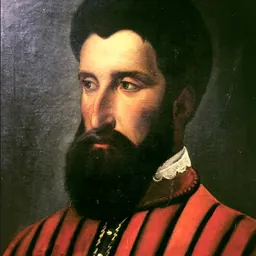


Frequently asked questions
Who was Joan Terès i Borrull?
Spanish bishop
When was Joan Terès i Borrull born?
Joan Terès i Borrull was born on 29 September 1538 in Verdú.
When did Joan Terès i Borrull die?
Joan Terès i Borrull died on 10 July 1603 in Barcelona.
What was Joan Terès i Borrull's occupation?
Joan Terès i Borrull was a catholic priest, professor, bishop and archbishop.
What nationality was Joan Terès i Borrull?
Joan Terès i Borrull was Spanish.
Sources & further reading
· Wikipedia: Joan Terès i Borrull
· DBpedia: Joan Terès i Borrull
Cite this page
APA: Biography.guide. (2026). Joan Terès i Borrull. https://biography.guide/joan-teres-i-borrull/
MLA: "Joan Terès i Borrull." Biography.guide, https://biography.guide/joan-teres-i-borrull/.
Chicago: "Joan Terès i Borrull." Biography.guide. https://biography.guide/joan-teres-i-borrull/.
Data last updated: 2026-09-20 · Spot an error? Report a correction.
Page generated 2026-09-27 05:19 UTC