
Jinpyeong of Silla
26th king of the Silla dynasty
About Jinpyeong of Silla
Lived 565 – 632 (aged 66–67).
Jinpyeong (; 567? – 632, reign 579 – 632) was the 26th king of Silla, one of the Three Kingdoms of Korea. King Jinpyeong followed in the footsteps of his predecessor, King Jinji, by reorganizing the central ruling system of Silla. Upon the onset of a multitude of conflicts between Baekje and Goguryeo, he sent emissaries to improve relations and strengthen ties between Silla and the Chinese dynasties Sui and Tang. He is also known for his promotion of Buddhism as a spiritual guide for the kingdom and encouraging Buddhist teachings. His 54 year long reign is the longest in Silla's history.
Life King Jinpyeong was born as Kim Baek-Jeong. His father, Crown Prince Dongryun, was the first son of King Jinheung. And his mother, Lady Mano, was the daughter of Galmunwang, Kim Reep Jong. The Samguk sagi describes King Jinpyeong as someone: big in stature, has a notable face and possessed great determination and sharp intellect as a youth. His father, Prince Dongryun, died before being able to ascend the throne. Four years later, King Jinheung died, his second son, King Jinji ascended the throne and became the 25th King of Silla. After 3 years, King Jinji was overthrown and eventually died a year after, King Jinpyeong was then proclaimed as Silla's 26th ruler. He married Queen Maya, the daughter of Galmunwang Bokseung, they had three daughters: Princess Cheonmyeong, Princess Deokman and Princess Seonhwa. He also had children with his concubines. Samguk yusa says that he had another wife after Queen Maya, she's called Lady Seungnam who later on became his second Queen. According to Hwarang Segi, after Princess Deokman was nominated as King Jinpyeong's successor, Queen Seungnam gave birth to a son which put Princess Deokman's status as a successor at stake. However, her son died shortly for unknown reason. Queen Seungnam blamed Princess Deokman and Kim Yongchun for the death of her child. It is said that she was forced to leave the palace because of her severe jealousy which caused disturbance to the palace. Princess Deokman became the 27th ruler of Silla after him. Princess Cheonmyeong's son, became the 29th ruler of Silla. According to the Samguk yusa, his third daughter Princess Seonhwa, married King Mu of Baekje. (Historians considered this unlikely, given the hostilities between the rival kingdoms.)
Reign Since King Jinpyeong was only 13 years old when he ascended the throne, Queen Dowager Sado, served as a regent until he reached the legal age. However, Queen Sado still refused to give him full control of Silla even after he reached the legal age. She appointed Noribu, as the Sangdaedeung and Hujik as the head of the Military. Noribu died on December of 588, Sueulbu became the next Sangdaedeung after him. King Jinpyeong relied heavily on these two chief officials to solidify his kingdom in both internal affairs and international relations. He also gave the rank of Galmunwang to his brothers Baekban and Gukban, to solidify his power in the court.
King Jinpyeong's achievement was the way he strengthened the Kingdom and improved the political system. He named himself, his wife and his younger siblings as people related to the Buddha which eventually made the entire royal family being seen as an especial household for the throne, completely different compared to the rest of the royal nobles.
He also built different departments for different political purposes, such as: The Ministry of Culture and Tourism and the Ministry of Education.
Buddhism was embraced during this era, as King Jinpyeong actively sent envoys and monks to China to study and help in diplomatic relations. Buddhism in Silla developed as a strong, nation-protecting religion.
Year 594, King Jinpyeong sent a diplomat to Sui dynasty of China in order to establish a diplomatic relationship between their countries. Two years later, he sent Monk Damyook to Sui in order to study Chinese Buddhism.
Year 603, King Yeongyang of Goguryeo sent his General, Go Seung to attack the north side of Han Fortress. And so, King Jinpyeong retaliated by leading the army himself with 10,000 troops and succeeded.
The King also made reforms in the regional counties and prefecture system. A new district, Bukhansanju , was created in preparation against attacks from Goguryeo in 604, and in 614 Ilseonju was formed in preparation against Baekje.
In 622, King Jinji's son Kim Yong Chun was appointed as the first Naeseongsasin , the official who managed the three major palaces. The reforms continued with the department of the Palace Guards Siwibu ; the department Sangsaseo , which looked after national heroes and their families; and Daedoseo which oversaw affairs regarding Buddhism.
Buddhism and relations with China King Jinpyeong was a fervent advocate for Buddhism, and many monks made travels to China during his rule while serving diplomatic roles. The monk Jimyeong who went to China's Chen dynasty in 585 to study Buddhism returned in 602 with emissaries, and the monk Wongwang , who had gone to study in China in 589, also returned with emissaries in 600. The monk Damyuk also went to study under the Sui dynasty in 596, with emissaries and gifts sent from King Jinpyeong.
These emissaries to China including Buddhist monks were continuously sent during King Jinpyeong's reign, and the two countries remained on amicable terms. In 608, when Silla was under attack from Baekje and Goguryeo, King Jinpyeong asked for the Sui's aid, with requests written by the monk Wongwang. Sui complied and joined forces with Silla in their attacks of Goguryeo, and in 613 Emperor Yang of Sui sent emissaries to Silla who participated in Buddhist ceremonies held by Monk Wongwang at Hwangnyong Temple.
Diplomatic relations with China continued throughout the Sui dynasty and the following Tang dynasty. Gifts were sent with emissaries to Tang in 621 and the Emperor Gaozu sent silks, folding screens of art with an official statement in return. These diplomatic relations continued in the following years and Silla used this relation for asking for Tang's assistance against Goguryeo. Emperor Gaozu of Tang sent governors to both Silla and Goguryeo in 626 to bring about a truce between the two countries, albeit briefly. Ongoing attacks included one on the fortress of Mosan in 616, Neuknohyeon in 623, and the three fortresses of Sokham , Gijam , and Hyeolchaek in 624.
In 626 Baekje attacked the fortress of Jujae , and two additional fortresses were taken with many people taken hostage in 627. In 628, Silla defeated Baekje at the fortress of Gajam and in 629 generals Kim Yong Chun , Kim Seo Hyeon , and Kim Yushin conquered Goguryeo's fortress Nangbi .
Political dissension reached its peak in May 631, when Ichan Chilsuk and Achan Seokpum plotted an uprising based on their opposition to having Princess Deokman as their next ruler. The revolt was discovered in advance and was stopped by Alcheon and Bidam; Chilsuk was beheaded in public and his relatives executed. Although Seokpum was able to escape, he later returned and was eventually captured and killed. With the rebellion put down, power was left mainly in the hands of the King's supporters (the most important of them was Kim Yushin, Commander in Chief of the Royal Army from 629), and it was in this political atmosphere that Princess Deokman was able to become Queen.
King Jinpyeong died in January 632, in the 54th year of his reign. He is buried in Bomun-dong, Gyeongju. His tomb was designated a historical landmark by the Korean government in 1969.
Anecdote
The King's Jade Belt There is a story about King Jinpyeong's jade belt in the history Samguk yusa, in which the belt is said to have been given by the heavens. In 579, when King Jinpyeong ascended to the throne, angels landed on the palace gardens and gave King Jinpyeong a gift from the Jade Emperor. King Jinpyeong always wore this belt in rituals and ceremonies in honor of the heavens. Along with the 9 story pagoda and statue of Buddha at the temple Hwangnyongsa, the jade belt is considered one of the three main treasures of Silla. After the fall of Silla, King Gyeongsun gave the belt to Goryeo's Taejo. According to this legend, King Jinpyeong was 11 feet (about 253 cm) tall.
The Fire of Mojiak The first record of coal in Korea is in the Samguk sagi, where there is a description of a "fire burning under the ground of Mojiak for 9 months during the reign of King Jinpyeong in the year 609". It is assumed that Mojiak is the present region of Youngil, North Gyeongsang Province, where brown coal is excavated.
Family Father: Crown Prince Dongryun , son of King Jinheung Mother: Lady Mano, family name Kim Brother: Galmunwang Baekban Brother: Galmunwang Gukban Niece: Princess Seungman , later Queen Jindeok
Wives and issue Queen: Queen Maya . Family name Kim, daughter of Galmunwang Bokseung and Princess Songhwa Daughter: Princess Deokman . Becomes Queen Seondeok in 632. Daughter: Princess Cheonmyeong . Future Queen Mother Munjeong , wife of Kim Yongsu, mother of King Muyeol Daughter: Princess Seonhwa . Married of King Mu of Baekje, mother of King Uija of Baekje (There is constant debate over her identity.) Second Queen: Queen Seungman, family name Sohn
Concubine: Lady Mishil Daughter: Princess Bohwa Concubine: Lady Boryang of the Seol clan (보량궁주 설씨; 604 – 670) Son: Prince Borojeon Concubine: Princess Bomyeong , daughter of Queen Jiso and Gu Jin
In popular culture Portrayed by Park Woong in the 1992 KBS TV series Samgukgi. Portrayed by Choi Dong-joon in the 2005–2006 SBS TV series Ballad of Seodong. Portrayed by Cha Du-ok in the 2006 SBS TV series Yeon Gaesomun. Portrayed by Jo Min-ki, Baek Jong-min and Kang San in the 2009 MBC TV series Queen Seondeok. Portrayed by Kim Ha-kyun in the 2012 KBS TV series Dream of the Emperor.
Don’t just read it —
keep it.
Full-length biographies made to live with: read them, listen on the way to work, watch them tonight.
- E-book
- Audio
- Video
Instant download · yours to keep · every purchase keeps this site free
Important facts
Family & relationships
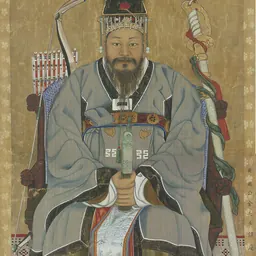
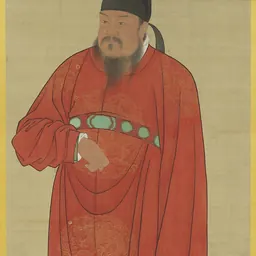
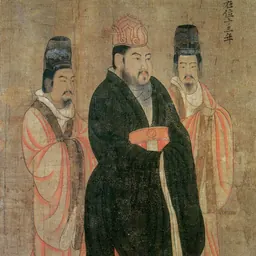
People in Jinpyeong of Silla's life
Named in this biography and alive at the same time

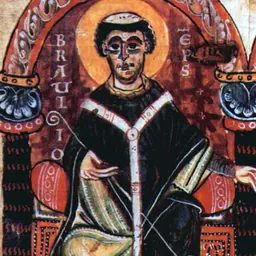
Contemporaries
People whose lives overlapped Jinpyeong of Silla's





Frequently asked questions
Who was Jinpyeong of Silla?
26th king of the Silla dynasty
When was Jinpyeong of Silla born?
Jinpyeong of Silla was born in 565.
When did Jinpyeong of Silla die?
Jinpyeong of Silla died in 632 in Silla.
Sources & further reading
· Wikipedia: Jinpyeong of Silla
Cite this page
APA: Biography.guide. (2026). Jinpyeong of Silla. https://biography.guide/jinpyeong-of-silla/
MLA: "Jinpyeong of Silla." Biography.guide, https://biography.guide/jinpyeong-of-silla/.
Chicago: "Jinpyeong of Silla." Biography.guide. https://biography.guide/jinpyeong-of-silla/.
Data last updated: 2026-09-20 · Spot an error? Report a correction.
Page generated 2026-09-27 05:08 UTC