
About Jimmy Hare
Lived 1856 – 1946 (aged 89). Jimmy Hare was a British and American photographer, photojournalist and war photographer.
James H. Hare (3 October 1856 – 24 June 1946) was an English photojournalist active between 1898 and 1931. He was the leading photographer during five major wars, and was the driving force behind Collier's becoming a large circulation magazine. Among other conflicts he covered, he photographed the Mexican Revolution (1910-20).
Early life Hare was born in London to George Hare, who, after a successful cabinet making business, became a successful camera manufacturer. Hare attended St. John's College in London. He voluntarily left after one year and became an apprentice in his fathers camera shop.
In 1879, Hare and his father had a disagreement when he told his father that they should begin making smaller hand-held cameras, which were becoming technologically feasible. Hare left his father's business to work for another London firm. On 2 August that year Hare married Ellen Crapper with whom he had five children.
Career
During the early 1880s Hare began to lose interest in camera manufacturing. He took up free-lance photography as a hobby and sold his work to various London journals.
In 1889, Hare became a technical adviser for E.& H.T. Anthony & Co., moving from London to Brooklyn, New York, where he lived for the rest of his life. He worked for a while as a free-lance photographer and in 1895, he became a full-time photographer for Illustrated American magazine.
On 15 February 1898, one month after a fire destroyed the Illustrated American headquarters, Hare presented himself at the office of Collier's Weekly proposing to photograph the wreckage of the battleship Maine, and life in Spanish Cuba. This was his first major job. He then captured images of the Spanish–American War (1898), which Collier's used to build support up for the controversial conflict. His intimate wartime photography was often cited as the reason Collier's circulation increased momentously. Other reporters with whom he worked at this time included Sylvester Scovel, Stephen Crane, and Richard Harding Davis.
After the Spanish–American War, Hare photographed four more wars: the Russo-Japanese War in 1904 and 1905, the Mexican Revolution in 1911 and 1914, the First Balkan War in 1912 and 1913, and World War I. He became known as the man who made the Russo-Japanese conflict famous, and was adored by his peers and contemporaries. In 1914, he learned that Collier's, his longtime employer, would not be sending him to Europe to cover World War I, so he contacted Leslie's Weekly to offer his services. He was hired by them and sent to England. Writers and photographers were often limited in their access to war fronts and had their writings and photos censored, but Hare was nevertheless a tirelessly tenacious photographer. During World War I he documented American, British, Canadian, and Italian soldiers, St Dunstan's home for blind soldiers, the Greek harbour town of Thessaloniki, the military hospital at the Hall of Mechanics at the Grand Palais in Paris, people fleeing Antwerp, funerals of the dead from the RMS Lusitania, and the American Ambulance Hospital at Neuilly-sur-Seine, among other subjects.
Other than photographing war, he took many notable photographs of aircraft evolution and early aviators, including the first photo by a journalist of an aircraft in flight in the US—the Wright Flyer III at the Kill Devil Hills in North Carolina in May 1908. (The Wright brothers had flown in 1903 but were wary of flying in front of spectators and reporters and Alberto Santos-Dumont had flown in public in 1906 in France.) He also documented American presidents, Boy Scouts, Haiti and other Latin American locations, and religious and archaeological sites in the Middle East.
Hare was profiled by The American Magazine in 1913 among its "interesting people", citing "the ability to catch the dramatic elements in the event he is picturing."
After 1922 Hare did little photography but lectured regularly. In 1929, Hare retired. In 1939, he was made the honorary president of the Overseas Press Club. On 24 June 1946, he died while staying with one of his daughters in Teaneck, New Jersey.
Hare's collection of negatives, prints, and lantern slides are at the Harry Ransom Center, at the University of Texas at Austin.
Don’t just read it —
keep it.
Full-length biographies made to live with: read them, listen on the way to work, watch them tonight.
- E-book
- Audio
- Video
Instant download · yours to keep · every purchase keeps this site free
Important facts
People in Jimmy Hare's life
Named in this biography and alive at the same time
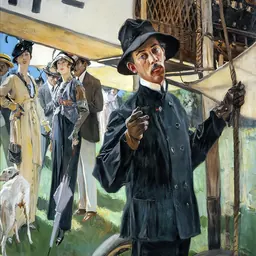



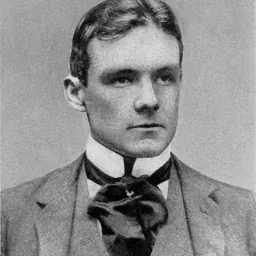
Related people
Same field, nearest in time



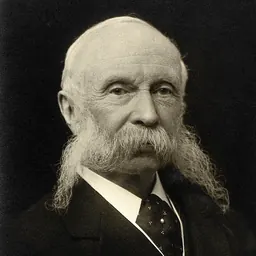
Contemporaries
People whose lives overlapped Jimmy Hare's
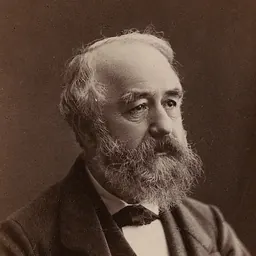

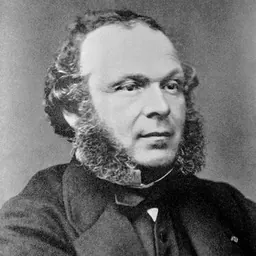



Frequently asked questions
Who was Jimmy Hare?
photojournalist (1856–1946)
When was Jimmy Hare born?
Jimmy Hare was born on 3 October 1856 in London.
When did Jimmy Hare die?
Jimmy Hare died on 24 June 1946 in Teaneck.
What was Jimmy Hare's occupation?
Jimmy Hare was a photographer, photojournalist and war photographer.
What nationality was Jimmy Hare?
Jimmy Hare was British and American.
Sources & further reading
Cite this page
APA: Biography.guide. (2026). Jimmy Hare. https://biography.guide/jimmy-hare/
MLA: "Jimmy Hare." Biography.guide, https://biography.guide/jimmy-hare/.
Chicago: "Jimmy Hare." Biography.guide. https://biography.guide/jimmy-hare/.
Data last updated: 2026-09-22 · Spot an error? Report a correction.
Page generated 2026-09-27 05:21 UTC