
About Jim Smith
Lived 1940 – 2019 (aged 79). Jim Smith was a British association football player and association football coach.
James Michael Smith (17 October 1940 – 10 December 2019) was an English footballer and manager. As a player, he made 249 appearances in the Fourth Division of the Football League, representing Aldershot, Halifax Town, Lincoln City and Colchester United, and played for years for Boston United of the Northern Premier League. He began a long managerial career with Boston United, and went on to take charge of top division clubs such as Birmingham City, Newcastle United and Derby County. Smith served as a member of the board of directors of Oxford United for three years from 2006 to 2009. He served as the League Managers' Association's chief executive and was inducted into their Hall of Fame for managing over 1000 matches. He was nicknamed "The Bald Eagle".
Playing career Smith was born in Sheffield and grew up a Sheffield Wednesday supporter, but began his playing career in 1957 when he signed for Sheffield United as an amateur, and turned professional with the club two years later. After failing to break into the first team he was transferred to Aldershot for the 1961–62 season.
At the beginning of the 1965–66 season, after scoring one goal in 74 league appearances, Smith left Aldershot to join Halifax Town. He made 113 league starts for Halifax, scoring seven goals, before moving to Lincoln City in 1968. After just over a year at Lincoln in which he made 54 appearances Smith signed for non-league club Boston United as player-manager; as player, he went on to make nearly 200 appearances for the club in all competitions. and in his fourth season, was 40 games into a run of 51 consecutive league games unbeaten, a British record at professional level – led to Colchester United offering Smith the position of manager in October 1972. In his autobiography, Smith said that he thought he got the job on the basis that he told the directors that he thought the team were "bloody awful" when watching a game with them, and they respected his honesty. He retained his playing registration for that season, but in 1973–74, he retired from playing and guided Colchester to promotion from the Football League Fourth Division.
In 1975, he quit the club to join Blackburn Rovers, newly promoted to the Second Division. He led Blackburn through one season of survival, one of establishment and was well into a promotion push in his third season when he left for First Division Birmingham City in March 1978 after Sir Alf Ramsey's resignation.
Birmingham were relegated from the First Division in Smith's first full season in charge, but he rebuilt the team, allowing many of the players who had won promotion in 1972 to leave, most notably making Trevor Francis the first £1 million player, a move which the board had not allowed Ramsey to make,
Smith guided Birmingham back into the top flight the next season, and maintained them in mid-table in 1981. In early 1982, Ron Saunders walked out on Aston Villa, the club he had led to the League title the previous season; Birmingham promptly dismissed Smith and appointed Saunders. In his autobiography, Smith said he thought the decision by Birmingham to sack him was taken on the coach journey home from the final game of the season.
In his first year at QPR, Smith took the club to the League Cup final, where they lost 3–0 to his former club Oxford United. Smith continued to manage QPR until December 1988 when he left to become manager of Newcastle United. Newcastle finished bottom of the First Division in 1989; they came close to making an immediate return, finishing third in the league but losing 2–0 in the playoff semi-final to local rivals Sunderland at St James' Park. With no prospect of promotion by March 1991, Smith resigned amid a boardroom power struggle at the club.
He had a spell as coach at Middlesbrough under Colin Todd before accepting the appointment as manager of Portsmouth in the summer of 1991. Key players including Darren Anderton and Guy Whittingham were sold, and there was no money for adequate replacements. Smith was sacked in January 1995 after a decline in form left them struggling at the wrong end of Division One.
Smith became chief executive of the League Managers' Association in 1995, but returned to club management that summer with Derby County.
He brought in Steve McClaren as first-team coach, and in their first full season they guided Derby to runners-up spot in Division One and promotion to the Premier League. Derby had spent five consecutive seasons in the top flight under Jim Smith.
In January 2002, Smith was appointed assistant manager at Coventry City, working alongside Roland Nilsson. Smith and Nilsson were dismissed three months later, after presiding over performances described as "totally unacceptable" and failing to achieve a playoff place. Later that year, Harry Redknapp appointed Smith as his assistant at former club Portsmouth. Smith helped Redknapp win the Division One title at the first attempt in 2002–03, and played his part as the club established itself in the Premier League. In November 2004, both Smith and Redknapp resigned from Portsmouth after the appointment of a Director of Football. Redknapp became the manager of Southampton two weeks later, and after rejecting the position of chief scout, Smith was appointed his assistant. As part of a "cost-cutting exercise" following Southampton's relegation from the Premier League, Smith's initial six-month contract was not extended.
After nearly a year out of football, Smith returned to front-line management in March 2006 as manager of Oxford United for the second time, and was also given a seat on the board of directors.
He failed to stave off relegation to the Conference National, but they came close to an immediate return to the Football League, finishing second and losing on penalties in the 2006–07 play-off semi-final. In November 2007, after a poor start to the season, Smith decided it was time to "put the interests of the club before his own and ... step down as manager and concentrate on his director's role full-time".
Following the dismissal of Darren Patterson in November 2008, Smith took over as caretaker manager; the team remained unbeaten for the few weeks until Chris Wilder's appointment. Smith stepped down from the board in 2009.
Death Smith died on 10 December 2019 at the age of 79.
Managerial statistics
Honours Manager Boston United Eastern Professional Floodlit Cup: 1971–72
Don’t just read it —
keep it.
Full-length biographies made to live with: read them, listen on the way to work, watch them tonight.
- E-book
- Audio
- Video
Instant download · yours to keep · every purchase keeps this site free
Important facts
People in Jim Smith's life
Named in this biography and alive at the same time




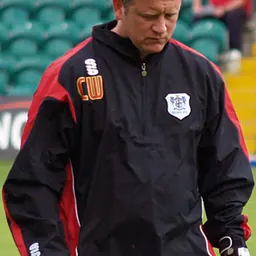
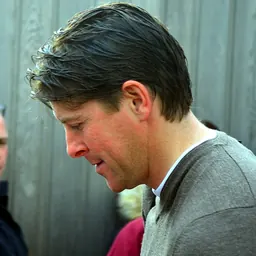
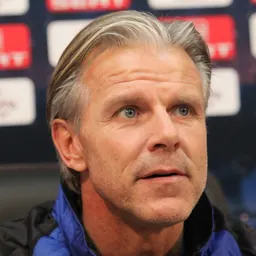
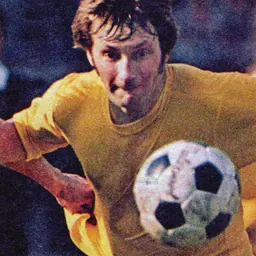
Related people
Same field, nearest in time


Contemporaries
People whose lives overlapped Jim Smith's


Frequently asked questions
Who was Jim Smith?
English footballer (1940-2019)
When was Jim Smith born?
Jim Smith was born on 17 October 1940 in Sheffield.
When did Jim Smith die?
Jim Smith died on 10 December 2019.
What was Jim Smith's occupation?
Jim Smith was an association football player and association football coach.
What nationality was Jim Smith?
Jim Smith was British.
Sources & further reading
· DBpedia: Jim Smith (footballer, born 1940)
Cite this page
APA: Biography.guide. (2026). Jim Smith. https://biography.guide/jim-smith-association-football-player/
MLA: "Jim Smith." Biography.guide, https://biography.guide/jim-smith-association-football-player/.
Chicago: "Jim Smith." Biography.guide. https://biography.guide/jim-smith-association-football-player/.
Data last updated: 2026-09-20 · Spot an error? Report a correction.
Page generated 2026-09-27 05:18 UTC