
About Jigdral Yeshe Dorje
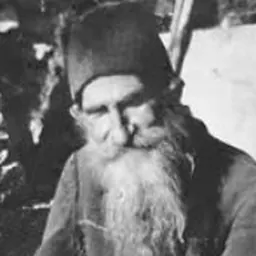
Lived 1904 – 1987 (aged 82–83). Jigdral Yeshe Dorje was a monk, writer, compiler and tertön.
In addition to the above, Rinpoche also reconstructed monasteries in Tibet, and built numerous monasteries in India and Nepal after his exile from Tibet in 1957. and in the United States. His activities and dharma centers brought the Vajrayana and the Nyingma teachings to the western worlds.
The Nyingma school's lineage can be traced to the great Vajrayana revealer and Second Buddha, Guru Padmasambhava, as well as to Yeshe Tsogyal and to her recordings of Padmasambhava's teachings. Drokben Lotsawa, among Padmasambhava's twenty-five students, is also an earlier incarnation. The Dzogchen lineage in the Nyingma school can be traced to Guru Padmasambhava and to Garab Dorje. The Dudjom Rinpoches are widely regarded as Padmasambhava's regents. Within the Dzogchen lineage, or the "Great Perfection", the 14th Dalai Lama is also a lineage holder. He had received Dzogchen teachings from two teachers, namely Dilgo Khyentse and Trulshik Rinpoche. Both of them were students of the Second Dudjom Rinpoche, and both were holders of the Dzogchen lineage.
Through Tibet's history, the Nyingma school never positioned itself in the role of the political leader of Tibet's nation, nor did the Nyingma school have a representative centralized leader. After Tibet's invasion by China caused a mass exodus of Tibetans escaping to India, efforts began to protect the Tibetan Buddhist teachings and the culture in exile. The 14th Dalai Lama and the Central Tibetan Administration requested that the Nyingma school select a representative leader, and Dudjom Rinpoche accepted this role in order to help preserve the Vajrayana vehicle of Tibetan Buddhism, and the Nyingma lineage.
Due to concerted efforts by Dudjom Rinpoche and many other Tibetans, all of the texts of the Nyingma school's Kama lineage and Terma lineage were recovered. He also helped locate missing texts and transferred them out of Tibet, thus saving the Tibetan Canon during the initial invasion of Tibet and during China's later Cultural Revolution in Tibet.
Dudjom Rinpoche was revered by many as an exceptional scholar in various fields, including sūtra, tantra, prose literature, poetry, and history, all of which are in the Five Sciences curriculum of Tibetan monastic shedra programs. He also wrote about the history of the Nyingma school. All twenty-five volumes are deemed as official accounts. Therefore, Dudjom Rinpoche was a poet, author, scholar and Vajrayana Master. He also organised the building of monasteries and retreat centers, and gave teaching in India to where he first moved, in Nepal to where he later moved, in Bhutan, and in several western countries.
In 1988, a year after his death, Dudjom Rinpoche's body was moved from Dordogne, France to Kathmandu, Nepal, and placed in his stūpa at Orgyen Do Nyak Choling, the monastery which he had built in Boudhanath, Nepal. In a letter, Dudjom Rinpoche appointed the Dzogchen Master Chatral Sangye Dorje (1913–2015) as his Vajra Regent.
Birth
Dudjom Rinpoche was born on July 22, 1904, according to the Western (Gregorian) calendar—the year 2444 after Buddha's passing into parinirvana, the year 2440 after the birth of Padmasambhava, and the year 2031 counted from the inception of the Tibetan monarchy. According to the astrological sixty-year cycle it was year of the Wood Dragon, sixth month, tenth day. The month and day also correspond to the birth date of Padmasambhava. Rinpoche was born into a noble family in the south-eastern Tibetan province of Pema Ko, which is one of the beyul ("hidden lands") of Padmasambhava. He was recognized as the incarnation of Traktung Dudjom Lingpa (1835–1904), a famous tertön or discoverer of concealed "treasures" (terma), particularly those related to the practice of Vajrakīla (rdo rje phur pa). Dudjom Lingpa had intended to visit southern Tibet to reveal the sacred land of Pema Kö, but as he was unable to do so, he predicted that his successor would be born there and reveal it himself.
Dharma activity In his youth, Dudjom Rinpoche studied with some of the most outstanding masters of the time. He began his studies with Khenpo Aten in Pema Kö, before attending some of the great monastic universities of Central Tibet, such as Mindrolling, Dorje Drak and Tarjé Tingpoling, and of East Tibet, such as Kathok and Dzogchen. Mindrolling was the monastery to which Dudjom Rinpoche returned to perfect his understanding of the Nyingma tradition. Foremost among his many teachers were Phungong Tulku Gyurmé Ngedön Wangpo, Jedrung Trinlé Jampa Jungne, Gyurme Phendei Özer, and Minling Dordzin Namdrol Gyatso.
Unique in having received the transmission of all the existing teachings of the Nyingma tradition, Dudjom Rinpoche was especially renowned as a great tertön, whose termas are now widely taught and practiced, and as a leading exponent of Dzogchen. He was regarded as the living embodiment and regent of Padmasambhava and his representative for this time. Dudjom Rinpoche taught many of today's masters.
Amongst the most widely read of his works are The Nyingma School of Tibetan Buddhism, Its Fundamentals and History; which he composed soon after his arrival in India as an exile and which is now available in English translation. This history of the Nyingma School presents a great deal of new material on the development of Buddhism in Tibet. At the invitation of the Dalai Lama, Dudjom Rinpoche also wrote a history of Tibet. Another major part of his work was the revision, correction, and editing of many ancient and modern texts, including the whole of the Canonical Teachings (kama) of the Nyingma School, a venture he began at the age of seventy-four. His own private library contained the largest collection of precious manuscripts and books outside Tibet.
After leaving Tibet, Rinpoche settled first in Kalimpong, in India. He gave extensive teachings in Kalimpong and Darjeeling, including giving the Vajrasattva sādhanā to Sangharakshita.
During a train ride back to Kalimpong from Dharamsala in the 1960s, the head lama of Kathok Monastery, Kathok Öntrul Rinpoche, believed able to do mirror divination, said that he saw a Padmasambhava statue wrapped in barbed wire. Dudjom Rinpoche was with him, and asked for that divination. The train had a stopover in Siliguri. According to Khenpo Tsewang Dongyal, enemies of Dudjom Rinpoche told Indian intelligence that Rinpoche was collaborating with the Chinese Communist party and was receiving a salary from them; the police put him under house arrest. Dudjom Lingpa is considered a mind manifestation of Padmasambhava. Dudjom Lingpa was also considered a voice manifestation of Yeshe Tsogyal. Finally Dudjom Lingpa was considered the body manifestation of his own previous reincarnation, Drogben Lotsawa, who was one of the twenty-five main disciples of Padmasambhava.
One story of Dudjom Lingpa's reincarnation describes a new birth occurring before he died. In that story, he sent his main disciples to Pema Ko saying: "Go to the secret land of Pema Ko. Whoever has faith in me, go in that direction! Before you young ones arrive, I will already be there." It took a few years for the disciples to stumble upon the exact location but the very young Dudjom Rinpoche reportedly aged about three called the surprised incognito strangers by their individual names, spoke in their Golok dialect which no one else did in that area and invited them to his surprised parents' house. It is said he could remember his previous lives clearly.
Dudjom Tersar lineage
Dudjom Tersar is the collective name for the large collection of terma teachings revealed by Dudjom Lingpa and Dudjom Rinpoche. As a class of texts, Tersar (gter gsar) means "new or recently revealed treasure teachings". Dudjom Rinpoche was a major terton (Wylie: gter ston) or treasure revealer of hidden teachings. Dudjom Rinpoche is considered one of the Hundred Great Tertons in the Nyingma lineage.
Most terma are small in scale; major cycles are rare. Those containing many major cycles, such as Dudjom Tersar, are even rarer historically. The Dudjom Tersar is possibly the most comprehensive suite of terma to be revealed in the twentieth century. Since terma traditionally are considered to be discovered during the time they are most needed, the most recently discovered terma may be the most pertinent to current needs. Recent terma are, then, considered to "still have the warm fresh breath of the dakinis".
A set of preliminary practices known as Dudjom Tersar ngöndro has to be undertaken by beginners prior to higher initiations. Dudjom Tersar contains different cycles: some are comprehensive, from beginning instruction through the highest Dzogchen teachings, and there are also smaller cycles, and individual practices, for specific purposes.
There are four major cycles in the Dudjom Tersar of Dudjom Lingpa, the first three being Mind Treasures (Wylie: dgongs gter) and the last one an Earth Treasure (Wylie: sa gter): (a) The "Dagnang Yeshe Drawa" cycle (The Wisdom Nets of Pure Visions), such as the Troma teachings; (b) The "Maha-Ati Yoga Zabcho Gongpa Rangdrol" cycle (The Profound Teachings on Naturally Self-liberating Enlightened Visions), such as the teachings of Chenrezig; (c) The "Chonyid Namkhai Longdzo" cycle (the Vast Space Treasure from the Wisdom Sky of the Ultimate Nature), with teachings of Thekchod and Thodgal; and (d) The "Khandro Nyingthig" (Heart Essence of the Dakini) cycle.
There are four major cycles in the Dudjom Tersar of Kyabje Dudjom Rinpoche, Jigdral Yeshe Dorje, which are all Mind Treasures (Wylie:dgongs gter): (a) The "Tsokyi Thugthig" cycle, for the practices on the outer, inner, secret and innermost secret sadhanas of the Lama; (b) The "Pudri Rekpung" cycle, for the practices of the Yidam; (c) The "Khandro Thugthig" cycle, for the practices on the outer, inner, secret and innermost secret sadhanas of the Khandro; and (d) The "Dorje Drolod" cycle.
Reincarnations Dudjom Rinpoche III The Tibetan Dudjom Yangsi Rinpoche was Dudjom Rinpoche Sangye Pema Shepa or Dudjom Rinpoche III, Sangye Pema Shepa (1990–2022), who was born on April 21, 1990. He was born in Jyekundo, Kham, Tibet, (Qinghai, China). His mother is Pema Khandro, and his father is the third son of Dudjom Rinpoche II, Dola Tulku, known as Jigmé Chokyi Nyima. Sangye Pema Shepa was first recognized by Terton Khandro Tare Lama through a prophetic poem written in dakini script on the day of his birth. Tare Lama wrote to Chatral Rinpoche, who confirmed the prophecy then wrote to Thinley Norbu Rinpoche, the eldest son of Sangyum Kusho Tseten Yudron and Dudjom Rinpoche II, and then recognized the three-year old Yangsi in person. Recognitions were also conferred by the 14th Dalai Lama, by Minling Trichen Rinpoche, Kyabje Penor Rinpoche, Sakya Trinzin Rinpoche, Shechen Rabjam Rinpoche, and Kathok Situ Rinpoche. Dudjom Sangyum Rigzin Wangmo also recognized him with absolute certainty.
Sangye Pema Shepa was enthroned in Tibet at Dzongsar Monastery by Khenpo Jigme Phuntsok, with Dzongsar Jamyang Khyentse Rinpoche, and later enthroned in Godhavari, Nepal on Lhabab Duchen, November 25, 1994, by Chatral Rinpoche, in the presence of Penor Rinpoche and many Nyingma lamas and students of Dudjom Rinpoche II. In June 2018, he made his first visit to Canada and the USA where he transmitted the Dudjom Tersar Empowerments and Transmissions at Pema Osel Ling in California. In August 2019, Dudjom Rinpoche III travelled to Spain, Switzerland, Russia, and to Dudjom Rinpoche II's European seat in France, where be conferred Dudjom Rinpoche's lineage initiations and blessings. and has composed a prayer for this cause.
Dudjom Rinpoche Sangye Pema Shepa, after telling his staff that he was going to rest and relax, to be quiet, and not to disturb him, retreated into his room. After not emerging in the morning his attendance entered the room to find him in a state of thukdam, and annoucned his passing on February 15, 2022. He was 31 years of age when he passed at his residence in Tibet.
Dudjom Rinpoche Tenzin Yeshe Dorje
The Bhutanese Dudjom Yangsi Rinpoche, Dudjom Tenzin Yeshe Dorje Rinpoche, was born in 1990 in Bhutan, and recognized by Dudjom Sangyum Rigdzin Wangmo, by the 14th Dalai Lama and by Tulku Urgyen Rinpoche. Yangsi is the honorific title given a young child whom is a recognized reincarnation of a high lama, a Tulku.
Tulku Orgyen Tromge The American Dudjom Yangsi Rinpoche is Sungtrul Rinpoche, also known as Tulku Orgyen Tromge (b. 1988). He was born on November 6, 1988, in the shrine room of his grandfather Chagdud Tulku Rinpoche's remote retreat land in Oregon, USA. In 1999, he was enthroned by Mogtsa Rinpoche at Kathok Monastery in Tibet, as a speech emanation of Dudjom Rinpoche. His father is Chagdud Rinpoche's son Jigme Tromge Rinpoche and his mother is Rigzin Wangmo Tromge. In 2004, Orgyen Tromge sat in attendance at Chagdud Tulku Rinpoche's Cremation ceremony at Katok Ritrö, near Pharping, Nepal.
Dudjom Rinpoche II's family
Dudjom Rinpoche was a householder, a yogi, a writer, and a master and guru with a family, married twice.
First wife Sangyum Kusho Tseten Yudron Dudjom Rinpoche's first wife was Sangyum Kusho Tseten Yudron. Their eldest daughter, Semo Dechen Yudron ( English: Turquoise Radiance of Great Bliss.), lived in Lhasa, taking care of Dudjom Rinpoche's seat, Lama Ling, in Kongpo.
Their elder daughter is Semo Chimey Wangmo, and their younger is Semo Tsering Penzom. Their son, Dungsey Shenphen Dawa Norbu Rinpoche (, 1950–2018), was a main holder of the Dudjom Tersar Lineage. Rinpoche spread the Dudjom Tersar throughout the East and West, establishing temples and retreat centers in France, Spain, and the US.
Dudjom Rinpoche's grandsons via his second wife, Sangyum Kusho Rigzin Wangmo, and their son, Shenphen Dawa Norbu Rinpoche are also renowned lamas. Shenphen Dawa Rinpoche helped His Holiness establish his vajra seat in North America at Dudjom Tersar Yeshe Nyingpo Temple in New York City in 1976 and its sister retreat center Orgyen Chö Dzong in Greenville, NY in 1980. Kyabje Dudjom Rinpoche was offered an old farm, soon to be transformed into a Dharma Center named Urgyen Samyé Chöling in Laugeral, Saint Léon-sur-Vézère France in 1979. Dungsey Shenphen Dawa Norbu Rinpoche went on to establish Dudjom Tersar centers in Southern California and Spain.
H.E. Dungsey Namgay Dawa Rinpoche is the elder son of Dungsey Shenphen Dawa Norbu Rinpoche. Dungsey Namgay Dawa Rinpoche was enthroned by Kyabje Dudjom Rinpoche himself, who blessed him and predicted his future. Rinpoche is a main lineage holder that currently oversees Dudjom Tersar Yeshe Nyingpo Temple in New York City and its sister retreat center, Orgyen Chö Dzong in the Northern Catskill Mountains in New York. Dungsey Namgay Rinpoche oversees sister Dharma Centers in Spain and the US.
Don’t just read it —
keep it.
Full-length biographies made to live with: read them, listen on the way to work, watch them tonight.
- E-book
- Audio
- Video
Instant download · yours to keep · every purchase keeps this site free
Important facts
People in Jigdral Yeshe Dorje's life
Named in this biography and alive at the same time

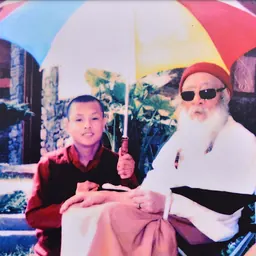


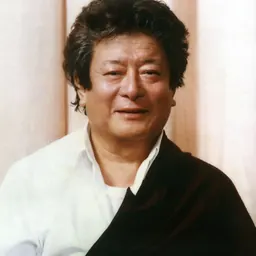
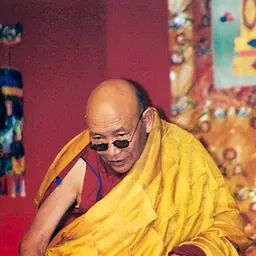
Related people
Same field, nearest in time



Contemporaries
People whose lives overlapped Jigdral Yeshe Dorje's




Frequently asked questions
Who was Jigdral Yeshe Dorje?
Tibetan Lama (1904-1987)
When was Jigdral Yeshe Dorje born?
Jigdral Yeshe Dorje was born in 1904 in Bomê County.
When did Jigdral Yeshe Dorje die?
Jigdral Yeshe Dorje died in 1987 in Dordogne.
What was Jigdral Yeshe Dorje's occupation?
Jigdral Yeshe Dorje was a monk, writer, compiler and tertön.
Sources & further reading
· Wikipedia: Jigdral Yeshe Dorje
· DBpedia: Dudjom Jigdral Yeshe Dorje
Cite this page
APA: Biography.guide. (2026). Jigdral Yeshe Dorje. https://biography.guide/jigdral-yeshe-dorje/
MLA: "Jigdral Yeshe Dorje." Biography.guide, https://biography.guide/jigdral-yeshe-dorje/.
Chicago: "Jigdral Yeshe Dorje." Biography.guide. https://biography.guide/jigdral-yeshe-dorje/.
Data last updated: 2026-09-20 · Spot an error? Report a correction.
Page generated 2026-09-27 05:22 UTC