
About Jiang Guangnai
Lived 1888 – 1967 (aged 78). Jiang Guangnai was a Chinese civil servant.
Jiang Guangnai (; 17 December 1888 – 8 June 1967) was a general and statesman in the Republic of China and the People's Republic of China, and was born in Dongguan, Guangdong.
Defense of Shanghai He became a bodyguard to Sun Yat-sen and, in 1932, was promoted to general and Commander in Chief of the 19th Route Army, leading it in the successful defense of Shanghai against Japanese invasion in the January 28 incident.
Fujian Incident
After the cease-fire was brokered, the 19th Army was reassigned by Chiang Kai-shek to suppress Chinese Communist insurrection in Fujian. It won some battles against the Communists but then negotiated peace with them. Jiang Guangnai joined an insurrection that, on 22 November 1933, established a new People's Revolutionary Government of the Republic of China , free from the control of Chiang's Nanjing government. The new Fujian government was not supported by other warlords or by all elements of the communists and was quickly crushed by Chiang's armies in January 1934. Jiang escaped with his family to Hong Kong and the rest of the army was disbanded and reassigned into other units of the National Revolutionary Army.
World War II During WWII from 1939 to 1944 he returned to become Deputy Commander in Chief of the 4th War Area and in 1945 Deputy Commander in Chief of the 7th War Area.
Later years After the Communist victory, Mao assigned Jiang to be Minister of Textiles of the new People's Republic of China from 1950.
Most high-ranking officials struggled with the Red Guards during the Cultural Revolution. Jiang, however, was saved by Zhou Enlai. Zhou carefully and cleverly arranged for Jiang to join him and Mao Zedong on Tiananmen to inspect the Red Guards, some of whom had just stormed Jiang's home the previous day. During the inspection Jiang was positioned almost next to Mao. Zhou personally walked over to Jiang in front of the Red Guards, asking him how he was doing after the "visit" by the Red Guards the day before. In front of Mao, Jiang was quick to reply that the Red Guards were still relatively civilized. After that, they did not bother Jiang again. He died in 1967 in Beijing.
Legacy Jiang Guangnai's residence in Dongguan is now a museum. After his death, his daughter, Jiang Dinggui 蒋定桂 (b. 1947) became a worker in a textile factory, and features on the 5-jiao renminbi note issued in 1972. KTLA television reporter Liberté Chan is a descendant of Jiang Guangnai.
Don’t just read it —
keep it.
Full-length biographies made to live with: read them, listen on the way to work, watch them tonight.
- E-book
- Audio
- Video
Instant download · yours to keep · every purchase keeps this site free
Important facts
People in Jiang Guangnai's life
Named in this biography and alive at the same time
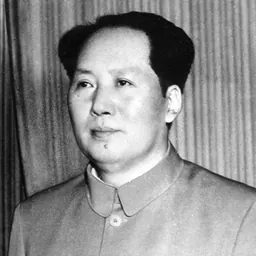


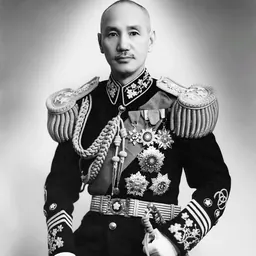
Related people
Same field, nearest in time


Contemporaries
People whose lives overlapped Jiang Guangnai's




Frequently asked questions
Who was Jiang Guangnai?
Chinese politician (1888–1967)
When was Jiang Guangnai born?
Jiang Guangnai was born on 17 December 1888 in Dongguan.
When did Jiang Guangnai die?
Jiang Guangnai died on 8 June 1967 in Beijing.
What was Jiang Guangnai's occupation?
Jiang Guangnai was a civil servant.
What nationality was Jiang Guangnai?
Jiang Guangnai was Chinese.
Sources & further reading
Cite this page
APA: Biography.guide. (2026). Jiang Guangnai. https://biography.guide/jiang-guangnai/
MLA: "Jiang Guangnai." Biography.guide, https://biography.guide/jiang-guangnai/.
Chicago: "Jiang Guangnai." Biography.guide. https://biography.guide/jiang-guangnai/.
Data last updated: 2026-09-20 · Spot an error? Report a correction.
Page generated 2026-09-27 05:19 UTC