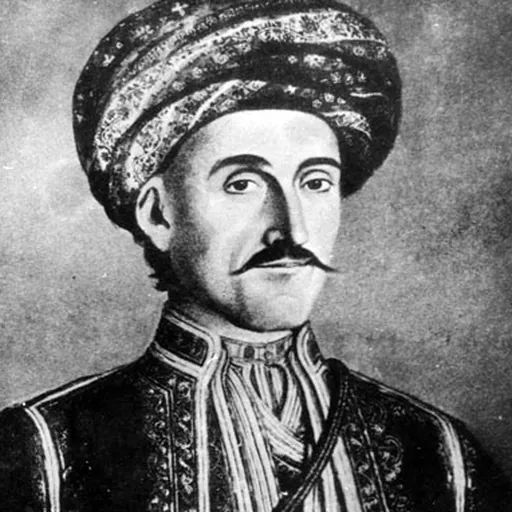
About Jevrem Obrenović
Lived 1790 – 1856 (aged 66). Jevrem Obrenović was a politician, revolutionary and military officer.
Gospodar Jevrem Teodorović Obrenović, Grand Prince of Šabac (18 March 1790 – 20 September 1856) was a Serbian politician and revolutionary who served as Prime Minister of Serbia from 1821 to 1826. He was the younger brother of Prince Miloš Obrenović I of Serbia, the founder of the Obrenović dynasty.
Early life Jevrem's mother Višnja Urošević (d. 1817) was married twice, first to Obren Martinović, with whom she had three children. After the death of Obren, she married a poor widower, Teodor Mihailović, in the village of Dobrinja. Višnja and Teodor had three sons: Miloš, Jovan and Jevrem. Teodor Mihailović died in 1802, leaving the family in poverty. A few years later, the older brothers, Jakov and Milan, took their mother and half-siblings to live on their estate.
Milan Obrenović had a great influence on the upbringing and development of his two younger brothers; as evidenced by the fact that Miloš, Jovan and Jevrem took on their half-brother's surname Obrenović. In 1817, Miloš concluded peace with the Ottomans and was recognized as the "Prince of Serbia" by the Ottoman Sultan, subject to tribute to the Porte. As such; Jevrem was in line to the succession to the Serbian throne behind his brother Jovan and the sons of Miloš.
Later life
In 1816, Jevrem married Tomanija Bogićević (1796–1881), the daughter of vojvoda Anta Bogićević (1750s–1813), with whom he had eight children - seven daughters (the eldest, Jelena, married Miloš's secretary Konstantin Hadija) and one son, Miloš Jevremov Obrenović.
In 1819, he was appointed governor of Valjevo. Jevrem ruled autocratically in the districts under his governance, decisions being made only with his consent.
Jevrem, as the younger brother of the ruler, had numerous responsibilities. His role in the organization and work of the nascent Serbian judiciary was of paramount importance. He was instrumental in combating banditry, which was especially rampant after 1817. Applying harsh, sometimes even cruel measures, Miloš and Jevrem managed to reduce brigandage to a reasonable level. In the period from 1817 to 1835, Jevrem participated in the suppression of several rebellions, during the Russo-Turkish War his task was to prevent the transfer of Ottoman troops from Bosnia through Serbia over to the eastern front. Until 1842, Jevrem at first secretly, but later publicly, fought for power. The opposition was able to remove Miloš from power, but then Jevrem realised that his chances of being elected Prince collapsed, and therefore committed his support to Miloš's second son Mihailo Obrenović III.
The town of Šabac, where Jevrem lived from 1816 until 1831, was completely modernized and "Europeanized" under Jevrem's auspices. His house, which was completed in 1824, was a multi-storey building of which "symmetry, architecture and beauty precedes all residences and palaces in Serbia." Understanding the importance of popular education, Jevrem built schools and invited many teachers, doctors, pharmacists, and artisans to the town. Šabac also had a well-stocked pharmacy with drugs valued at 5,000 pence. The same year, Jevrem also built the town hospital, and the first barracks with four departments, which could each accommodate 60 soldiers.
Jevrem headed a "literary circle" which included members archpriest Ignjat Savić, physician and writer Jovan Stejić, polymath Dimitrije P. Tirol, writer Princess Anka Obrenović and others. In 1829, he appointed Joseph Schlesinger the music teacher for his children. Schlesinger soon formed his own "music chapel" in the town. After a written order from Prince Miloš Obrenović in 1830 that the Serbian army needed military music, Schlesinger was on 1 June 1831 appointed kapellmeister of military music in Kragujevac.
Jevrem hosted many of the intelligentsia of Europe, and played a significant role in raising the general cultural level in the country. His library at his residence in Šabac, with the works of La Fontaine, Schiller and others, is among the richest in Serbia. Under Jevrem's auspices, the National Library of Serbia in Belgrade was founded in 1832.
After a long illness, Jevrem died at his home in Mărășești, Wallachia, on 9 September 1856.
Don’t just read it —
keep it.
Full-length biographies made to live with: read them, listen on the way to work, watch them tonight.
- E-book
- Audio
- Video
Instant download · yours to keep · every purchase keeps this site free
Important facts
People in Jevrem Obrenović's life
Named in this biography and alive at the same time

Related people
Same field, nearest in time
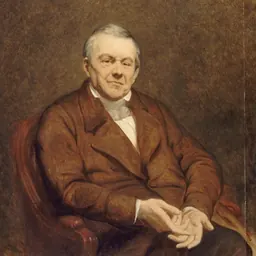


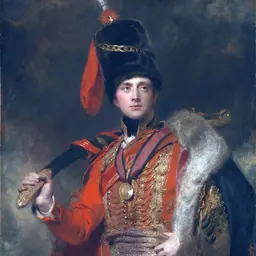

Contemporaries
People whose lives overlapped Jevrem Obrenović's
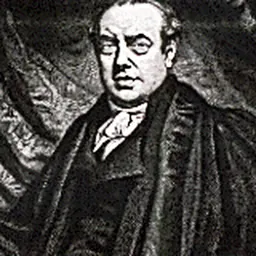


Frequently asked questions
Who was Jevrem Obrenović?
Serbian noble (1790-1856)
When was Jevrem Obrenović born?
Jevrem Obrenović was born on 3 March 1790 in Gornja Dobrinja.
When did Jevrem Obrenović die?
Jevrem Obrenović died on 20 September 1856 in Mărășești.
What was Jevrem Obrenović's occupation?
Jevrem Obrenović was a politician, revolutionary and military officer.
What nationality was Jevrem Obrenović?
Jevrem Obrenović's recorded nationality: Principality of Serbia.
Sources & further reading
Cite this page
APA: Biography.guide. (2026). Jevrem Obrenović. https://biography.guide/jevrem-obrenovic/
MLA: "Jevrem Obrenović." Biography.guide, https://biography.guide/jevrem-obrenovic/.
Chicago: "Jevrem Obrenović." Biography.guide. https://biography.guide/jevrem-obrenovic/.
Data last updated: 2026-09-20 · Spot an error? Report a correction.
Portrait: Wikimedia Commons · author & licence
Page generated 2026-09-27 04:57 UTC