
About Jevel Katz
Lived 1902 – 1940 (aged 37). Jevel Katz was an Argentine and Lithuanian comedian and singer.
Jevel Katz (1902–1940) was a Lithuanian Jewish singer and stage performer, who migrated to Argentina and became popular there for his songs, which often mixed Yiddish humorously with Spanish.
Biography
Jevel Katz was born in Vilna (Vilnius), known as the "Jerusalem of Lithuania", into a family with few resources. At a very young age he began working as a tool maker in the Rom brothers' printing press. He began singing his first parodies in the Vilnius graphic workers' union. At the age of 27, he decided to follow a brother of his who was already living in Buenos Aires. He quickly became one of the most popular Yiddish performers on the Yiddish stage in Argentina, with a combination of monologues, humoresques, couplets, parodies, nostalgic songs, and satires, while accompanying himself on guitar, mandolin, harmonica, and/or accordion.
Jevel Katz defined himself as a caberet singer (kleynkunst, in Yiddish); he would perform in a tuxedo or dressed as a gaucho or as a woman. Katz sang in Yiddish, mixed with Spanish. The Argentine Jewish poet and critic Eliahu Toker labelled this language mixture castídish. These humorous songs included tangos, rumbas, rancheras, and fox-trots. Performing on radio stations in Buenos Aires and Montevideo, he toured the interior of Argentina, especially the Jewish colonies of Moisés Ville and Basavilbaso, and performed in Tucumán, Uruguay and Chile.
The keys to his success were his versatile performance style and themes of nostalgia, privation, and struggle tugged at his audiences’ heartstrings, combined with comic relief. For example, one of his songs “A rantshera (A ranchera7),”
Among his well-known creations are: "Zlate", "Tucumán", "Basavilbaso", and "Moisés Ville".
Katz's success extended beyond Buenos Aires to other cities and the Jewish agricultural colonies in Argentina and bordering countries. His comic persona is reflected in his reputation as "der freylekhster yid in Argentine" [the happiest Jew in Argentina].
He was known posthumously as the "Jewish Gardel", after Carlos Gardel, who had died at the height of his musical career in 1935.
Filmography In 2005, Argentine filmmaker Alejandro Vagnenkos released the documentary Jevel Katz y sus paisanos, which chronicles the comedian's life in Argentina.
Don’t just read it —
keep it.
Full-length biographies made to live with: read them, listen on the way to work, watch them tonight.
- E-book
- Audio
- Video
Instant download · yours to keep · every purchase keeps this site free
Important facts
People in Jevel Katz's life
Named in this biography and alive at the same time
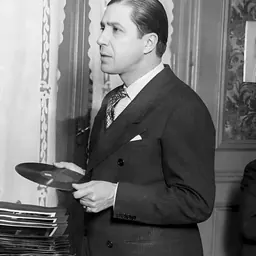
Related people
Same field, nearest in time
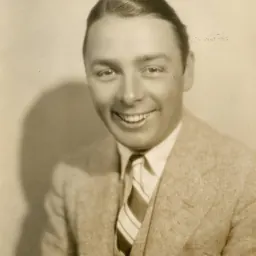


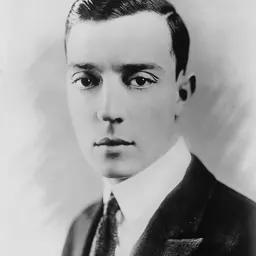


Contemporaries
People whose lives overlapped Jevel Katz's
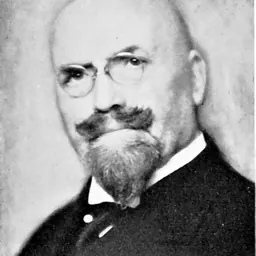





Frequently asked questions
Who was Jevel Katz?
Argentinian comedian and singer (1902-1940)
When was Jevel Katz born?
Jevel Katz was born on 10 May 1902 in Vilnius.
When did Jevel Katz die?
Jevel Katz died on 8 March 1940 in Buenos Aires.
What was Jevel Katz's occupation?
Jevel Katz was a comedian and singer.
What nationality was Jevel Katz?
Jevel Katz was Argentine and Lithuanian.
Sources & further reading
Cite this page
APA: Biography.guide. (2026). Jevel Katz. https://biography.guide/jevel-katz/
MLA: "Jevel Katz." Biography.guide, https://biography.guide/jevel-katz/.
Chicago: "Jevel Katz." Biography.guide. https://biography.guide/jevel-katz/.
Data last updated: 2026-09-20 · Spot an error? Report a correction.
Page generated 2026-09-27 05:29 UTC