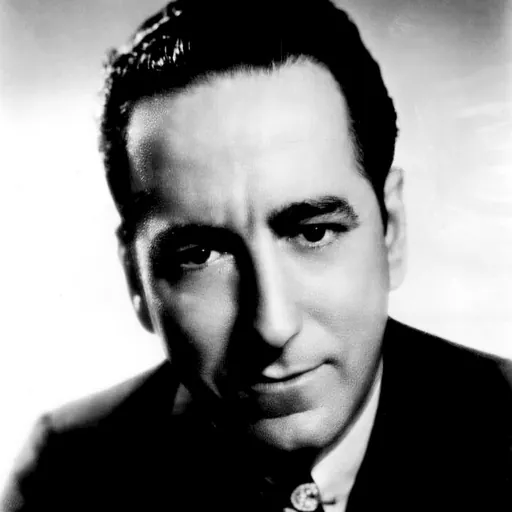
About Jesús Maria Sanromá
Lived 1902 – 1984 (aged 81). Jesús Maria Sanromá was an American music educator, pianist and musician.
Jesús María Sanromá (November 7, 1902 – October 12, 1984) was a Puerto Rican pianist. In 1932 he performed in the North American premiere of Maurice Ravel's Piano Concerto in G conducted by Serge Koussevitzky.
Early years Sanromá's father, José María, was born in Barcelona, Spain, and studied at a Jesuit seminary but did not take his final orders to become a priest. After graduation from college, he became a political gadfly writing for a newspaper about the Spanish plebiscite. They recommended he take a hasty retreat to Puerto Rico with all expenses paid by the Spanish government. He settled in the town of Carolina, and later in the town of Fajardo. He sent for his girlfriend, María Torra de la Riba, but in 1894 women were not allowed to travel unmarried. They were married by proxy before she traveled to be with him. They had two sons, Juan Bautista born in Trujillo Alto in 1899 and Jesús María born in Carolina in 1902. José María earned a living in Fajardo by publishing a newspaper and teaching. Jesús María began playing his father's piano. José, realizing his son was talented, said, "If you are going to play the piano, then you shall go to school to study." He enrolled him at a music school located in the town of Fajardo to take piano lessons. In 1913, at the age of 11, Sanromá made his debut in the Fajardo Municipal Theater.
Sanromá debuts In January 1916, Sanromá debuted at the Puerto Rican Ateneo in San Juan, the island's capital. Unknown to him, José de Diego was amongst the public in the audience. So impressed was de Diego with Sanromá that he persuaded the government to give Sanromá a grant of 600 dollars. The grant was to be used to further his musical education in the United States.
Sanromá enrolled in the New England Conservatory of Music in Boston, Massachusetts, and studied piano with David Sequeira. He graduated in 1920 and was awarded the Mason and Hamlin Prize. Shortly after his graduation he earned the position of official pianist of the Boston Symphony Orchestra, becoming the first person to receive such an honor. He continued studies with Polish pianist Antoinette Szumowska-Adamowska at NEC from 1920 to 1927, and later took additional classes with Alfred Cortot in Paris (June–July 1927) and with Artur Schnabel in Berlin (September–October 1927).
Boston Symphony Orchestra Sanromá worked with various composers, such as Igor Stravinsky and Sergei Prokofiev, but it was the future conductor of the Boston Pops Orchestra (a subsection of the Boston Symphony Orchestra), Arthur Fiedler, with whom he was to develop an artistic relationship that was to last for many years. In 1932 he gave the first North American performance of Maurice Ravel's Concerto in G under the baton of Serge Koussevitzky, the same day as Sylvan Levin did with the Philadelphia Orchestra. He was the soloist in the first complete recording of George Gershwin's Rhapsody in Blue, with Fiedler and the Boston Pops for RCA Victor in July 1935. They also made the first recording of Edward MacDowell's Second Concerto (1934). Sanromá resigned as official pianist for the BSO after 20 years of service. During his amazing career Sanromá collaborated and recorded with composers such as Paul Hindemith, Walter Piston, Ernst Toch, Heitor Villa-Lobos, Hector Campos Parsi, Vladimir Dukelsky, Edward Burlingame Hill, John Carpenter, Juan José Castro, Ernst Bloch, Carlos Chavez, Igor Stravinsky, Pablo Casals and Leonard Bernstein.
Sanromá Concerts
In 1952, he returned to Puerto Rico and was named musical consultant of the Department of Music of the University of Puerto Rico. Sanromá presented a series of "Sanromá Concerts" until 1975. In 1956, he was named member of the organizing committee of the Music Conservatory of Puerto Rico. He was also an active participant in the Pablo Casals Festivals. Sanromá recorded over 38 albums for RCA Victor and Columbia, besides his 13 albums devoted to 154 danzas by Juan Morel Campos. Sanromá traveled and performed throughout the world. Amongst the 21 countries in which he performed were Germany, France, Austria, Spain, England, the United States, Canada, Venezuela and the rest of Latin America.
Don’t just read it —
keep it.
Full-length biographies made to live with: read them, listen on the way to work, watch them tonight.
- E-book
- Audio
- Video
Instant download · yours to keep · every purchase keeps this site free
Important facts
People in Jesús Maria Sanromá's life
Named in this biography and alive at the same time



Related people
Same field, nearest in time

Contemporaries
People whose lives overlapped Jesús Maria Sanromá's




Frequently asked questions
Who was Jesús Maria Sanromá?
Puerto Rican musician (1902-1984)
When was Jesús Maria Sanromá born?
Jesús Maria Sanromá was born on 7 November 1902 in Carolina.
When did Jesús Maria Sanromá die?
Jesús Maria Sanromá died on 12 October 1984 in San Juan.
What was Jesús Maria Sanromá's occupation?
Jesús Maria Sanromá was a music educator, pianist and musician.
What nationality was Jesús Maria Sanromá?
Jesús Maria Sanromá was American.
Sources & further reading
· Wikipedia: Jesús Maria Sanromá
· DBpedia: Jesús María Sanromá
Cite this page
APA: Biography.guide. (2026). Jesús Maria Sanromá. https://biography.guide/jesus-maria-sanroma/
MLA: "Jesús Maria Sanromá." Biography.guide, https://biography.guide/jesus-maria-sanroma/.
Chicago: "Jesús Maria Sanromá." Biography.guide. https://biography.guide/jesus-maria-sanroma/.
Data last updated: 2026-09-21 · Spot an error? Report a correction.
Portrait: Wikimedia Commons · author & licence
Page generated 2026-09-27 04:59 UTC