
Jessie Vasey
Australian activist
About Jessie Vasey
Lived 1897 – 1966 (aged 68).
Jessie Mary Vasey (19 October 1897 – 22 September 1966) was the founder and President of the War Widows' Guild of Australia.
Jessie Vasey (second from the left) on the wharf bidding farewell to the departing troop transport RMS Strathallan carrying her husband George Alan Vasey and the Advance Party of the 6th Division AIF to service overseas. Vasey is flanked by her sisters Thelma Halbert (left) and Doris Sleigh (second from right), and her sister-in-law Marjorie Vasey (right).
Early life Jessie Mary Vasey was born on 19 October 1897 in Roma, Queensland, the eldest of three daughters of Joseph Halbert, a farmer and grazier, and his wife Jessie, née Dobbin. Young Jessie attended Moreton Bay Girls' High School. The family moved to Victoria in 1911, where Jessie attended Lauriston Girls' School. In 1913, she became a border at the Methodist Ladies' College, Melbourne (MLC). Jessie continued her education at the University of Melbourne living at Trinity College Hostel. She graduated with a Bachelor of Arts with First Class Honours in April 1921. A second son, Robert Alan, was born in 1932. Alan's military career was stagnant, and he remained a major for twenty years. It also forced a number of moves, and the family resided in India from 1928 to 1929 while Alan attended the Staff College at Quetta and again from 1934 from 1937 while he was on exchange with the British Indian Army. The Vaseys sold their house in Kew and Jessie even sold some of the period furniture that had been a wedding gift from her father to pay for expenses involved in the second posting to India.
After Alan was posted back to Melbourne in 1938, they bought a 5.65 Ha property at Wantirna, which they named 'Tiltargara', where they intended to retire. The house was a white weatherboard cottage with a wood stove and no sewage or electricity, requiring kerosene lamps but probably all that they could afford. Alan commuted to Army Headquarters at Victoria Barracks by bus. Her work with this body drew her attention to the plight of war widows. In a society built around couples, they were single, having lost not only their husbands but also their social status. As such, they were often rejected by their married female friends. Many found themselves facing the awesome responsibility of raising children without fathers. Some found themselves faced with having to make decisions independently for the first time in their lives. They also faced real financial hardships and a cold and seemingly uncaring government bureaucracy.
Alan was supportive of this work. "They come to me... time and time Jess," he told her in 1945, "especially before a show, and say: 'Sir, if anything happens to me you'll see that my wife and kids are all right?' And I tell them... yes, you know bloody well I will."
On 5 March 1945 – just a few days later – Alan was killed in an air crash near Cairns and Jessie became a war widow herself.
War widow An investiture ceremony was held at Government House where service personnel received awards from the Governor-General of Australia, Field Marshal Prince Henry, Duke of Gloucester. Mrs Jessie Vasey, who received the CB, CBE, and bar to the DSO awarded to her late husband, talks with the Governor of Victoria, Major General Sir Winston Dugan.
Men have always loved women, much as ogres have loved little children, for their own personal consumption — Jessie Vasey
Some 300 war widows showed up for an inaugural meeting. A constitution was drawn up and office holders were elected, with Vasey being elected the first president. The War Widows' Craft Guild officially came into existence on 21 January 1946. The AIF Women's Association provide space in its building in Collins Street, Melbourne and the Australian Red Cross opened a nursery nearby for war widows' children. and by early 1947 there were Guilds in every state. This enabled the formation of a federal organisation, with clubs operating at the local level, autonomous state branches, and a national council for liaising with the Commonwealth government and federal organisations, such as the Returned and Services League of Australia. Vasey was elected founding president of the new national organisation at its first conference in 1947.
There were also some anomalies in the pension structure. For example, a serviceman was paid an allowance of 21/6 for the first child and 17/6 for the second; but if he died, the orphan's allowance was just 17/6 and 12/6 respectively.
There was a stigma associated with collecting the pension. "They gave you this £2/10, and you had to go to the post office and get the money handed to you over the counter. And if they were busy at the post office they'd say, 'Just stand aside.'" Vasey argued that the pension was not charity but a statutory right, being compensation for the life of a serviceman. Vasey's attitude would bring her into conflict with charitable groups like Legacy Australia.
Perhaps the most controversial clause in the Repatriation Act was Section 43 which stated that a pension could be refused or terminated if the Board felt that the grant or continuance was undesirable. Any widow who remarried could expect to have her pension terminated. Section 43 was wielded as a morality clause against those found to be living in sin. Any widow suspected of having an affair was liable to have her pension terminated. To Vasey, this was an intolerable intrusion on the privacy of war widows, stripping them of their dignity. Vasey and Barnard publicly clashed over the issue between May and September 1949 and the offending clause was ultimately removed from the act.
Conflict over the scheme arose from the considerably different needs of the elderly widows of previous wars and of the younger, more recent war widows. This would recur when they were joined by war widows from the Vietnam War and war in Afghanistan. Matters came to a head in 1968 when the War Widows Guild formally severed its connection with Vasey Housing. and a Commander (CBE) in the 1963 Queen's Birthday Honours. In 1953 she was sponsored by the Australian government to attend the Coronation of Queen Elizabeth II. Robert Alan Vasey died on 21 September 2008.
Awards Jessie Vasey was inducted into the Victorian Honour Roll of Women in 2001.
Don’t just read it —
keep it.
Full-length biographies made to live with: read them, listen on the way to work, watch them tonight.
- E-book
- Audio
- Video
Instant download · yours to keep · every purchase keeps this site free
Important facts
People in Jessie Vasey's life
Named in this biography and alive at the same time

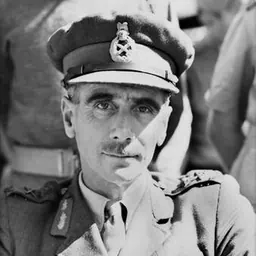


Contemporaries
People whose lives overlapped Jessie Vasey's

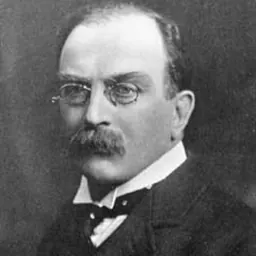

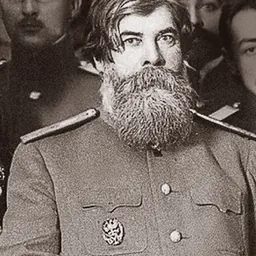
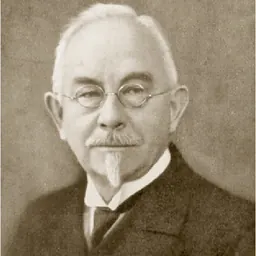

Frequently asked questions
Who was Jessie Vasey?
Australian activist (1897–1966)
When was Jessie Vasey born?
Jessie Vasey was born on 19 October 1897.
When did Jessie Vasey die?
Jessie Vasey died on 22 September 1966.
Sources & further reading
Cite this page
APA: Biography.guide. (2026). Jessie Vasey. https://biography.guide/jessie-vasey/
MLA: "Jessie Vasey." Biography.guide, https://biography.guide/jessie-vasey/.
Chicago: "Jessie Vasey." Biography.guide. https://biography.guide/jessie-vasey/.
Data last updated: 2026-09-20 · Spot an error? Report a correction.
Page generated 2026-09-27 05:22 UTC