
About Jerzy Jeliński
Lived 1901 – 1986 (aged 85). Jerzy Jeliński was a Polish explorer.
Jerzy Leon Jeliński (21 June 1901 - 30 November 1986) was a Polish traveler and scout. From 1926 to 1928, he completed a successful trip around the world by car.
Early life Jeliński spent his childhood in Warsaw and the surrounding area . In 1918, as a high school student, he joined the Polish municipal militia in Warsaw, organized after the withdrawal of German troops.
In 1920, he was one of the first volunteers to enlist in the newly established Polish Navy. He fought with the Marine Battalion during the Polish–Soviet War and was injured in the hand near Ostrołęka. After the war, he was promoted to boatswain and transferred to the Navy's headquarters in Warsaw.
Career In 1926, Jeliński, together with Eugeniusz Smosarski (brother of Jadwiga Smosarska), Brunon Bredschneider (a filmmaker), and Jan Ława (a sailor), and their dog Oranek, organized a trip around the world by car. The expedition was initially planned by Smosarski to be undertaken by bicycle, but Jeliński persuaded the group to use a car instead. To fund the purchase of the car, Jeliński and Ława sold most of their belongings.
The travelers set off in a Ford Model T specially adapted by the Centralne Warsztaty Samochodowe. The trip, thanks to governmental support (including the Ministry of Internal Affairs and Ministry of Foreign Affairs) and non-governmental support (from organizations such as the Polish Scouting and Guiding Association, Sokół movement, , Polish Olympic Committee, and Polish Economic Association), became known as the Polish Scouts' Round-the-World Expedition (participants received patches in English reading Polish Scouts Round the World). The remaining three continued through Sicily to Tunis and Algiers, where Bredschneider ended his journey, finding further travel tiring and unprofitable. Jeliński and Smosarski continued the trip. In Casablanca, they loaded the car onto the Sinsinnawa ship bound for North America. US immigration authorities did not allow Smosarski, who was ill with trachoma, to enter; Jeliński continued alone. Thanks to his perseverance (he gave many lectures to the Polish diaspora) and the help of Polish Americans, he traveled through the United States (from New York through Washington – where he had an audience with President Coolidge – Pittsburgh, Detroit – from where he continued in a new Buick Master Six – Cleveland, Buffalo, Niagara Falls, Chicago, Milwaukee, Saint Louis, Denver, Los Angeles to San Francisco). In Toledo, he declined a young Polish woman's offer to join him on his journey as inappropriate. The journey continued by ship Taiyō Maru from Hawaii to Japan, where he traveled from Yokohama to Kobe (through Kamakura, around Mount Fuji, Nikkō, Tokyo, Kyoto, Osaka). He planned to return to Poland through China, but due to the ongoing civil war there, he abandoned the plan to travel through India because of insufficient funds. He loaded his car onto the Kashima Maru ship and, through the Suez Canal (Port Said), visiting ports in Nagasaki, Shanghai, Penang Island, Hong Kong, Singapore, and Colombo on Ceylon, he reached Marseille. He then returned through France, Belgium, and Germany to Poland. The trip lasted over two years, from 30 May 1926 to 31 October 1928.
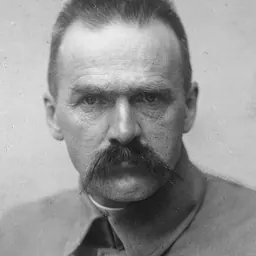
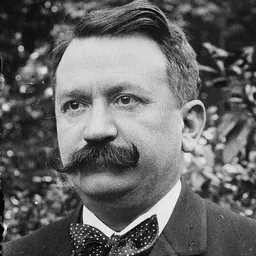
During the expedition, the travelers met many heads of state, mayors of various cities, and university professors. Among those who hosted them were: President of Poland Ignacy Mościcki, Marshal Józef Piłsudski, President of Czechoslovakia Tomáš Masaryk, President of Austria Michael Hainisch, Admiral Miklós Horthy, Italian Prime Minister Benito Mussolini, Pope Pius XI, President of the United States John Calvin Coolidge Jr., Japanese Minister Gotō Shinpei, French Prime Minister Gaston Doumergue, and King of Belgium Albert I. Information about the expedition appeared in Polish and foreign newspapers (including American, Japanese, and German), with about 2,000 articles published about it.
Upon his return, Jeliński was greeted by a large crowd of Warsaw residents, and he was received by President Mościcki.
The expedition was described by Władysław Umiński in the book (Under the Polish Flag: Around the World by Car) published in 1929.
Later years During World War II, he was involved in the resistance against the occupiers. His family home was used to store weapons for the Home Army units, and he also participated in the in Stara Miłosna.
Awards and honors
Eagle Scout – 1928 Silver Cross of Merit – 20 September 1929
Don’t just read it —
keep it.
Full-length biographies made to live with: read them, listen on the way to work, watch them tonight.
- E-book
- Audio
- Video
Instant download · yours to keep · every purchase keeps this site free
Important facts
People in Jerzy Jeliński's life
Named in this biography and alive at the same time





Related people
Same field, nearest in time


Contemporaries
People whose lives overlapped Jerzy Jeliński's



Frequently asked questions
Who was Jerzy Jeliński?
Polish traveler and scout
When was Jerzy Jeliński born?
Jerzy Jeliński was born on 21 June 1901 in Warsaw.
When did Jerzy Jeliński die?
Jerzy Jeliński died on 30 November 1986 in Warsaw.
What was Jerzy Jeliński's occupation?
Jerzy Jeliński was an explorer.
What nationality was Jerzy Jeliński?
Jerzy Jeliński was Polish.
Sources & further reading
Cite this page
APA: Biography.guide. (2026). Jerzy Jeliński. https://biography.guide/jerzy-jelinski/
MLA: "Jerzy Jeliński." Biography.guide, https://biography.guide/jerzy-jelinski/.
Chicago: "Jerzy Jeliński." Biography.guide. https://biography.guide/jerzy-jelinski/.
Data last updated: 2026-09-20 · Spot an error? Report a correction.
Page generated 2026-09-27 05:22 UTC