
About Jerry Buckley
Lived 1891 – 1930 (aged 39). Jerry Buckley was a journalist and talk radio, known for Charles Bowles (mayor).
Gerald Emmett Buckley (April 5, 1891 – July 23, 1930) was an American radio commentator in Detroit, Michigan. He successfully campaigned for the recall of Mayor Charles Bowles in the wake of corruption allegations. Prior to his death, Buckley had served as an investigator for Henry Ford, and as a special investigator for the United States government.
Early life and career Jerry Buckley was born and spent his youth in Detroit's oldest neighborhood of Corktown. Buckley and his five siblings were raised by his mother, Anna “Annie” C. Buckley, a stay-at-home mom and Michigan native, and his father, Jeremiah “J.C.” Buckley, a moneyed landowner who emigrated from Canada to Michigan in 1884.
As a popular young adult, Jerry Buckley was known for his good looks and his “playboy” attitude, wooing women through his musical compositions and frequent presence in local nightclubs. In 1915, at the age of 24, Jerry Buckley married Michigan native Jeanette Logan, who gave birth to their only daughter, Rosemary, in 1918.
Buckley served as an investigator for Henry Ford, owner of Ford Motor Company, during the 1921 Newberry v. United States Supreme Court case, in which Ford legally challenged his defeat to Truman Newberry in the 1918 US Senate Election. Following his involvement in this case, Buckley continued to work as a government investigator on various legal cases, and occasionally channeled his investigative skills to aid his brother, George, in his legal work. Buckley's lifelong passion for song composition, combined with his investigative background, led him to a career in broadcasting, where he would become one of the first media celebrities of the burgeoning new medium of radio in the 1920s.
Radio career In 1928, Buckley began hosting a 6 p.m. nightly commentary program on Detroit radio station WMBC. Bootleggers operated extensively in Detroit, using nearby Windsor, Ontario as a conduit to funnel liquor illicitly into the US. Broadcasting from WMBC's studios on the top floor of the luxurious LaSalle Hotel, Buckley used his platform to enact a campaign against the rampant and rising crime in Detroit.
Buckley voiced the fears and outrage of his Detroit audience, whom he called the "Common Herd," openly criticizing and accusing city government officials of incompetence and attacking those whom he believed to be at fault for Detroit's rising crime rates. This advocacy earned him his status as "the voice of the people" amidst the beginnings of the Depression Era, when unemployment figures skyrocketed in Detroit.
Mayoral recall The tension and violence that permeated throughout Detroit culminated in "Bloody July" in July 1930, during which ten men were killed by gangsters in the span of two weeks. Using the Prohibition Era to his advantage, Bowles ran as the "dry candidate" in the elections, thus winning the support of Detroit Protestants.
Following a funeral mass at St. Gregory's Catholic Church, Buckley was buried at Detroit's Mount Olivet Cemetery. The funeral had 150,000 attendees.
After his murder, Police Commissioner Wilcox alleged that Buckley was a known extortionist and racketeer who had likely been killed because of his underworld connections. In his attempt to tarnish Buckley's reputation, Wilcox produced an affidavit stating that the slain radio commentator had been paid $4,000 in "protection money" by a bootlegger. The affidavit was soon dismissed as having been coerced. Buckley's brother Paul, a former assistant prosecutor, claimed that the murder was orchestrated as revenge for the campaign against the mayor.
In response, Michigan Gov. Fred W. Green directed the state police to investigate the murder separately from the Detroit Police Department. The investigation was taken to a grand jury by prosecutor (and future Governor) Harry Kelly.
Trial Historical documents provide several different iterations of the events that occurred that night, testimonies given, as well as suspects and their fates. As a result of the murder and inconclusive initial investigation, a Grand Jury of 23 people was constructed to investigate the murder of Buckley. Harry Toy served as prosecutor, with Harry Kelly second in command. Anthony Maiullo, Allen W. Kent, Nicholas Salowich, and Leroy W. Payne provided defense.
The first person to be questioned was Mrs. Lucille Love, whose car blocked the street after the shots were fired. She claimed to have heard the shots, and exited the car and fled across the street in fright. The jury made note of the fact that she was being held as a witness for some time, making $25 a week, and that she was the daughter of a policeman.
Other sources invoke the testimony of Gus Reno, who owned a taxi stand at the La Salle hotel. He identified Angelo Livecchi and claimed he exited the hotel and gave other men the signal to enter just seconds before gunshots were heard. Livecchi was charged with first degree murder. Other suspects included Thomas Licavoli, Ted Pizzino, Mike Morgany, and Frank Cammarata. Thomas Licavoli was buried just 100 feet away from Buckley.
Testimonies from Robert Jackson, the hotel's night porter, and Fred Tara, a shady police informant, identified Pizzino, Bommarito, and Livecchi as the three men who killed Buckley.
At one point, Tara refused cross examination and fought with news reporters, claiming that a photo of him would mean his death. Tara was held in contempt, and his testimony was stricken from the record. Upon resuming his testification later in the trial, the judge reinstated his earlier testimony.
Other witness testimonies contradicted the accounts of Jackson and Tara- an auto salesman who had been in the lobby and claimed to have seen the killers testified that none of the three that were identified by Jackson and Tara were there. An electrician who was across the street testified that he had seen the murderers enter the building, and that none of the men on trial were the men he saw. William Adams, a bellboy who was also in the lobby, was not able to identify any of the men. W.S. Martin, a WMBC radio engineer who had disappeared after the murder, resurfaced a week before the trial and stated that he was willing to testify and that he would recognize the killers, but that they were not Pizzino, Bommarito, and Livecchi.
Although henchmen belonging to Detroit mobster James "Blackie" Licavoli's gang were arrested, no convictions were secured for the killing.
Don’t just read it —
keep it.
Full-length biographies made to live with: read them, listen on the way to work, watch them tonight.
- E-book
- Audio
- Video
Instant download · yours to keep · every purchase keeps this site free
Important facts
People in Jerry Buckley's life
Named in this biography and alive at the same time

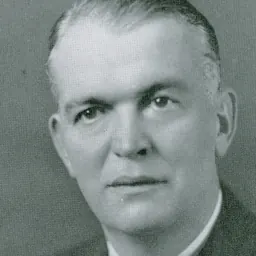


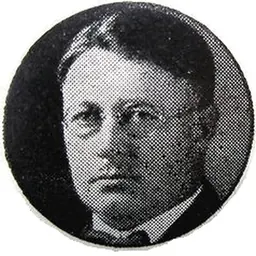

Related people
Same field, nearest in time

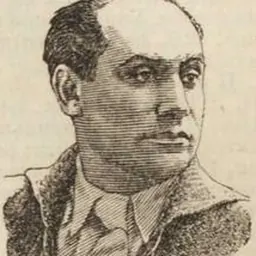

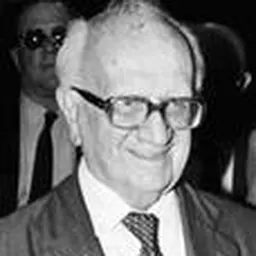


Contemporaries
People whose lives overlapped Jerry Buckley's

Frequently asked questions
Who was Jerry Buckley?
American radio journalist (1891-1930)
When was Jerry Buckley born?
Jerry Buckley was born on 5 April 1891.
When did Jerry Buckley die?
Jerry Buckley died on 23 July 1930.
What was Jerry Buckley's occupation?
Jerry Buckley was a journalist and talk radio.
What was Jerry Buckley known for?
Jerry Buckley was known for Charles Bowles (mayor).
Sources & further reading
· DBpedia: Jerry Buckley (journalist)
Cite this page
APA: Biography.guide. (2026). Jerry Buckley. https://biography.guide/jerry-buckley-journalist/
MLA: "Jerry Buckley." Biography.guide, https://biography.guide/jerry-buckley-journalist/.
Chicago: "Jerry Buckley." Biography.guide. https://biography.guide/jerry-buckley-journalist/.
Data last updated: 2026-09-22 · Spot an error? Report a correction.
Page generated 2026-09-27 05:34 UTC