
About Jerónimo de Azevedo
Lived 1555 – 1625 (aged 69–70). Jerónimo de Azevedo was a governor, viceroy and military commander.
Dom Jerónimo de Azevedo (Estate of Barbosa, Entre-Douro-e-Minho, Portugal, circa 1550 (?) – Lisbon, São Jorge Castle, 1625) was a Portuguese fidalgo, Governor (captain-general) of Portuguese Ceylon and viceroy of Portuguese India. He proclaimed in Colombo, in 1597, the King of Portugal, Philip I, as the legitimate heir to the throne of Kotte, thus substantiating the Portuguese claims of sovereignty over the island of Ceylon. Comendador of the monastery of São João de Alpendurada. He was thus a half-brother of the Jesuit martyr, Blessed Inácio de Azevedo.
Not being the firstborn son, he did not inherit his father's estate, that included the lordship of the medieval honras of Barbosa and Ataíde, each with an estimated annual income of 100 thousand reais,
Capture of Maldives The leader of the Portuguese forces during the capture of the Maldives in 1558 was Dom Jerónimo de Azevedo. He played a significant role in the Portuguese expansion in the Indian Ocean.
Dom Jerónimo de Azevedo led the military expedition to the Maldives, and under his command, the Portuguese captured the Maldivian capital, Malé, in 1558. The Maldivian ruler at that time was Sultan Ali VI, and the Portuguese captured him during their invasion.
However, the Portuguese rule in the Maldives was relatively short-lived, lasting for about 15 years. The Maldivians successfully revolted against Portuguese rule, and in 1573, they managed to drive the Portuguese out of their islands and regain their independence. Maldivians Refer to him as Andhiri Andhirin.
Governorship of Ceylon Azevedo was Captain-Major of the Malabar coast for a period of 15 years, before being nominated Captain-General of Ceylon in the year 1594. He stayed in charge in Ceylon for a period of 18 years (from Christmas 1594 until November 1612), an unusual long period for holding one office in the Estado da Índia. in the late 16th-century and early 17th-century Portuguese attempts to take full control over the whole territory of present-day Sri Lanka.
The touchstone of Portuguese ambitions in Ceylon by the end of the 16th century was the bequest by King Dharmapala of Kotte in 1580 of his entire realm to the king of Portugal. Dharmapala was a Christian convert and his bequest was unacceptable to many of his Buddhist subjects and to the ruler of the neighboring kingdom of Kandy. The takeover was therefore resisted, and the Portuguese had to subjugate Kotte by force.
Military campaigns in Kotte Azevedo arrived in Colombo with fresh troops on 24 December 1594, with the presence of several Portuguese dignitaries and an important number of court nobles of Kotte. Among the local nobles were a mudalyar (a high military official), an aratchi (captain of a company of Lankan soldiers) and a patangatim (a caste headman among the fishermen). The participants in this Assembly had been chosen "by the main vassals of the King of Kotte"
This Ceremony, quickly decided and organized by Azevedo, was thus equivalent to the acclamation of Filipe I as King of Portugal in the cortes of Almeirim, with the purpose of dispelling any doubts about the legitimate right of succession of the Portuguese sovereign to the throne of Kotte. Flag of the Kingdom of Kotte, donated by its sovereign Dharmapala to the King of Portugal. When Dharmapala died in 1597, Azevedo took formal possession of the Kingdom on behalf of Philip I of Portugal
Opening of Ceylon to the Jesuits Another issue to which Azevedo dedicated his attention was missionary activity. In 1554, the Portuguese crown had decided that its possessions in Ceylon would be an exclusive preserve of the Franciscans, and it reaffirmed this decision in 1593. the kingdom "never in our time recovered its former opulence and size". However, this strategy aimed at the economic strangulation of the kingdom of Kandy did not produce all the effects expected by Azevedo, because Portuguese traders in Indian port cities such as São Tomé de Meliapor, with the support of the Hindu king at Jaffna, refused to abandon their highly lucrative trades with Kandy. Political map of Ceylon in the early 17th century. Dom Jerónimo de Azevedo invaded Kandy in 1603, but was forced to retreat after a rebellion erupted among his Lascarin auxiliaries.
The Fort of São Jerónimo in Daman. Azevedo ordered its building in the year 1615, while viceroy in Goa.
Viceroy of Portuguese India Azevedo was appointed 20th viceroy of Portuguese India on 24 November 1611, and left Colombo for Goa where he assumed his new duties on 16 December 1612.
Geographic explorations During his government in Goa Azevedo also had to face the serious threat posed by the increasing pressure of Dutch fleets against the Portuguese possessions and trade routes in the Indian Ocean.
His response was not only military, for one surprising byproduct of the Dutch challenge was galvanizing the Portuguese into undertaking new journeys of geographical exploration, seen as a sort of preemptive strike against the movements of Dutch and English fleets. Between 1613 and 1616 Dom Jerónimo ordered two such expeditions to the coasts of Madagascar - known to the Portuguese as ilha de São Lourenço since the beginning of the 16th century - with the participation of Jesuit priests (the Jesuits were then very much engaged in such activity, including journeys to the interior of China and to Tibet). One of the aims of this project was evaluating the possibilities for conquest of the island.
Fall from favor at the Habsburg court Towards the end of his tenure, Azevedo began to lose the favor he had previously enjoyed at the court of the Spanish Habsburgs, who ruled Portugal.
1635 map showing on its left side the Fort of São Jerónimo (Saint Jerome) in Nani Daman.
One factor that probably contributed to his downfall was the obstruction he made, that prevented him from reaching his final destination until the year 1617. Azevedo even ordered Silva Figueroa's detention for a time before finally allowing him to continue his journey to Persia. In this approach, Dom Jerónimo was fully expressing the feelings of the local Portuguese in Goa. They saw with great concern the dispatch of a Spanish national as envoy to a country where Portugal supposedly had exclusive interests, that should be preserved, in the framework of the distribution of powers agreed between Portugal and Spain, since the beginning of the dynastic union between the two countries, in 1580.
On his return to Lisbon, Azevedo was held in custody and put on trial on several accusations, including embezzlement. Dom Jerónimo de Azevedo died on 9 March 1625, in São Jorge Castle, before the conclusion of his trial and without the various allegations against him being proven. in Lisbon, which was then the home church of the Jesuits in Portugal.
The nativity chapel, in the Igreja de São Roque, in Lisbon, where D. Jerónimo de Azevedo is buried
Legacy Azevedo lived at a time when the Portuguese Empire in the East was already past its heyday and relatively weakened by the arrival to Asian waters of other European powers. But military successes in the 1590s against the Kingdoms of Sitawaka and Jaffna presented the Portuguese crown with a unique window of opportunity that led it to decide (in 1594) to attempt the conquest of the entire island of Ceylon.
Don’t just read it —
keep it.
Full-length biographies made to live with: read them, listen on the way to work, watch them tonight.
- E-book
- Audio
- Video
Instant download · yours to keep · every purchase keeps this site free
Important facts
People in Jerónimo de Azevedo's life
Named in this biography and alive at the same time


Related people
Same field, nearest in time



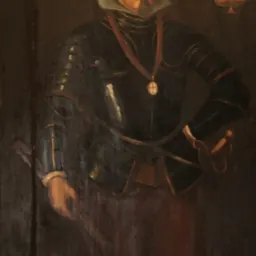

Contemporaries
People whose lives overlapped Jerónimo de Azevedo's

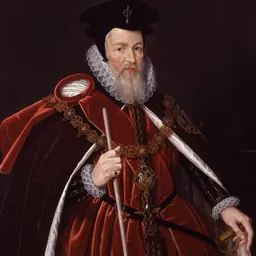


Frequently asked questions
Who was Jerónimo de Azevedo?
Colonial governor of Ceylon
When was Jerónimo de Azevedo born?
Jerónimo de Azevedo was born in 1555 in Kingdom of Portugal.
When did Jerónimo de Azevedo die?
Jerónimo de Azevedo died in 1625 in Lisbon.
What was Jerónimo de Azevedo's occupation?
Jerónimo de Azevedo was a governor, viceroy and military commander.
What nationality was Jerónimo de Azevedo?
Jerónimo de Azevedo's recorded nationality: Kingdom of Portugal, Portuguese People.
Sources & further reading
· Wikipedia: Jerónimo de Azevedo
· DBpedia: Jerónimo de Azevedo
Cite this page
APA: Biography.guide. (2026). Jerónimo de Azevedo. https://biography.guide/jeronimo-de-azevedo/
MLA: "Jerónimo de Azevedo." Biography.guide, https://biography.guide/jeronimo-de-azevedo/.
Chicago: "Jerónimo de Azevedo." Biography.guide. https://biography.guide/jeronimo-de-azevedo/.
Data last updated: 2026-09-20 · Spot an error? Report a correction.
Page generated 2026-09-27 05:22 UTC