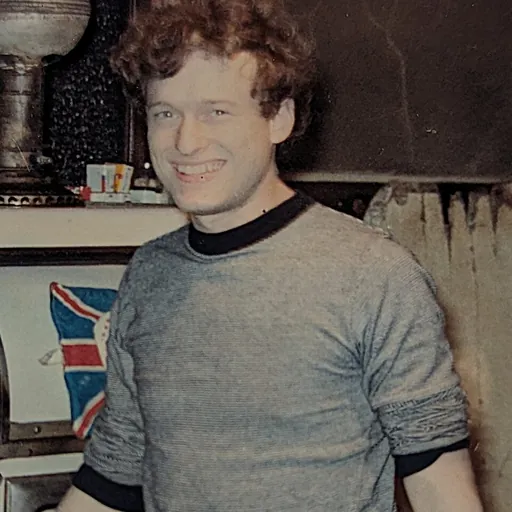
Jeremy Lansman
American radio engineer and community radio trailblazer
About Jeremy Lansman
Lived 1942 – 2024 (aged 82). Jeremy Lansman was a radio engineer and community organizer.
Jeremy David Lansman (November 25, 1942 – December 28, 2024) was an American radio engineer, station creator, and producer. Lansman contributed to the growth of community radio in the United States by helping establish numerous community radio stations across the United States including KRAB Seattle, KBOO Portland, KDNA St. Louis, KFAT Gilroy, KBDI-TV Broomfield, and KYES-TV Anchorage.
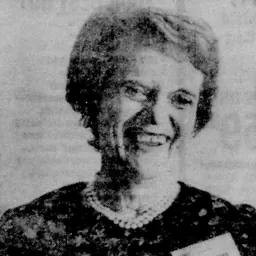
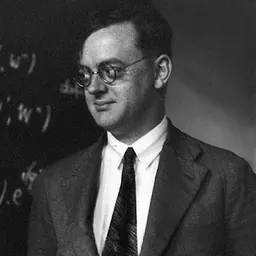
Early life Lansman grew up in Central West End, St. Louis, Missouri, the son of Paul Lansman, a mathematician, and Elizabeth Gips. As a child, Lansman played with electronic kits and built small devices, including crystal radios, tube radios, and an FM receiver. Experimenting at home in St. Louis with electronics and a radio kit, Lansman made his first radio broadcast at the age of seven, from his bedroom to his parents’ radio downstairs. " found a positive reinforcement with radio that was lacking in the rest of my life. I could make it work when nothing else in my life did."
Career In the late 1950s, Lansman moved to San Francisco as a teenager and became a volunteer at KPFA in Berkeley, the first listener supported radio station in the country. Lansman dropped out of high school and eventually became chief engineer at KHOE in Truckee, California. After his work at KHOE, the station owner sent Lansman to Honolulu to build a new station.
"...community radio... would not have happened without Jeremy because Jeremy actually built the stations," said Michael Huntsberger, a professor emeritus at Linfield University in Portland, Ore., who wrote a doctoral dissertation about the history of community radio.
KRAB Seattle 1961-1966 In 1961, while visiting Washington state, Lansman answered a classified ad from Lorenzo Milam, who was looking for an engineer to help him start an experimental FM station in Seattle. At age 19, Lansman became KRAB’s chief engineer. KRAB-FM 107.7 went on the air on December 12, 1962. Lansman worked at KRAB for four years and developed an ongoing partnership with Milam. During that time, he also helped a sister station, KBOO in Portland, Oregon, get on the air.
KDNA St. Louis 1967-1974
In 1963, Lansman and Milam applied for a broadcast license for an unused FM frequency in St. Louis (102.5 Mhz), There was a competitive application for the frequency, from the Christian Fundamental Church, "a temple that proudly proclaimed, on a sign out front, that it was racially segregated." In 1967, after hearings and a court case, the FCC awarded the license to Lansman and Milam. Lansman's life partner, Cammie Enslow, played an active role in the construction and early days of KDNA. Lansman had the final decision-making power and worked to keep the free-form approach of the programming. Tom Thomas and Terry Clifford, KDNA staff members, "fondly" recalled Lansman’s governing style as "surrealist" and "chaotic." Milam described the station as "fearless and magical."
Lansman used an engineering analogy to explain his vision of the purpose of KDNA:
"Good radio is a feedback system, providing society continuing information about itself so that society can be self-correcting. Like society, a servomechanism without negative feedback goes wild, cannot function, hunts and oscillates. Correct information can set the system back on the correct ‘course’ – like an aircraft autopilot. KDNA, when it was functioning at peak efficiency, had such a self-adjusting system. It was the four telephones which could be linked together and put on the air. It was the people who called in on these telephones, commenting on our programs, correcting our factual or interpretive errors, adding, constantly adding new bits of information and details, feeding their ideas back into the society serving and served by our constantly changing signal. The listener fed back and became KDNA. KDNA became a self-correcting servomechanism of the community that was part of it …" RM-2493 challenged the eligibility requirements for operating noncommercial educational (NCE) stations. Specifically, the petition requested that faith-based organizations not be granted licenses to operate stations in the portion of the spectrum reserved for NCE stations (88.1 to 91.9 FM), because they presented a one-sided view. The FCC denied the petition in 1975, citing its obligation to remain neutral towards religion on First Amendment.
RM-2493 generated the most public comment received by the FCC on any single issue. By the time the petition was denied in August 1975, the FCC had received an estimated 750,000 letters of protest. Many were based on the mistaken belief that the petition wanted all religious broadcasting banned. Lansman said that he suspected representatives of religious groups failed to read the petition carefully and "in their panic reacted to the rhetoric of the petition instead of the facts."
KFAT Gilroy, CA 1975-1979 In 1975, using some of the proceeds from the sale of KDNA, Lansman and Milam bought KSND (94.5 Mhz), a low wattage station in Gilroy, CA, a small agricultural community 80 miles south of San Francisco. They changed the call letters to KFAT, which went on the air on August 6, 1975. Lansman and his partner, Laura Ellen Hopper, ran the station. Milam moved to Dallas to start another community radio station, KCHU. Lansman and Hopper hired Larry Yurdin as the first station manager. He helped to define KFAT’s sound, an irreverent mix of country, blues, folk, rock, Hawaiian, and humor. There was an emphasis on playing music not heard anywhere else. KFAT became a Bay Area counterculture phenomenon (dedicated listeners called themselves “FATheads”). The musical format pioneered at KFAT later became known as Americana music or American Roots music. Yurdin left after about six months, but the musical approach continued.
"Having a subversive country station was always a dream of mine," Lansman said about KFAT in 1978.
Tom Leyde of The Californian described KFAT's music as a "conglomeration of old and new country music, country swing, bluegrass, folk music, and off-color monologues mixed with live studio music and remote broadcasts from concerts and clubs. One is apt to hear anything from Hank Williams and Bob Wills and his Texas Playboys, to Kris Kristofferson and Jerry Jeff Walker." KFAT was a commercial station, but one with frequent financial difficulties. Despite its passionate, loyal listenership, advertising was difficult to sell, in part because its unique sound and format confused advertisers, who were used to radio with clearly defined genres and audience demographics. Often, the staff and DJs were not paid and staff dissatisfaction was a constant theme.
KBDI-TV Broomfield, CO 1980-1982 In 1979, Lansman began working to start an alternative public television station, KBDI-TV, in the Boulder-Denver area. He helped get the station on the air in February 1980 and served as operations director. KBDI operated on a very low budget and was known for controversial programming, including documentaries on the conflicts in Central America and home movies submitted by viewers.
KYES-TV Anchorage, AK 1990-2016 Lansman and his wife, Carol Schatz, applied for a license for a television station, Channel 5, in Anchorage, which was unused and available. The FCC awarded them a construction permit and the station, KYES-TV, went on the air in January, 1990.
Owning a VHF television station was widely considered to be a lucrative business. Lansman said he wanted KYES to be profitable and become his "retirement plan."
KYES went on the air in January 1990. At first, the station offered Video Juke Box, a pay-per-choice music video service, which enabled viewers to request a video for which they were charged a fee through a 900 telephone number. Later, KYES was the first television station in Anchorage to convert to digital broadcasting, using equipment assembled by Lansman from used components.
Schatz and Lansman sold the station in 2016.
Impact on Community Radio After the sale of KDNA in 1974, Lansman and two former KDNA staffers, Tom Thomas and Terry Clifford, helped people across the country apply for FCC licenses for community radio stations. Lansman provided technical expertise to identify available FM frequencies, locate transmitter sites, and prepare the required engineering information. Thomas and Clifford advised applicants on how to craft successful applications, and wrote and edited applications when needed.
Community radio stations that obtained licenses from this work included WRFG in Atlanta, GA; WEFT in Champaign, IL; WAIF in Cincinnati, OH; KOPN in Columbia, MO; KCHU in Dallas, TX; KKFI in Kansas City, MO; WORT in Madison, WI; WEVL in Memphis, TN; WDNA in Miami, FL; KFAI in Minneapolis, MN; WYEP in Pittsburgh, PA; KPOO in San Francisco, CA; KBDY in St. Louis, MO; KDHX in St. Louis, MO; and KOTO in Telluride, CO.
While creating these new community radio stations, Lansman advocated for radio’s potential to be a medium for free speech, community dialogue, and creative expression.
In 2013, Lansman was inducted into the St. Louis Radio Halls of Fame. His induction announcement credits him with "[helping] create a plethora of independent community stations throughout the country."
Personal life Lansman had several long-term romantic relationships in his life. He was together with Cammie Enslow from 1964 until 1970 and with Laura Ellen Hopper from 1971 until 1979. With Hopper he has a daughter, Elsbeth Lansman, born in 1973. In 1988 he married Carol Schatz and they divorced in 2016. In August 2012 he moved to South Africa to live with Ineke Buskens, who he married in 2017.
Lansman's cousin was Jay Landesman, owner of the Crystal Palace nightclub in the Gaslight Square entertainment district and a well-known literary figure.
Death In 2009, Lansman was diagnosed with myelodysplasia. On December 28, 2024, he died at his home, in Grabouw, South Africa, from complications of the disease.
Don’t just read it —
keep it.
Full-length biographies made to live with: read them, listen on the way to work, watch them tonight.
- E-book
- Audio
- Video
Instant download · yours to keep · every purchase keeps this site free
Important facts
People in Jeremy Lansman's life
Named in this biography and alive at the same time







Contemporaries
People whose lives overlapped Jeremy Lansman's



Frequently asked questions
Who was Jeremy Lansman?
American radio engineer and community radio trailblazer (1942-2024)
When was Jeremy Lansman born?
Jeremy Lansman was born on 25 November 1942.
When did Jeremy Lansman die?
Jeremy Lansman died on 28 December 2024.
What was Jeremy Lansman's occupation?
Jeremy Lansman was a radio engineer and community organizer.
Sources & further reading
Cite this page
APA: Biography.guide. (2026). Jeremy Lansman. https://biography.guide/jeremy-lansman/
MLA: "Jeremy Lansman." Biography.guide, https://biography.guide/jeremy-lansman/.
Chicago: "Jeremy Lansman." Biography.guide. https://biography.guide/jeremy-lansman/.
Data last updated: 2026-09-22 · Spot an error? Report a correction.
Portrait: Wikimedia Commons · author & licence
Page generated 2026-09-27 05:03 UTC