
About Jenny Saville
Born 1970. Jenny Saville is a British painter and photographer.
Jennifer Anne Saville (born 7 May 1970) is an English figurative painter and an original member of the Young British Artists (YBAs). Saville lives and works in Oxford, England, and is noted for her large-scale nudes of unconventional female subjects. Some credit her with originating a new method of painting the female nude for contemporary art.
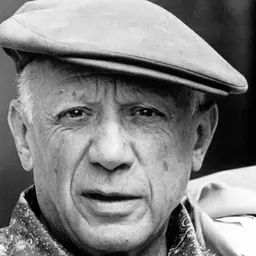
Recurring figures depicted in her work range from mothers, children, transgender people, burn victims, and cosmetic surgery patients. She partially credits her artistic interest in big bodies to the works of Pablo Picasso.
Career The Saatchi Gallery opened in 1985Her early series included large-scale self-portraits and other models. As part of the Young British Artists (YBAs) scene, Saville has been noted for her contemporary style of figure painting.
Since her debut in 1992, Saville's focus has remained on the female body, stating she is "drawn to bodies that emanate a sort of state of in-betweenness: hermaphrodite, a transvestite, a carcass, a half-alive/half-dead head."
In 1994, Saville observed plastic surgery operations in New York City. Her published sketches and documents include surgical photographs of liposuction, trauma victims, deformity correction, disease, and transgender patients. Much of her work features distorted flesh, while others reveal the marks of plastic surgery.
Between 1996 and 2002, Saville collaborated with photographer Glen Luchford to produce Closed Contact, a series of large photographic prints which depict Saville's nude body pressed up against a clear panel. The series explores femininity and the challenges the perception of the female body.
Album covers
Saville's paintings have appeared on two album covers:
1994 – Strategy (South Face/Front Face/North Face) appeared on the cover of Manic Street Preachers' third album The Holy Bible. 2009 – Stare (2005) was used for Manic Street Preacher's 2009 album Journal for Plague Lovers. UK supermarkets stocked the CD in a plain slipcase, after the cover was deemed "inappropriate".
Recent work In Saville's recent works, she has employed graphite, charcoal, and pastel to render overlapping figures. These works are reminiscent of traditional underdrawings and illustrate themes of movement, hybridity, and gender ambiguity. becoming the most expensive work by a living female artist sold at auction.
Work Materials and technique Saville is known for her use of massive canvases, usually or more,
Visual style Jenny Saville's post-painterly style has been compared to that of Lucian Freud and Rubens. She frequently utilizes muted colour combinations for her art pieces to create a soft atmosphere that contrasts with her usually intense subject matter. Saville's technique creates a look that is visceral and fleshy, with the size of her paintings allowing the viewer to see the details and layering of her aesthetic of movement and abstract realism.
Subject matter The primary subject of Saville's works are the female nude and figuration, with the majority of all of Saville’s early works being the artist herself, and having almost exclusively painted female subjects since. Her works often "depict distorted, fleshy, and disquieting female bodies" to provoke the viewer. "I paint flesh because I'm human", she has said. "If you work in oil, as I do, it comes naturally. Flesh is just the most beautiful thing to paint."
After having children, Saville's subjects and methods became freer, though still revolve around the depiction of bodies. Her references expanded to include motherhood, art history, and ancient myth.
Themes and influences Saville’s work has been read as directed against the fantasy that humans can be the complete authors of their lives. Her unconventional views on beauty expand the traditional nude form into a way to comment on the body, gender politics, sexuality, and self-realisation.
Saville plays upon the "ambiguity of embodiment" and what it means to be "feminine" or "beautiful" through the use of the distortion and "disgust". In an interview for the Saatchi Gallery, Saville comments that she tries to create a balance between abstract and aesthetic effect and realistic depiction of the body in her work. Plan (1993). Oil painting on a canvas. A nude female figure with contour lines marked on her body, much like that of a topographical map. Saville said of this work: "The lines on her body are the marks they make before you have liposuction done to you. They draw these things that look like targets. I like this idea of mapping of the body, not necessarily areas to be cut away, but like geographical contours on a map. I didn't draw onto the body. I wanted the idea of cutting into the paint. Like you would cut into the body. It evokes the idea of surgery. It has lots of connotations." Fulcrum (1999). Oil painting on an canvas. Three obese women are piled on a medical trolley. Thin vertical strips of tape have been painted over and then pulled off the canvas, creating a sense of geometric measure at odds with the flesh. Hem (1999). Oil painting on a canvas. This painting depicts a large nude female with subtle textures. The stomach has a glow, while the figure's left side is covered with thick white paint as if by a plaster cast. Her pubic area, painted pink over dark brown, resembles carved and painted wood.
Reception Saville's work Propped (1992), which is the most expensive work sold at an auction house by a living female artist, has been described as "one of the undisputed masterpieces of the Young British Artists" by Sotheby's European head of Contemporary Art, Alex Branczik.
Saville's artistic style has garnered feedback about her use of detail and engaged discussion about the perception of women. Suzie Mackenzie of The Guardian has expressed that Saville's works are " confrontation with the dynamics of exposure...her exaggerated nudes point up, with an agonising frankness, the disparity between the way women are perceived and the way that they feel about their bodies." Gallerist Asana Greenstreet has also commented that Saville performs "explorations of people that are both intimate and uncomfortable. Through detailed, frank and unapologetic investigations of the human body, dialogues occur between past and present, and are animated by questions of gender, suffering, and ambiguity." Michelle Meagher writes that Saville sees standards of "beauty and pleasure [as] deeply embedded within Western [culture]", yet, she constantly tries to challenge these assumptions of the body and beauty. 2005 Museo d'Arte Contemporanea Roma Rome 2006 Museo Carlo Billoti Rome 2010 Gagosian Gallery London 2011 Continuum Gagosian Gallery New York 2012 Jenny Saville Norton Museum of Art West Palm Beach, Florida Part of the Norton's RAW series – Recognition of Art by Women 2012 Jenny Saville Modern Art Oxford 2016 Jenny Saville Drawing Ashmolean Museum Venice Formed the final section of the 'Titian to Canaletto: Drawing in Venice' exhibition. Twenty new works on paper and canvas were produced in response to the Venetian drawings in the exhibition 2016 Erota Gagosian Gallery London Frawings inspired by the previous "Titian to Canaletto: Drawing in Venice" exhibition. 2018 Ancestors Gagosian Gallery New York Jenny Saville The George Economou Collection Athens
National Portrait Gallery London Modern Art Museum of Fort Worth Jenny Saville Albertina Museum Albertina, Vienna 2026 Jenny Saville a Ca’ Pesaro International Gallery of Modern Art Venice At 2026 Venice Biennale Group exhibitions
Other activities Gagosian Gallery, Member of the Board of Directors (since 2022)
Don’t just read it —
keep it.
Full-length biographies made to live with: read them, listen on the way to work, watch them tonight.
- E-book
- Audio
- Video
Instant download · yours to keep · every purchase keeps this site free
Important facts
People in Jenny Saville's life
Named in this biography and alive at the same time


Related people
Same field, nearest in time


Contemporaries
People whose lives overlapped Jenny Saville's



Frequently asked questions
Who is Jenny Saville?
British painter (born 1970)
When was Jenny Saville born?
Jenny Saville was born on 7 May 1970 in Cambridge.
What is Jenny Saville's occupation?
Jenny Saville is a painter and photographer.
What nationality is Jenny Saville?
Jenny Saville is British.
Sources & further reading
Cite this page
APA: Biography.guide. (2026). Jenny Saville. https://biography.guide/jenny-saville/
MLA: "Jenny Saville." Biography.guide, https://biography.guide/jenny-saville/.
Chicago: "Jenny Saville." Biography.guide. https://biography.guide/jenny-saville/.
Data last updated: 2026-09-20 · Spot an error? Report a correction.
Page generated 2026-09-27 05:14 UTC