
About Jelena Dorotka
Lived 1876 – 1965 (aged 89). Jelena Dorotka was a Croatian painter.
Jelena Dorotka Hoffmann née Jelena Dorotka von Ehrenwall (1 March 1876 – 19 May 1965) was a Dubrovniknian cubist painter.
Dorotka, a native of Dubrovnik, lived as an artist in Paris between 1907 and 1914, where she met many prominent figures of modern art, and became the first Ragusan cubist painter. She finished elementary school in Dubrovnik and graduated from gymnasium in Trieste. Then she married Otto Hoffmann, who was, like her father, an Austro-Hungarian Army officer who served in Dubrovnik. The marriage lasted just several years, until her husband's death in 1906, at the age of 33.
Paris years
After the death of her husband, Dorotka decided to pursue arts. She briefly studied painting and sculpture in Basel before moving to Paris in 1907. She had an atelier at 21 Avenue du Maine, Montparnasse, not far from her Paris home. She was friends with Russian-born painter Marie Vassilieff, founder of the famous Paris Académie Russe (later Académie Vassilieff). She met many leading figures in the world of painting (Matisse, Chagall, Picasso, Van Dongen, Laurencin, and others), and also worked for a time in the Matisse Painting School. She also met the famous Croatian sculptor Ivan Meštrović, with whom she remained in contact, as evidenced by her letters preserved in Meštrović's estate.
In 1914, upon the outbreak of World War I, Dorotka was, as a citizen of Austria-Hungary, forced to leave France, and her assets in the country were frozen.
Exile in Spain After leaving Paris in late September or early October 1914, Dorotka went to Spain, a neutral country. At first, she stayed in Barcelona, and then wandered between Palma de Mallorca, Ibiza and Alicante for the next five years. In Spain, she developed a close friendship with her Paris acquaintance Marie Laurencin, a French painter and printmaker who was likewise an exile from France, due to her German husband. The two artists also spent time drawing together.
Return to Dubrovnik After the end of World War I, Dorotka decided to return to her homeland. Between July 1920 and September 1922, she worked for a hydroelectric power plant company in Dugi Rat, near Omiš. She was fluent in Italian, German, French and Spanish, and was employed as a translator and correspondent.
By that time, her financial resources were depleted, and she petitioned the Yugoslav embassy in Paris to help her get compensation for her confiscated Paris property. There is no evidence she was successful, and her modest means since then suggest little or no compensation was actually received.
In 1922, Dorotka returned to Dubrovnik. She lived the rest of her life in anonymity, making a very modest living from beekeeping and growing of cacti. Citizens of Dubrovnik remembered her for her elegant appearance, as well as for her somewhat eccentric and bohemian lifestyle.
Don’t just read it —
keep it.
Full-length biographies made to live with: read them, listen on the way to work, watch them tonight.
- E-book
- Audio
- Video
Instant download · yours to keep · every purchase keeps this site free
Important facts
People in Jelena Dorotka's life
Named in this biography and alive at the same time
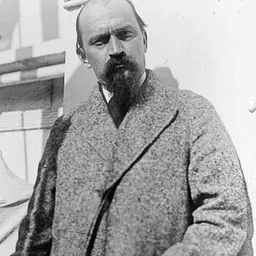
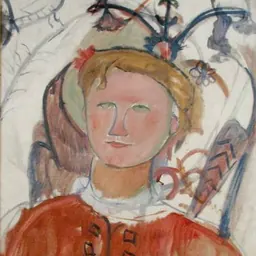
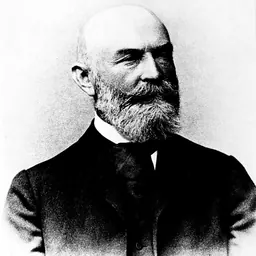

Related people
Same field, nearest in time
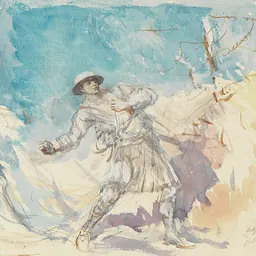


Contemporaries
People whose lives overlapped Jelena Dorotka's
Frequently asked questions
Who was Jelena Dorotka?
Croatian painter (1876-1965)
When was Jelena Dorotka born?
Jelena Dorotka was born on 1 March 1876 in Dubrovnik.
When did Jelena Dorotka die?
Jelena Dorotka died on 19 May 1965 in Dubrovnik.
What was Jelena Dorotka's occupation?
Jelena Dorotka was a painter.
What nationality was Jelena Dorotka?
Jelena Dorotka was Croatian.
Sources & further reading
Cite this page
APA: Biography.guide. (2026). Jelena Dorotka. https://biography.guide/jelena-dorotka/
MLA: "Jelena Dorotka." Biography.guide, https://biography.guide/jelena-dorotka/.
Chicago: "Jelena Dorotka." Biography.guide. https://biography.guide/jelena-dorotka/.
Data last updated: 2026-09-20 · Spot an error? Report a correction.
Page generated 2026-09-27 05:28 UTC