
Jeff Dean
American computer scientist
About Jeff Dean
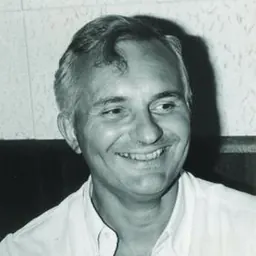
Born 1968. Jeff Dean is an American computer scientist, software engineer and artificial intelligence researcher, known for Bigtable, MapReduce and Spanner (distributed database technology).
Early life and education Jeff Dean was born to a family of a tropical disease researcher and a medical anthropologist, who moved the family frequently. However, from the fifth to tenth grade, Dean attended schools in the Twin Cities.
Dean received a B.S., summa cum laude, from the University of Minnesota in computer science and economics in 1990. His undergraduate thesis was on neural networks in C programming, advised by Vipin Kumar. During freshman year, Dean met his future wife, Heidi Hopper, who graduated from the same university in 1990.
Career Early career Before graduate school, Dean worked at the World Health Organization's Global Programme on AIDS, developing software for statistical modeling and forecasting of the HIV/AIDS pandemic. Much of his work was completed in close collaboration with Sanjay Ghemawat. As of 2018, Dean and Sanjay Ghemawat are the only two employees at Google to hold the title of Senior Fellow, the highest technical level at the company. Protocol Buffers are used extensively across Google for remote procedure call (RPC) protocols and for storing structured information in persistent storage systems, offering advantages in efficiency and extensibility compared to alternatives like XML. The system's architecture and design influenced the NoSQL database movement, with multiple open-source projects adopting similar approaches.
Spanner represents Dean and Ghemawat's contribution to globally distributed database systems, delivering a horizontally scalable, multi-version database that can replicate data synchronously across geographically distributed datacenters while maintaining strong consistency guarantees. Spanner's architecture enables applications to specify fine-grained replication constraints, control data locality to minimize latency, and transparently migrate data between datacenters for load balancing, supporting SQL-based queries and ACID transactions across potentially millions of machines and trillions of rows.
Dean and Ghemawat developed LevelDB, an open-source on-disk key-value store released in 2011 that drew inspiration from Bigtable's design principles while minimizing external dependencies to enable broader adoption. LevelDB stores sorted key-value pairs, supports atomic batch writes, forward and backward iteration, and compression via Google's Snappy library, subsequently becoming the backend storage engine for Google Chrome's IndexedDB as well as other applications including Bitcoin Core and Minecraft Bedrock Edition.
Artificial intelligence
Dean joined Google X in 2011 to investigate deep neural networks, which had just resurged in popularity. This ended with "the cat neuron paper", a deep belief network trained by unsupervised learning on YouTube videos. The DistBelief system was used to train the network in "the cat neuron paper". TensorFlow initially dominated the machine-learning research landscape, but by 2023 accounted for only 8% of exclusive models on Hugging Face compared to 92% for PyTorch, which was also used in 80% of academic papers utilizing deep learning frameworks.
Dean also worked on Pathways, an asynchronous distributed dataflow system for neural networks.
In April 2018, Dean was appointed the head of Google's artificial intelligence division, after John Giannandrea left to lead Apple's AI projects.
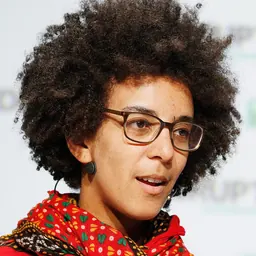
In December 2020, Google's Ethical AI team co-lead Timnit Gebru was terminated after a draft paper she co-authored on the risks and ethical implications of large language models didn't receive publication approval. The incident received significant attention in the media, and in the aftermath, Dean addressed an email to staff acknowledging that the episode had “surfaced large, important issues” around research culture, bias, and inclusion within Google's AI organization. In an open letter, critics demanded that members of Google's senior leadership, including Dean, "explain the process by which the paper was unilaterally rejected by leadership." Later, Margaret Mitchell, then co-lead of the Ethical AI team and an outspoken supporter of Gebru, was fired on February 19, 2021 for "reportedly using automated scripts to find examples of mistreatment of Dr. Timnit Gebru." On the same day Mitchell was fired, Dean issued an internal memo acknowledging Google "could have and should have handled this situation with more sensitivity" and said he "regrets that it led to some employees questioning whether they belong at Google."
In June 2021, Dean was a senior author on a Nature paper introducing a reinforcement-learning approach to chip floorplanning. Dean and co-authors claimed the method outperformed prior approaches. Google engineer Satrajit Chatterjee raised concerns about the results to Dean. A California court denied Google's motion to dismiss Chatterjee's lawsuit. Academic researchers raised criticisms of the Nature paper's results and disclosure of methods. In 2023, Professors Chung-Kuan Cheng and Andrew Kahng and UCSD collaborators reported that replication studies on public benchmarks found simulated annealing and commercial EDA software to outperform the Nature method. A peer-reviewed publication in Communications of ACM identified questionable research practices in the Nature paper and concluded that the paper's integrity was undermined by errors. Dean raised objections to these criticisms. In 2025, Cheng and Kahng published a peer-reviewed journal paper that addressed Dean's objections, while reconfirming and strengthening their earlier conclusions. Along with other independent experts, Cheng and Kahng have called for Google to provide results on public benchmarks to definitively settle the dispute.
In April 2023, Alphabet announced that Google Brain was being combined with DeepMind to form a unified AI research unit, Google DeepMind, headed by DeepMind's CEO Demis Hassabis. As part of this reorganization, Google Brain ceased to exist as a separate entity and Dean became Google's chief scientist.
On 5 August 2026, Google announced that Dean would depart after almost 27 years. Alongside three other Google executives, he co-founded a startup called Discovery Loop that plans to use AI for research in fields like chip design, biology, drug discovery, and material design.
Philanthropy Dean and his wife, Heidi Hopper, started the Hopper-Dean Foundation and began making philanthropic grants in 2011. In 2016, the foundation gave $2 million each to UC Berkeley, Massachusetts Institute of Technology, University of Washington, Stanford University and Carnegie Mellon University to support programs that promote diversity in science, technology, engineering and mathematics (STEM). The Menlo Park-based foundation gave $22.1 million to a variety of universities and non-profits in 2023 and ended the year with $54.4 million in assets, according to its Form 990.
In 2025, Dean joined the board of Laude Institute, steering the organization with David Patterson, Joelle Pineau, and Andy Konwinski.
Awards and honors Elected to the National Academy of Engineering (2009) Fellow of the Association for Computing Machinery (2009) ACM SIGOPS Mark Weiser Award (2012) ACM Prize in Computing (2012) Recipient of the IEEE John von Neumann Medal (2021)
Publications Selected papers Jeffrey Dean and Sanjay Ghemawat. 2004. MapReduce: Simplified Data Processing on Large Clusters. OSDI'04: Sixth Symposium on Operating System Design and Implementation (December 2004) Fay Chang, Jeff Dean, Sanjay Ghemawat, Wilson C. Hsieh, Deborah A. Wallach, Mike Burrows, Tushar Chandra, Andrew Fikes, and Robert E. Gruber. 2006. Bigtable: A Distributed Storage System for Structured Data. OSDI'06: 7th Symposium on Operating System Design and Implementation (October 2006)
Personal life Dean is married and has two daughters. For example: Once, in early 2002, when the index servers went down, Jeff Dean answered user queries manually for two hours. Evals showed a quality improvement of 5 points.
Don’t just read it —
keep it.
Full-length biographies made to live with: read them, listen on the way to work, watch them tonight.
- E-book
- Audio
- Video
Instant download · yours to keep · every purchase keeps this site free
Important facts
People in Jeff Dean's life
Named in this biography and alive at the same time






Related people
Same field, nearest in time


Contemporaries
People whose lives overlapped Jeff Dean's




Frequently asked questions
Who is Jeff Dean?
American computer scientist
When was Jeff Dean born?
Jeff Dean was born in 1968 in Hawaii.
What is Jeff Dean's occupation?
Jeff Dean is a computer scientist, software engineer and artificial intelligence researcher.
What is Jeff Dean known for?
Jeff Dean is known for Bigtable, MapReduce, Spanner (distributed database technology) and TensorFlow.
What nationality is Jeff Dean?
Jeff Dean is American.
Sources & further reading
Cite this page
APA: Biography.guide. (2026). Jeff Dean. https://biography.guide/jeff-dean/
MLA: "Jeff Dean." Biography.guide, https://biography.guide/jeff-dean/.
Chicago: "Jeff Dean." Biography.guide. https://biography.guide/jeff-dean/.
Data last updated: 2026-09-20 · Spot an error? Report a correction.
Page generated 2026-09-27 05:33 UTC