
About Jeanette Schoon
Lived 1949 – 1984 (aged 34–35). Jeanette Schoon was a South African activist.
Jeanette Eva Schoon (; 1949 – 28 June 1984) was a South African anti-apartheid activist. She and her daughter, Katryn Schoon, were killed by letter bomb in June 1984 in an operation carried out by the Security Branch of the South African Police.
Formerly a student and labour activist and later a member of the African National Congress, Schoon was banned between 1976 and 1981. She went into exile in Botswana and Angola in 1977 with her husband, former political prisoner Marius Schoon. She was assassinated at her home in Lubango, Angola and police agent Craig Williamson was granted amnesty for orchestrating the attack.
Early life and activism Schoon was born in 1949 in Cape Town in the former Cape Province. She was elected as vice-president of the anti-apartheid National Union of South African Students in 1972, and she helped co-found the Western Province Workers' Advice Bureau, a forerunner of the General Workers' Union, in 1973.
In 1974, Schoon moved to Johannesburg, where she was a founder of the Industrial Aid Society and a member of its executive committee. She also worked as an archivist for the South African Institute of Race Relations, collecting information about trade unions and trade unionists.
Shortly after her release, she met Marius Schoon, another banned activist who had recently served a long prison sentence for a sabotage plot under the auspices of Umkhonto we Sizwe. Although their banning orders made it an offence for them to meet, they married secretly in 1977 in a friend's apartment in Johannesburg. Having been informed that Marius was due for rearrest, and under the guise of going for a "honeymoon picnic", they left the country the same night, crossing the border into Botswana.
Exile After leaving South Africa, the Schoons spent three years as secondary school teachers in Molepolole, Botswana. In September 1981 they were hired as co-directors of the Botswana branch of the International Voluntary Service, a British aid programme based in Gaborone. During this period, they continued their political activities underground as members of the African National Congress (ANC); who argued, among other things, that Williamson had personal reason to resent the Schoons, who had suspected him of being a spy during his years undercover in NUSAS in the 1970s. However, Williamson was granted amnesty in June 2000, with the Truth and Reconciliation Commission finding that the murder was politically motivated. President Jacob Zuma awarded Schoon the Order of Luthuli in silver for "Her definitive contribution to the fight against apartheid."
Don’t just read it —
keep it.
Full-length biographies made to live with: read them, listen on the way to work, watch them tonight.
- E-book
- Audio
- Video
Instant download · yours to keep · every purchase keeps this site free
Important facts
People in Jeanette Schoon's life
Named in this biography and alive at the same time
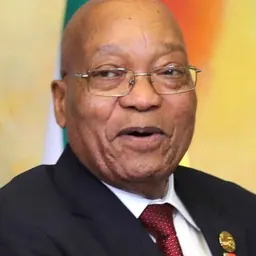

Related people
Same field, nearest in time

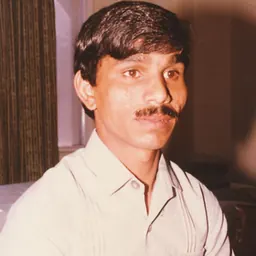

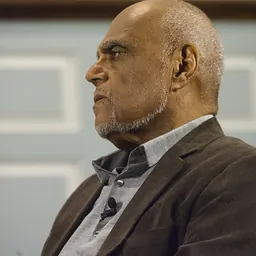

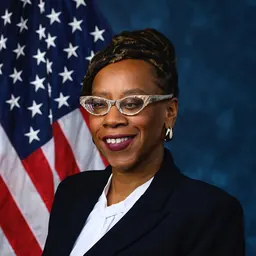
Contemporaries
People whose lives overlapped Jeanette Schoon's


Frequently asked questions
Who was Jeanette Schoon?
South African anti-apartheid activist
When was Jeanette Schoon born?
Jeanette Schoon was born in 1949 in Cape Town.
When did Jeanette Schoon die?
Jeanette Schoon died in 1984.
What was Jeanette Schoon's occupation?
Jeanette Schoon was an activist.
What nationality was Jeanette Schoon?
Jeanette Schoon was South African.
Sources & further reading
Cite this page
APA: Biography.guide. (2026). Jeanette Schoon. https://biography.guide/jeanette-schoon/
MLA: "Jeanette Schoon." Biography.guide, https://biography.guide/jeanette-schoon/.
Chicago: "Jeanette Schoon." Biography.guide. https://biography.guide/jeanette-schoon/.
Data last updated: 2026-09-20 · Spot an error? Report a correction.
Page generated 2026-09-27 05:15 UTC