
About Jean-Yves Daniel-Lesur
Lived 1908 – 2002 (aged 93). Jean-Yves Daniel-Lesur was a French composer, organist, choreographer, music educator, music teacher and musician.
Daniel Jean-Yves Lesur (19 November 1908 – 2 July 2002) was a French organist and composer. He was the son of the composer Alice Lesur.
Biography Born in Paris, he entered the Conservatoire de Paris at age 11, studying solfège with Emile Schwartz, harmony with Jean Gallon, and composition with Georges Caussade. He also took private lessons in piano with Armand Ferté and composition with Charles Tournemire. From 1935 to 1964, he was professor of counterpoint at the Schola Cantorum under director Nestor Lejeune, becoming director himself in 1957.
In 1936, he co-founded the group La Jeune France along with composers Olivier Messiaen (with whom he would remain a lifelong friend), André Jolivet and Yves Baudrier, who were attempting to re-establish a more human and less abstract form of composition. La Jeune France developed from the avant-garde chamber music society La spirale, formed by Jolivet, Messiaen, and Daniel-Lesur the previous year.
That same year he, together with Jean Langlais and Jean-Jacques Grunenwald, gave the first performance of Olivier Messiaen's La Nativité du Seigneur.
Between 1927 and 1937 he seconded Tournemire at the organ of Ste. Clotilde, Paris, and was organist of the Benedictine Abbey of Paris, 1937–44. Daniel-Lesur also served as director of the Opéra National de Paris from 1971 to 1973.
His opera Andrea del Sarto (1968) received the composition prize of the City of Paris in 1969. In 1973, he received the Prix Samuel Rousseau of the Académie des Beaux Arts. In 1982, he was elected member of the Institut de France.
He died in Paris.
Selected compositions
Stage Andrea del Sarto (libretto after Alfred de Musset), opera in 2 acts (1949) Ondine (libretto after Jean Gireaudoux), opera in 3 acts (1981) La Reine morte (libretto after Henry de Montherland), not dated
Orchestral works Suite française (1935) Passacaille (1938) for piano and orchestra Pastorale (1938) for chamber orchestra Variations (1943) for piano and string orchestra Ouverture pour un festival (1951) Concerto da camera (1953) for piano and chamber orchestra Sérénade (1954) for string orchestra Intermezzo (1956; his contribution to Variations sur le nom de Marguerite Long) Symphonie de danses (1958) Symphonie 'd'ombre et de lumière (1974) Nocturne (1974) for oboe and string orchestra Fantaisie concertante (1992) for cello and orchestra
Chamber music Suite (1939) for oboe, clarinet, and bassoon Suite (1940) for string quartet Suite en trio (1943) for violin, viola, cello and piano Suite médiévale (1945) for flute, harp, violin, viola, cello Sextuor (1948) for flute, oboe, violin, viola, cello, harpsichord Élégie (1956) for two guitars Nocturne (1974) for oboe and piano Novelette (1977) for flute and piano Marine (1978) for harp Lamento (1983) for violin and piano Stèle à la mémoire d'un héros (1991) for flute and string quartet
Piano music Soirs (1929) Bagatelle (1934) Pavane (1938) Le Bouquet de Béatrice (1946) for piano 4-hands Pastorale varié (1947) Ballade (1948)
Nocturne (1952) Le Bal (1954) 3 Études (1962) Fantaisie (1962) for 2 pianos L'Armoricaine (1964) Contre-fugue (1974) for 2 pianos Berceuse sur le nom de Schostakovitch (1975) Chanson à danser (1980)
Organ works Scène de la passion (1931) La Vie intérieure (1932) In paradisium (1933) Hymnes (1935) Quatre Hymnes (1939)
Choral works (with poets) Annonciation (Loÿs Masson), cantata for speaker, tenor, mixed chorus and chamber orchestra (1951) Le Cantique des cantiques (biblical) for 12 voices and chorus (1952) Cantique des colonnes (Paul Valéry) for female voices and orchestra (1957) Encore un instant de bonheur (Henry de Montherland) numerous folksong arrangements
Songs (for voice and piano) Les Harmonies intimes (Daniel-Lesur) (1931) La Mort des voiles (Paul Fort) (1931) La Mouette / Les Yeux fermés (Heinrich Heine) (1932) Quatre Lieder (Cécile Sauvage, Heine), several versions (1932–39) Trois Poèmes de Cécile Sauvage (1939) Deux Chansons de l'étoile de Seville (Claude Roy) L'Enfance de l'art (Claude Roy) Chansons cambodgiennes (traditional) (1946) Berceuses à tenir éveillé (René de Obaldia) (1947) Les Amants séparés (Claude Roy) (1950) Dialogues dans la nuit (Claude Roy) for mezzo-soprano, bass, and chamber orchestra (1987) À la lisière du temps / Le Voyage d'automne / Permis de séjour (Claude Roy) (1990)
Le Cantique des cantiques Daniel-Lesur's best-known composition is the a cappella choral work Le Cantique des cantiques, a setting for 12 voices of parts of the Song of Songs, interspersed with Latin verses and New Testament texts. The seventh and final movement, titled "Épithalame", utilizes "the combination of richly harmonised upper voices singing the famous words from Chapter 8 of the Song of Songs in French ("Pose-moi comme un sceau sur ton coeur, comme un sceau sur ton bras. Car l'amour est fort comme la mort') over an ostinato set to Latin words ("Veni sponsa Christi") [which] has very great cumulative power, reaching a mighty twelve-part climax where all the voices sing a succession of Alleluias which initially emerge from the complex texture in a repeated motif coloured by the Lydian mode – an idea which seems to suggest the joyous pealing of bells." (From his obituary; see external links.) The Cantique des cantiques has been recorded by Harry Christophers and The Sixteen, and is frequently performed internationally by such groups as Chanticleer and the Santa Fe Desert Chorale.
Don’t just read it —
keep it.
Full-length biographies made to live with: read them, listen on the way to work, watch them tonight.
- E-book
- Audio
- Video
Instant download · yours to keep · every purchase keeps this site free
Important facts
People in Jean-Yves Daniel-Lesur's life
Named in this biography and alive at the same time
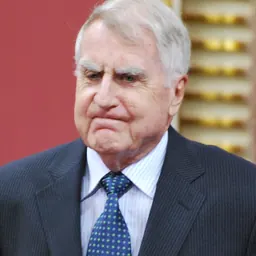


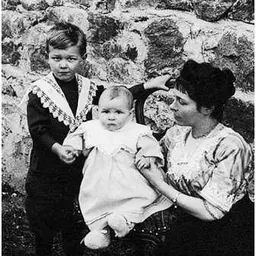
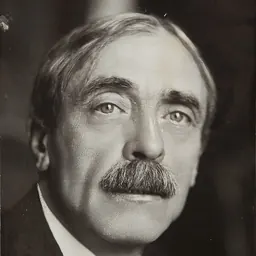

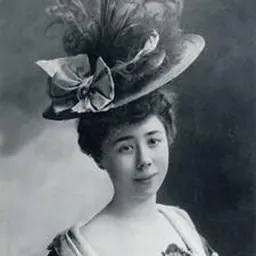
Related people
Same field, nearest in time



Contemporaries
People whose lives overlapped Jean-Yves Daniel-Lesur's

Frequently asked questions
Who was Jean-Yves Daniel-Lesur?
French musician (1908–2002)
When was Jean-Yves Daniel-Lesur born?
Jean-Yves Daniel-Lesur was born on 19 November 1908 in Paris, 16th arrondissement of Paris.
When did Jean-Yves Daniel-Lesur die?
Jean-Yves Daniel-Lesur died on 2 July 2002 in Paris, Puteaux.
What was Jean-Yves Daniel-Lesur's occupation?
Jean-Yves Daniel-Lesur was a composer, organist, choreographer, music educator, music teacher and musician.
What nationality was Jean-Yves Daniel-Lesur?
Jean-Yves Daniel-Lesur was French.
Sources & further reading
· Wikipedia: Jean-Yves Daniel-Lesur
Cite this page
APA: Biography.guide. (2026). Jean-Yves Daniel-Lesur. https://biography.guide/jean-yves-daniel-lesur/
MLA: "Jean-Yves Daniel-Lesur." Biography.guide, https://biography.guide/jean-yves-daniel-lesur/.
Chicago: "Jean-Yves Daniel-Lesur." Biography.guide. https://biography.guide/jean-yves-daniel-lesur/.
Data last updated: 2026-09-20 · Spot an error? Report a correction.
Page generated 2026-09-27 05:33 UTC