
About Jean Titelouze
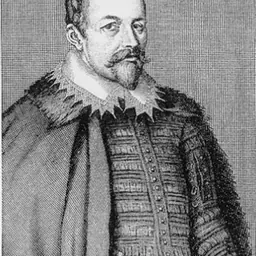
Lived 1563 – 1633 (aged 69–70). Jean Titelouze was a French organist, composer and poet.
The city of Rouen in 1610. Titelouze spent most of his life here, working as organist of the Rouen Cathedral.
Jean (Jehan) Titelouze (c. 1562/63 – 24 October 1633) was a French Catholic priest, composer, poet and organist of the late Renaissance and early Baroque periods. He was a canon and organist at Rouen Cathedral. His style was firmly rooted in the Renaissance vocal tradition and as such, was far removed from the distinctly French style of organ music that developed during the mid-17th century. However, his hymns and Magnificat settings are the earliest known published French organ collections, and he is regarded as the first composer of the French organ school.
Life The Rouen Cathedral, where Titelouze worked from 1588 until his death in 1633.
In a 1930 study, Amédée Gastoué suggested that the surname Titelouze may be of English or Irish origin (more specifically, derived from "Title-House"), but recently this supposition has been disproven, and "Titelouze" is now linked to "de Toulouse". Titelouze was born in Saint-Omer in 1562/3 (his exact date of birth is unknown) and educated there; by 1585, he entered the priesthood and served as organist of the Saint-Omer Cathedral. He moved to Rouen later that year and in 1588, succeeded François Josseline as organist of the Rouen Cathedral. His work was not limited to Rouen: he also acted as organ consultant and helped with the installation and repair of important instruments in various cities.
The second collection, Le Magnificat ou Cantique de la Vierge pour toucher sur l'orgue suivant les huit tons de l'Église, published in 1626, contains eight Magnificat settings in all eight church modes. There are seven versets in each setting, presenting the odd-numbered versets of the canticle, with two settings of Deposuit potentes: Magnificat Quia respexit Et misericordia Deposuit potentes, first setting Deposuit potentes, second setting Suscepit Israel Gloria Patri et Filio
In the preface, Titelouze explains that this structure makes these Magnificat settings usable for the Benedictus. Save for the introductory ones, all of the versets are fugal. Most feature two main points of imitation: the first concludes on the mediant cadence of the mode, and so, Titelouze writes, the organist can shorten any verset during the service by substituting this cadence with one on the final.
Media
Don’t just read it —
keep it.
Full-length biographies made to live with: read them, listen on the way to work, watch them tonight.
- E-book
- Audio
- Video
Instant download · yours to keep · every purchase keeps this site free
Important facts
Related people
Same field, nearest in time


Contemporaries
People whose lives overlapped Jean Titelouze's





Frequently asked questions
Who was Jean Titelouze?
French composer
When was Jean Titelouze born?
Jean Titelouze was born in 1563 in Saint-Omer.
When did Jean Titelouze die?
Jean Titelouze died on 24 October 1633 in Rouen.
What was Jean Titelouze's occupation?
Jean Titelouze was an organist, composer and poet.
What nationality was Jean Titelouze?
Jean Titelouze was French.
Sources & further reading
Cite this page
APA: Biography.guide. (2026). Jean Titelouze. https://biography.guide/jean-titelouze/
MLA: "Jean Titelouze." Biography.guide, https://biography.guide/jean-titelouze/.
Chicago: "Jean Titelouze." Biography.guide. https://biography.guide/jean-titelouze/.
Data last updated: 2026-09-20 · Spot an error? Report a correction.
Page generated 2026-09-27 04:58 UTC