
Jean Marc Ela
Cameroonian sociologist and theologian
About Jean Marc Ela
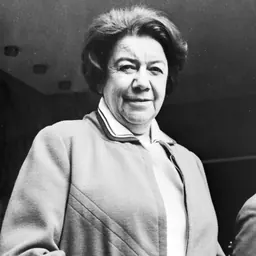
Lived 1936 – 2008 (aged 72). Jean Marc Ela was a Cameroonian sociologist, anthropologist, professeur des universités, catholic priest and catholic theologian.
Jean-Marc Ela (27 September 1936 – 26 December 2008) was a Cameroonian sociologist and theologian. Working variously as a diocesan priest and a professor, Ela was the author of many books on theology, philosophy, and social sciences in Africa. His most famous work, African Cry has been called the "soundest illustration" of liberation theology in sub-Saharan Africa. His works are widely cited as exemplary of sub-Saharan African Christian theology for their focus on contextualisation and their emphasis on community-centered approaches to theology.
Biography Jean-Marc Ela was born on 27 September 1936 in Ebolowa, in Cameroon. The son of a middle-class family, Ela claimed that he first began to think of theology as a discipline that should be concerned with the local needs of believers while he was studying philosophy and theology in France at the University of Strasbourg in the 1960s. He was buried in his hometown of Ebolowa, Cameroon.
Major works Jean-Marc Ela acknowledged the value of the everyday practices of pagan village life.
African Cry and My Faith as an African, Ela's two most famous works, criticize the Catholic Church for holding to a model of faith that ignores the needs of African people, especially those in poor and rural communities. Through an analysis of selected sacraments, missionary structures, and biblical hermeneutics, Ela identified ways in which the Catholic tradition subordinates Africans to a position of dependence vis-a-vis White Europeans. He countered these instances of oppression with opportunities for liberation based on the argument that the Gospel advocates for the restoration of dignity to marginalised people.
According to Ela, the only way to restore dignity to African peoples is to allow them to transform Christian traditions into forms that are familiar and useful to Africans. He argued that the Eucharist should be served with local rather than imported products. He believed that African churches should be self-funded. He also believed that biblical interpretation should be guided by a "shade-tree theology", in which small groups of believers can gather together to interpret the Gospel in the light of their own particular circumstances.
Interspersed between his hard-hitting theological tones, Ela produced several volumes on social sciences in Africa. He was dedicated to opening a conceptual framework to encompass and address the needs of his countrymen. For example, he wrote in 2001 a guide explaining the imperative African researchers have to direct new research to meeting the basic needs of the population and not only to improve industrial production. Similarly, in several books published between 1998 and 2007, he showed the place of Africa in the world of rational science, and the necessity of high quality scientific work. In a book published in 2007, he tried to explain the inseparability of knowledge and power.
Critique The Cameroonian-American theologian David Ngong has criticized three of Ela's weaknesses. First is the "problematic equation of the oppressed with Jesus Christ." Second is his "extreme historicizing of the eschatological hope," arguing that Ela ignored the invisible realities that exist in addition to the tangible. Finally, Ngong states that Ela's theology often resorts to a "calumniation of Western Christianity."
Tribute Jean-Marc Ela was awarded the Grand Prix de la mémoire of the GPLA 2018.
Don’t just read it —
keep it.
Full-length biographies made to live with: read them, listen on the way to work, watch them tonight.
- E-book
- Audio
- Video
Instant download · yours to keep · every purchase keeps this site free
Important facts
People in Jean Marc Ela's life
Named in this biography and alive at the same time

Related people
Same field, nearest in time





Contemporaries
People whose lives overlapped Jean Marc Ela's




Frequently asked questions
Who was Jean Marc Ela?
Cameroonian sociologist and theologian (1936-2008)
When was Jean Marc Ela born?
Jean Marc Ela was born on 27 September 1936 in Ebolowa.
When did Jean Marc Ela die?
Jean Marc Ela died on 26 December 2008 in Vancouver.
What was Jean Marc Ela's occupation?
Jean Marc Ela was a sociologist, anthropologist, professeur des universités, catholic priest and catholic theologian.
What nationality was Jean Marc Ela?
Jean Marc Ela was Cameroonian.
Sources & further reading
Cite this page
APA: Biography.guide. (2026). Jean Marc Ela. https://biography.guide/jean-marc-ela/
MLA: "Jean Marc Ela." Biography.guide, https://biography.guide/jean-marc-ela/.
Chicago: "Jean Marc Ela." Biography.guide. https://biography.guide/jean-marc-ela/.
Data last updated: 2026-09-20 · Spot an error? Report a correction.
Page generated 2026-09-27 05:30 UTC