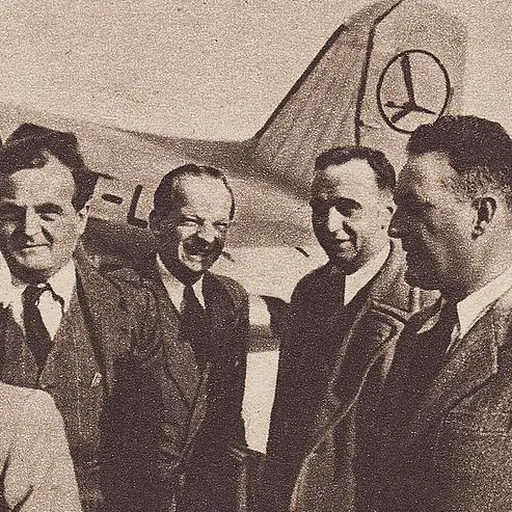
About Jean Grémillon
Lived 1902 – 1959 (aged 57). Jean Grémillon was a French film director, screenwriter and director.
Jean Grémillon (; 3 October 1901 – 25 November 1959) was a French film director.
Biography Grémillon was born in Bayeux and spent his early years in Cerisy-la-Forêt in Normandy. His father was employed by the Ouest railway company. During his school years he developed an interest in music, and although his father wanted him to become an engineer, in 1920 he went to the Schola Cantorum in Paris. There he studied violin and composition under Vincent d'Indy and met other musicians including Ravel and Stravinsky; he was particularly influenced by the music of Debussy. He also found work in cinemas as a violinist with orchestras accompanying silent films, which provided his introduction to the world of the cinema.
He met the cameraman Georges Périnal who introduced him to the film studios and he started working as an editor and writer of intertitles. In 1923 he began making a series of commissioned short documentary films, especially on the subject of work, with Périnal as his regular cameraman. Another encounter which proved significant for Grémillon's career was with the actor and theatre manager Charles Dullin. In 1927 Dullin was interested in producing and starring in a film and had set up his own production company. He asked Grémillon to direct what would be his first full-length feature, Maldone (Misdeal), with a screenplay by the novelist and playwright Alexandre Arnoux. Although the film suffered cuts when it went into distribution and was not a financial success, it was well-received by critics.
The chance to direct a second silent film was offered to Grémillon by Jacques Feyder who had written a script for Gardiens de phare (The Lighthouse Keepers) (1929), a story of a father and son looking after an isolated Brittany lighthouse, based on a melodrama from the Grand Guignol theatre. Working again with members of Dullin's Atélier theatre company, Grémillon brought together a fascination with the documentary detail of the workings of a lighthouse with the poetic effects of photography and editing which were offered by the drama of the location.
Grémillon's first sound films, La Petite Lise (1930) and Daïnah la métisse (1932), were not commercially successful despite their originality, and for the next few years he had to move abroad to find further work. After several films made in Spain, he was given the opportunity of making another French film by the producer Raoul Ploquin, but financed by the German company UFA and filmed principally in their Berlin studios. The film, Gueule d'amour (Lady Killer) (1937) starring Jean Gabin and Mireille Balin, was well received by the public and marked the start of a sequence of Grémillon's most successful films. It was followed by L'Étrange Monsieur Victor (1938), Remorques (Stormy Waters) (1941), Lumière d'été (Summer Light) (1943), and Le ciel est à vous (The Woman Who Dared) (1944). All four of these starred Madeleine Renaud, and the last two were made under the strict censorship conditions of the German Occupation.
Le ciel est à vous was Grémillon's most popular film of this period (though the expense of its production prevented it from being a commercial success) and it came to be seen as a key film of the Occupation years. It was interpreted by some as promoting the moral code favoured by the Vichy government (family, small town values, hard work), while others saw it as a representation of indomitable French spirit which would not be subdued by the temporary political restraints of the Occupation.
In the years after WW2, Grémillon found it increasingly difficult to get funding for his projects, and there were few completed feature films. They included Pattes blanches (White Paws) (1949), the direction of which he took over from its author Jean Anouilh at a few days notice, and L'Amour d'une femme (The Love of a Woman) (1953); both of these films involved location filming on the coast of Brittany in areas familiar to him from his youth. His final completed film was André Masson et les Quatre Éléments (1959), in which he reflected on artistic creativity through the work of the French painter.
In 1944 Grémillon was appointed as president of the Cinémathèque française and one of his projects in that role was the revival of the film societies. After the Liberation he also became president of the film technicians' union, the Syndicat des techniciens. At that time he was also a member of the underground Comité de libération du cinéma français which was planning for the future of the post-war French cinema. In 1958 he served as the president of the Venice Film Festival.
Jean Grémillon died in 1959, at the age of 58, on the same day as the actor Gérard Philipe, and he was buried in the cemetery at Saint-Sulpice-de-Favières in Essonne.
Reputation Histories and dictionaries of cinema have often described Grémillon as an “unlucky” filmmaker (or cinéaste maudit), whose qualities have never achieved the recognition they deserved. Many of his films featured popular stars but few of them managed to be commercially successful.
One of the distinguishing features of Grémillon’s films is his depiction of the details of working lives especially among those who practised crafts or physical trades. This concern for realism in his characters and their environment was mingled with a feeling for visual poetry and a sense of everyday tragedy, and it permeated both his documentaries and his feature films.
Although the reception of some of his most successful films may have been muted by the conditions of the war years, he was nevertheless appreciated by some critics as the best representative of the realist tradition in French cinema during the period 1930-1945, and the equal of his contemporaries such as Clair, Feyder, Renoir, or Carné.
Films directed by Jean Grémillon Fiction films 1928: Maldone, (silent) 1929: Gardiens de phare (The Lighthouse Keepers), (silent) 1930: La Petite Lise (Little Lise) 1931: Daïnah la métisse 1932: Pour un sou d'amour (For One Cent's Worth of Love) 1933: Gonzague (a.k.a. L'Accordeur) 1934: La Dolorosa (Our Lady of Sorrows) 1936: Valse royale 1936: Les Pattes de mouches 1937: ¡Centinela, alerta! (completed by Luis Buñuel) 1937: Gueule d'amour (Lady Killer) 1938: L'Étrange Monsieur Victor (The Strange Monsieur Victor) 1941: Remorques (Stormy Waters) 1943: Lumière d'été (Summer Light) 1944: Le ciel est à vous (The Woman Who Dared) 1949: Pattes blanches (White Paws) 1951: L'Étrange Madame X (The Strange Madame X) 1953: L'Amour d'une femme (The Love of a Woman)
Documentary films Most of Grémillon's documentaries were short films, with the exception of Le 6 juin à l'aube (1945). Those marked with an asterisk * are believed lost.
1923: Chartres 1923: Le Revêtement des routes * 1924: La Fabrication du fil * 1924: Du fil à l'aiguille * 1924: La Bière * 1924: Le Roulement à billes * 1924: Les Parfums * 1924: L'Étirage des ampoules électriques * 1924: La Photogénie mécanique * 1925: L'Éducation professionnelles des conducteurs de tramway * 1925: L'Électrification de la ligne Paris-Vierzon * 1925: L'Auvergne * 1925: La Naissance des cigognes * 1925: Les Acieries de la marine et d'Homecourt * 1926: La Vie des travailleurs italiens en France * 1926: La Croisière de l'Atalante * 1926: Tour au large * 1927: Gratuités * 1928: Bobs * 1932: Le Petit Babouin * 1945: Le 6 juin à l'aube 1949: Les Charmes de l'existence (The Charms of Life) 1951: Les Désastres de la guerre [dir. Pierre Kast; text by Grémillon] 1952: Astrologie, ou le Miroir de la vie 1952: Alchimie 1954: Au cœur de l'Île de France 1955: La Maison aux images 1956: Haute lisse 1959: André Masson et les Quatre Éléments
Don’t just read it —
keep it.
Full-length biographies made to live with: read them, listen on the way to work, watch them tonight.
- E-book
- Audio
- Video
Instant download · yours to keep · every purchase keeps this site free
Important facts
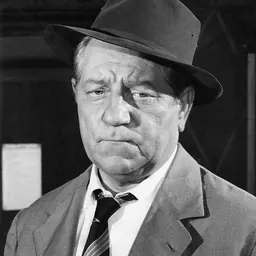
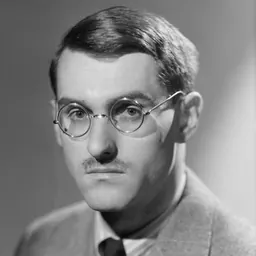
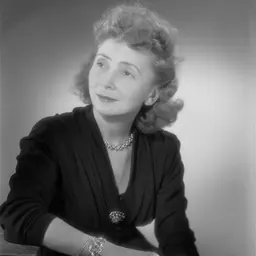
People in Jean Grémillon's life
Named in this biography and alive at the same time





Related people
Same field, nearest in time


Contemporaries
People whose lives overlapped Jean Grémillon's



Frequently asked questions
Who was Jean Grémillon?
French film director (1901-1959)
When was Jean Grémillon born?
Jean Grémillon was born on 3 October 1902 in Bayeux.
When did Jean Grémillon die?
Jean Grémillon died on 25 November 1959 in Paris.
What was Jean Grémillon's occupation?
Jean Grémillon was a film director, screenwriter and director.
What nationality was Jean Grémillon?
Jean Grémillon was French.
Sources & further reading
Cite this page
APA: Biography.guide. (2026). Jean Grémillon. https://biography.guide/jean-gremillon/
MLA: "Jean Grémillon." Biography.guide, https://biography.guide/jean-gremillon/.
Chicago: "Jean Grémillon." Biography.guide. https://biography.guide/jean-gremillon/.
Data last updated: 2026-09-22 · Spot an error? Report a correction.
Portrait: Wikimedia Commons · author & licence
Page generated 2026-09-27 05:02 UTC