
About Jean de Reszke
Lived 1850 – 1925 (aged 75). Jean de Reszke was a Polish, French and Russian opera singer, pianist, singer and tenor.
Jean de Reszke (born Jan Mieczysław Reszke; 14 January 18503 April 1925) was a Polish dramatic tenor and opera star. Reszke came from a wealthy Polish family with classical and operatic musical traditions. His mother gave him his first singing lessons and provided a home that was a recognized music centre. His sister Josephine and younger brother Édouard performed in Western Europe, and Reszke would perform with each of them throughout his career.
He began as a baritone, but after having been trained by Giovanni Sbriglia he found that he was better suited and was most proficient as a tenor. His performance as John the Baptist in Massenet's Hérodiade in Paris in 1883 made him a notable singer. Reszke ranked as the world's leading tenor from that point until his retirement from the stage in 1902.
His mother, Emiljia Ufniarska, first taught him to sing. She was a soprano who had studied under Manuel García and Pauline Viardot, his daughter. He sang with his siblings Josephine and Édouard at a soirée in 1869 and he sang soprano solos as a boy in Warsaw Cathedral.
Becoming a tenor
In January 1874, Reszke made his debut in Venice undertaking the baritone part of Alfonso in a production of Donizetti's La favorite. He performed in other operas as a baritone, such as Figaro in The Barber of Seville and Valentin in Faust. His voice was compared to that of Enrico Caruso. In 1884, composer Jules Massenet and famous baritone Victor Maurel persuaded him to sing the role of John the Baptist in Massenet's Hérodiade. Reluctantly, he obliged and sang the role opposite his sister, Josephine, as Salomé. Despite suffering a nervous breakdown before the performance and having to be physically restrained by his brother, Edouard, and Maurel, his performance was a sensation; turning the then 34 year-old De Reszke into an overnight celebrity.
Expertise
Reszke spoke German, French, Italian, Russian, Polish, and English. He was adept at translating the styles of the different operatic traditions: "From the Italian one learned the legato line and the control that comes from agility, the French school gave charm and sobriety, while the German method taught energy of diction, the violence required in certain dramatic situations and a particular poetic vehemence, or exuberance..."
Queen Victoria Reszke's singing was admired by Queen Victoria, On 24 May 1899, Reszke performed Lohengrin for the Queen's eightieth birthday. After the performance, he was awarded the Royal Victorian Order (R.V.O) cross (fourth class).
Recordings De Reszke made two commercial recordings in 1905 for the Fonotipia label. One of the tomb scene from Gounod's Roméo et Juliette and another of the celebrated aria 'O Souverain o Juge o Père' from Massenet's Le Cid. Unfortunately, he was dissatisfied with the results and prohibited their release. There have been numerous theories of what became of them; some claimed they were destroyed by De Reszke himself on the spot, while others say that there still is some hope that at least one of them survived (one of the more persistent rumors being that a copy of the Roméo record is currently being kept in a vault in an unspecified bank in Paris, but details regarding its veracity are scarce). Either way the recordings are still lost to this day and are considered the 'Holy Grail' of records. While in New York, he also recorded his voice on at least one Bettini cylinder, which is also lost (destroyed in World War I bombings along with an entire Bettini warehouse in France). Also rumored to exist is a private recording made for Queen Alexandra of Denmark, which according to the book 'Jean de Reszke and the Great Days of Opera' by Clara Leiser, is now in the possession of the British Royal Family. At present however, only a couple of Mapleson Cylinders recorded live during a few of his performances at the Metropolitan Opera in 1901 exist. The sound is not optimal and one can only hear a faint 'echo' of his voice, but it is enough to get a rather decent picture of him as an artist (especially in regard to his phrasing). A few of them have been released with other performances recorded by Mapleson on CD by the Symposium label.
Vocal teacher In 1902, after a respiratory illness forced him to retire, and he began teaching singing in Paris. In 1906, he established a vocal academy in Paris (later Webber Douglas Academy of Dramatic Art). He was one of the most highly reputed and well-paid vocal teachers in Europe. The Musical Times stated that he brought the same devotion and skill that made him a successful singer to his role as a teacher.
His pupils came from a variety of countries; most of them came from English-speaking countries. He once said that in gratitude to the success that he found in the United States, many of his students were from America. E. Azalia Hackley, and Esther Mundell. The already well established Austrian tenor Leo Slezak also took lessons from De Reszke in 1908–1909, seeking advice on how to further improve his vocal technique. She was an amateur musician, a linguist and a student of Gounod. She translated Wagner works from German to French for Reszke and his brother. The Reszkes had a son Jean de Reszke Jr. who died during the Battle of Clermont on the French front during World War I.
Throughout his career, Reszke was subject to bouts of flu and painful and anxiety-producing bronchial infections. He left his estates in Poland to his sisters Emilia and Josephine, as well as Édouard's daughters. 1888 – Royal Italian Opera Season (15 May – 21 July) as Vasco da Gama in L'Africaine (2, debut at Covent Garden in this role on 4 June) as Radames in Aida (1) as Riccardo in Un ballo in maschera (1) as Faust in Faust (7, shared) as Raoul in Les Huguenots (4) as Lohengrin in Lohengrin (6) 1889 – Royal Italian Opera Season (18 May – 27 July) as Radames in Aida (3, shared) as Raoul in Les Huguenots (3) as Lohengrin in Lohengrin (6, shared) as Walther von Stolzing in Die Meistersinger (4) as Romeo in Roméo et Juliette (7) 1890 – Royal Italian Opera Season (19 May – 28 July) as Don Josè in Carmen (5) as Phoebus in Esmeralda (3) as Faust in Faust (6, shared) as Lohengrin in Lohengrin (5, shared) as Walther von Stolzing in Die Meistersinger (4) as Jean de Leyden in Le prophète (5) as Romeo in Roméo et Juliette (5) 1891 – Royal Italian Opera Season (6 April – 27 July) as Don Josè in Carmen (7, shared) as Faust in Faust (12, shared) as Raoul in Les Huguenots (8, shared) as Lohengrin in Lohengrin (9, shared) as Walther von Stolzing in Die Meistersinger (2, shared) as Otello in Otello (4) as Jean de Leyden in Le prophète (3) as Romeo in Roméo et Juliette (8) 1892 – Royal Opera Season (16 May – 28 July) as Don Josè in Carmen (2, shared) as Lancelot in Elaine (5) as Lohengrin in Lohengrin (5, shared) as Jean de Leyden in Le prophète (1) as Romeo in Roméo et Juliette (3) 1893 – Royal Opera Season (15 May – 29 July) as Faust in Faust (6, shared) as Raoul in Les Huguenots (2) as Lohengrin in Lohengrin (6, shared) as Walther von Stolzing in Die Meistersinger (2) as Romeo in Roméo et Juliette (7, shared) 1894 – Royal Opera Season (14 May – 30 July) as Radames in Aida (2, shared) as Lancelot in Elaine (2) as Faust in Faust (7, shared) as Lohengrin in Lohengrin (4, shared) as Walther von Stolzing in Die Meistersinger (1) as Romeo in Roméo et Juliette (7) as Werther in Werther (1) 1896 – Royal Opera Season (11 May – 28 July) as Faust in Faust (6) as Lohengrin in Lohengrin (5) as Walther von Stolzing in Die Meistersinger (5) as Romeo in Roméo et Juliette (8) as Tristan in Tristan und Isolde (4) 1897 – Royal Opera Season (10 May – 28 July) as Lohengrin in Lohengrin (7, shared) as Walther von Stolzing in Die Meistersinger (3) as Romeo in Roméo et Juliette (6, shared) as Siegfried in Siegfried (4) as Tristan in Tristan und Isolde (3) 1898 – Royal Opera Season (9 May – 16 July) as Siegfried in Gotterdammerung (3) as Lohengrin in Lohengrin (7, shared) as Walther von Stolzing in Die Meistersinger (4) as Siegfried in Siegfried (3, shared) as Tristan in Tristan und Isolde (4) 1899 – Royal Opera Season (8 May – 24 July) as Faust in Faust (8, shared) as Lohengrin in Lohengrin (6, shared) as Walther von Stolzing in Die Meistersinger (2) as Romeo in Roméo et Juliette (5, shared) as Tristan in Tristan und Isolde (4) 1900 – Royal Opera Season (14 May – 30 July) as Lohengrin in Lohengrin (6, shared) as Walther von Stolzing in Die Meistersinger (2) as Romeo in Roméo et Juliette (5, shared)
Gala and command appearances Gala appearances with Édouard de Reszke at Covent Garden and command performances at Windsor Castle include: 2 July 1889 – Gala in honour of the Shah of Persia: Éduoard as Mephistofele in Act I of Mefistofele and as Mefistofele in Act 4 of Faust Jean as Faust in Act 4 of Faust 8 July 1891 – Visit of the Emperor and Empress of Germany Édouard as Enrico in Act 1 of Lohengrin, as Laurent in Act 4 of Roméo et Juliette and as San Bris in Act 4 of Les Huguenots Jean as Lohengrin in Act 1 of Lohengrin, as Romeo in Act 4 of Roméo et Juliette and as Raoul in Act 4 of Les Huguenots 4 July 1893 – Gala in honour of the marriage of the Duke of York (later George V) and Princess Mary of Teck (later Queen Mary) Édouard as Laurent in Roméo et Juliette Jean as Romeo in Roméo et Juliette 23 June 1897 – 60th Anniversary of Queen Victoria's accession Édouard as Laurent in Act 3 of Roméo et Juliette Jean as Romeo in Act 3 of Roméo et Juliette 27 June 1898 – Command Performance at Windsor Castle (no data on programme) 24 May 1899 – Command Performance at Windsor Castle Édouard as Enrico in Lohengrin Jean as Lohengrin in Lohengrin 16 July 1900 – Command Performance at Windsor Castle Édouard as Mefistofele in Faust
Don’t just read it —
keep it.
Full-length biographies made to live with: read them, listen on the way to work, watch them tonight.
- E-book
- Audio
- Video
Instant download · yours to keep · every purchase keeps this site free
Important facts
People in Jean de Reszke's life
Named in this biography and alive at the same time


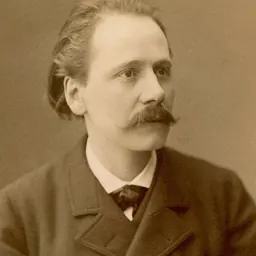
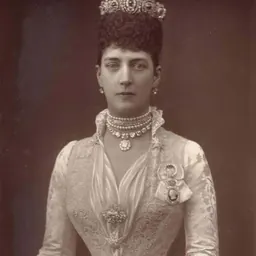

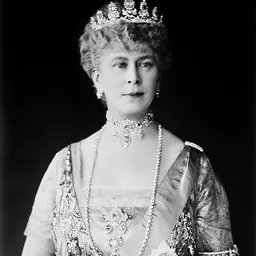
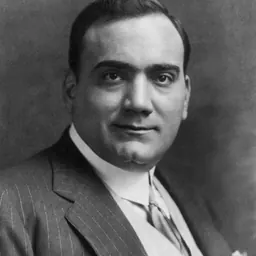
Related people
Same field, nearest in time


Contemporaries
People whose lives overlapped Jean de Reszke's


Frequently asked questions
Who was Jean de Reszke?
Polish singer (1850–1925)
When was Jean de Reszke born?
Jean de Reszke was born on 14 January 1850 in Warsaw.
When did Jean de Reszke die?
Jean de Reszke died on 3 April 1925 in Nice.
What was Jean de Reszke's occupation?
Jean de Reszke was an opera singer, pianist, singer and tenor.
What nationality was Jean de Reszke?
Jean de Reszke was Polish, French and Russian.
Sources & further reading
Cite this page
APA: Biography.guide. (2026). Jean de Reszke. https://biography.guide/jean-de-reszke/
MLA: "Jean de Reszke." Biography.guide, https://biography.guide/jean-de-reszke/.
Chicago: "Jean de Reszke." Biography.guide. https://biography.guide/jean-de-reszke/.
Data last updated: 2026-09-22 · Spot an error? Report a correction.
Page generated 2026-09-27 05:33 UTC