
About Jean de La Forêt
Lived 1500 – 1537. Jean de La Forêt was a French diplomat.
Draft of the 1536 Treaty negotiated between Jean de La Forêt and Ibrahim Pasha, a few days before his assassination, expanding to the whole Ottoman Empire the privileges received in Egypt from the Mamluks before 1518.
Jean de La Forêt, also Jean de La Forest or Jehan de la Forest (died 1537), was the first official French Ambassador to the Ottoman Empire, serving from 1534 to 1537. Antonio Rincon had preceded him as an envoy to the Ottoman Empire from 1530 to 1533. When Jean de La Forêt died in Constantinople in 1537, he was succeeded by Antonio Rincon as official ambassador.
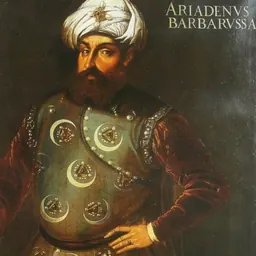
1534 embassy to the Ottoman Empire Jean de La Forêt negotiated with Hayreddin Barbarossa in 1534. Jean de La Forêt departed together with the returning Ottoman embassy to France. On his way to Constantinople, Jean de La Forêt first landed in north Africa, where he offered Hayreddin Barbarossa fifty ships and supplies in exchange for help against Genoa. He also asked Hayreddin to raid the coasts of Spain "with all manner of war". and endeavored to exert French influence on Ottoman affairs.
Jean de La Forêt was directed to seek trading privileges, as well as religious arrangements and military agreements between France and the Ottoman Empire. In exchange, Francis I proposed in his instructions to La Forêt: an ambassador, a perpetual treaty of alliance, trade and a promise "to hold all Christianity quiet, without war undertaken against him... in a universal peace", by weakening Charles V "until he can no more resist".
1536 Franco-Turkish treaty
In February 1536, de la Forêt obtained the signature of a commercial treaty called Capitulations (of which only a draft has been recovered), which was the foundation for French influence in the Ottoman Empire and the Levant until the 19th century. Suleiman seemingly had some doubts about French commitment, expressing: "How can I have trust in him? He has always promised more than he can carry out", referring to the lack of French commitment in 1534–35, when Tunis was finally recaptured by Charles V, but he nevertheless agreed to the alliance upon Francis I's invasion of Piedmont in early 1536.
The 1536 Franco-Turkish treaty allowed the French in the Ottoman Empire to be judged by their own laws, in a French Consular court (a status the Venetians had already been granted), exemption from the usual taxes and dues levied upon non-Muslim foreigners, and trading concessions. By this agreement, French law courts, churches and valuables would all remain extraterritorial in the Ottoman Empire. By 1620, one third of France's foreign trade was done with the Ottoman Empire.
The commercial treaty actually was something of a façade for Jean de La Forêt, whose main role was actually to coordinate military collaboration between France and the Ottoman Empire. In 1537 Hayreddin Barbarossa raided the Italian coast and laid siege to Corfu, although this provided only limited assistance to the French. La Forêt died at Constantinople in the following year. Charles V would turn his efforts against the Ottomans, only to lose the Battle of Preveza on 28 September 1538.
The vizier died soon after the treaty was made in 1536, and there is doubt whether the treaty was formally ratified at this point, since only an archived draft has been found. The treaty of alliance between France and the Ottoman Empire would eventually be ratified later in 1569 through ambassador Claude du Bourg. Suleiman nevertheless respected the content of the agreement, and launched his armies, awaiting for the French offensive. who led the scientific research of the mission, and made an extremely positive account of the Ottoman civilization and its educational, judicial and welfare systems in his De Orbis terrae concordia libri quattuor.
Don’t just read it —
keep it.
Full-length biographies made to live with: read them, listen on the way to work, watch them tonight.
- E-book
- Audio
- Video
Instant download · yours to keep · every purchase keeps this site free
Important facts
People in Jean de La Forêt's life
Named in this biography and alive at the same time
Related people
Same field, nearest in time



Contemporaries
People whose lives overlapped Jean de La Forêt's




Frequently asked questions
Who was Jean de La Forêt?
First French Ambassador to the Ottoman Empire, 1534 to 1537
When was Jean de La Forêt born?
Jean de La Forêt was born in 1500.
When did Jean de La Forêt die?
Jean de La Forêt died in 1537 in Constantinople.
What was Jean de La Forêt's occupation?
Jean de La Forêt was a diplomat.
What nationality was Jean de La Forêt?
Jean de La Forêt was French.
Sources & further reading
Cite this page
APA: Biography.guide. (2026). Jean de La Forêt. https://biography.guide/jean-de-la-foret/
MLA: "Jean de La Forêt." Biography.guide, https://biography.guide/jean-de-la-foret/.
Chicago: "Jean de La Forêt." Biography.guide. https://biography.guide/jean-de-la-foret/.
Data last updated: 2026-09-20 · Spot an error? Report a correction.
Page generated 2026-09-27 05:24 UTC