
About Jean Aurenche
Lived 1903 – 1992 (aged 89). Jean Aurenche was a French screenwriter.
Jean Aurenche (11 September 1904 – 29 September 1992) was a French screenwriter. During his career, he wrote 80 films for directors such as René Clément, Bertrand Tavernier, Marcel Carné, Jean Delannoy and Claude Autant-Lara. He is often associated with the screenwriter Pierre Bost, with whom he had a fertile partnership from 1940 to 1975.
The early years In the 1920s and 1930s, Jean Aurenche was friends with some members of the surrealist groups. His sister Marie-Berthe was the wife of Max Ernst and Max Ernst soon became friend with Jean Aurenche. Later, he even appeared in some film commercials directed by Jean Aurenche (for the "Nicolas" Wine, the "Barbes" stores and so on...). Jean Aurenche was also a close friend of Jean Cocteau who helped him publish several of his short stories in the famous "NRF".
In 1933, Jean Aurenche co-directed two short documentaries with Pierre Charbonnier: Pirates du Rhône and Bracos de Sologne. He later co-wrote the short film Monsieur Cordon with director Pierre Prévert. He soon turned to screenwriting, writing or co-writing several films like L'affaire du Courrier de Lyon (1936) by Maurice Lehmann and Claude Autant-Lara, L'affaire Lafarge or, more famously, Hôtel du Nord that he co-wrote with Marcel Carné and Henri Jeanson.
Aurenchébost In 1942, starting with Douce (directed by Autant-Lara), Aurenche formed a longstanding partnership with Pierre Bost. Their method of writing together initially worked as such : Jean Aurenche wrote the treatment of the screenplay (sometimes based on a novel) and Pierre Bost then expanded this outline and wrote the dialogue. But soon, both of them wrote all the script together without any clear division of the writing. Together, Aurenche & Bost wrote several great successes of this time period, often associated with director Claude Autant-Lara : le Diable au corps (1945), l'Auberge rouge (1951), le Rouge et le Noir (1954), la Traversée de Paris (1956). Meanwhile, Aurenche & Bost started a fertile collaboration with Jean Delannoy, writing for him La Symphonie Pastorale (1947) which won the Palme d'Or at the Cannes Festival of 1947. During this time, they also worked with René Clément (Au-delà des grilles, Jeux interdits and Gervaise). The film Jeux Interdits won the Academy Award on the Best Foreign Film in 1952 and soon became a classic. All these critic and commercial triumph contributed to make of Aurenche one of the most revered screenwriters of his time.
The later years In 1954, future filmmaker François Truffaut wrote an article in Les Cahiers du Cinéma harshly criticizing the work of Jean Aurenche & Pierre Bost. The writing team progressively went out of fashion and barely worked during the 1960s as their favorite collaborators (Autant-Lara, Clément, Delannoy) grew older and retired. In 1970, young filmmaker Bertrand Tavernier (who was a fan of their work), asked them to write with him an adaptation of L'Horloger d'Everton (a Georges Simenon novel) for his first feature film. The film, titled L'Horloger de Saint Paul was a great success, both public and critical. Aurenche and Tavernier quickly became close collaborators, even after Pierre Bost's death in 1975. They went on to write three more films together and even co-directed a documentary about surrealist writer Philippe Soupaul. In 1975, Jean Aurenche and Bertrand Tavernier reworked an outline written in 1951 by Aurenche & Bost. This became the film le Juge et l'Assassin which garnered great reviews when it was released in 1976.
During the 80s, Jean Aurenche kept on working with several directors like Robert Enrico (De Guerre Lasse), Bertrand Tavernier (Coup de Torchon, based on the Jim Thompson novel "Pop. 1280" and L'Étoile du Nord de Pierre Granier-Deferre. He died in 1992 in Bandol. He was 89.
Hommages
Soon after his death, a compilation of interviews with Jean Aurenche was published. Named La Suite à l'écran (To be continued on the screen), this book co-written by French journalist Alain Riou contained insights and information about most of Jean Aurenche's screenplays and collaborators. Later, almost ten years after his death, Bertrand Tavernier co-wrote and directed a film about the lives of Jean Aurenche and Jean Devaivre (a French assistant director) during World War II. The film, named Laissez Passer starred Jacques Gamblin (as Jean Devaivre) and Denis Podalydès (as Jean Aurenche).
In 2010, French cinema channel Cine Cinema broadcast a 52 minutes documentary about the life and work of Jean Aurenche, which is also available as a DVD. Titled Jean Aurenche, écrivain de cinéma, this film was directed by Alexandre Hilaire and Yacine Badday. It features some of Jean Aurenche's collaborators including Jean-Pierre Mocky, Alain Riou and Bertrand Tavernier. It also features Jean Aurenche himself by means of footage of a 1970 interview.
Filmography 1933 : Monsieur Cordon, directed by Pierre Prévert 1937 : Les Dégourdis de la 11e, directed by Christian-Jaque 1937 : Vous n'avez rien à déclarer ?, directed by Léo Joannon 1937 : The Courier of Lyon, directed by Maurice Lehmann and Claude Autant-Lara 1938 : The Lafarge Case, directed by Pierre Chenal : histoire 1938 : The Gutter, directed by Maurice Lehmann : adaptation 1938 : Hôtel du Nord, directed by Marcel Carné : adaptation 1939 : Midnight Tradition 1940 : Love Cavalcade 1940 : The Emigrant, directed by Léo Joannon : histoire 1940 : The Mondesir Heir, directed by Albert Valentin : histoire 1941 : Madame Sans-Gêne, directed by Roger Richebé : adaptation 1942 : Le Moussaillon: 1942 : Romance for Three, directed by Roger Richebé : adaptation 1942 : Chiffon's Wedding, directed by Claude Autant-Lara : adaptation 1942 : No Love Allowed 1942 : Eight Men in a Castle : adaptation 1942 : Love Letters 1943 : L'Épouvantail : histoire 1943 : Domino, directed by Roger Richebé 1943 : Love Story, directed by Claude Autant-Lara 1980 : The Lady of the Camellias, directed by Mauro Bolognini : histoire 1981 : Coup de Torchon, directed by Bertrand Tavernier : scénario 1982 : L'Étoile du Nord, directed by Pierre Granier-Deferre : an adaption of Georges Simenon's novel La Locataire 1987 : Fucking Fernand, directed by Gérard Mordillat 1987 : , directed by Robert Enrico 1989 : La Passion de Bernadette, directed by Jean Delannoy
Don’t just read it —
keep it.
Full-length biographies made to live with: read them, listen on the way to work, watch them tonight.
- E-book
- Audio
- Video
Instant download · yours to keep · every purchase keeps this site free
Important facts
People in Jean Aurenche's life
Named in this biography and alive at the same time
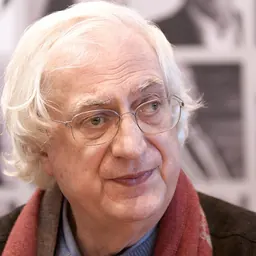

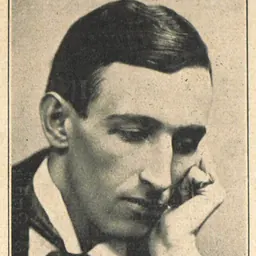
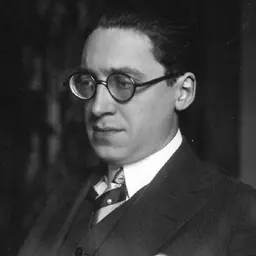




Related people
Same field, nearest in time
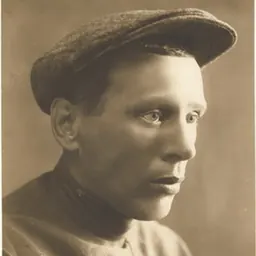

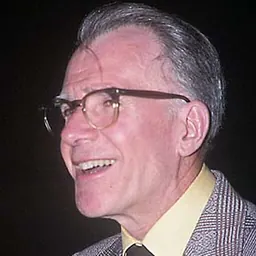
Contemporaries
People whose lives overlapped Jean Aurenche's
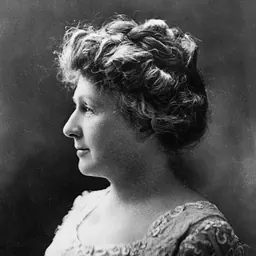
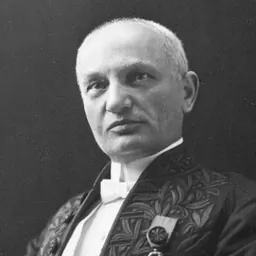
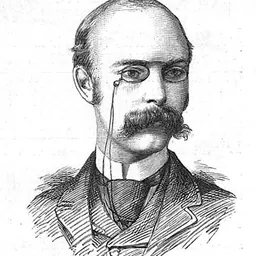
Frequently asked questions
Who was Jean Aurenche?
French screenwriter (1903–1992)
When was Jean Aurenche born?
Jean Aurenche was born on 11 September 1903 in Pierrelatte.
When did Jean Aurenche die?
Jean Aurenche died on 29 September 1992 in Bandol.
What was Jean Aurenche's occupation?
Jean Aurenche was a screenwriter.
What nationality was Jean Aurenche?
Jean Aurenche was French.
Sources & further reading
Cite this page
APA: Biography.guide. (2026). Jean Aurenche. https://biography.guide/jean-aurenche/
MLA: "Jean Aurenche." Biography.guide, https://biography.guide/jean-aurenche/.
Chicago: "Jean Aurenche." Biography.guide. https://biography.guide/jean-aurenche/.
Data last updated: 2026-09-20 · Spot an error? Report a correction.
Page generated 2026-09-27 05:27 UTC