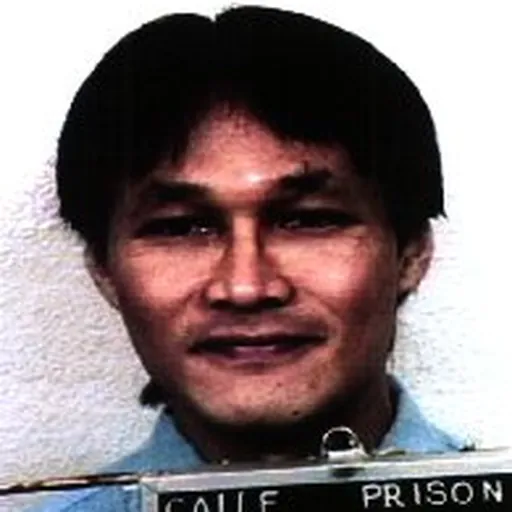
Jaturun Siripongs
Thai national executed in California
About Jaturun Siripongs
Lived 1955 – 1999 (aged 43). Jaturun Siripongs was a Thai.
Jaturun "Jay" Siripongs (, ; October 15, 1955 – February 9, 1999) was a Thai national who was executed by the U.S. state of California for the December 1981 murders of Packovan Wattanaporn and Quach Nguyen during a robbery in Garden Grove, California. Siripongs maintained that he was involved in the robbery but was not the actual killer. Ultimately, he was convicted and sentenced to death in 1983 and was subsequently executed in 1999 at San Quentin State Prison by lethal injection.
Siripongs was both the first Asian and the first foreign-born prisoner to be executed in California since the resumption of executions in 1992.
Early life Siripongs was born in 1955 in northern Thailand, as one of four children. His father was a wealthy timber merchant and opium dealer who divorced Siripongs' mother when he was an infant. Due to their mother's poverty, Siripongs and his sister were sent to live with an uncle, who ran a brothel out of his home.
While still in Thailand, Siripongs was convicted twice of robbery.
By 1981, Siripongs had taken residence in Hawthorne, California, become employed as an optical grinder and polisher in Irvine, is assumed to have arrived for his shift around noon.
On December 17, Siripongs returned to work, this time claiming that the cuts on his hands were from a physical struggle with Noon Vecharungspri, saying she had attempted suicide with a knife, which she later denied. Separately, Siripongs called Petsuksomvilai from jail, telling him that he was arrested for the murders in Garden Grove, but denying involvement. He also denied that the jewelry given to Petsuksomvilai was stolen, instead instructing him to contact Noon, claiming she knew where to find Sang and return the jewelry. Petsuksomvilai called Noon, but she said that she knew no one named Sang. convicted Siripongs of burglary, robbery, and two counts of first-degree murder following a one-month trial.
Siripongs admitted that he took part in the robbery but always claimed the murders were committed by an accomplice, who had inflicted Siripongs' hand injuries when he tried to stop the accomplice. His original attorney, James Spellman had not provided evidence for the claim during the original trial In an affidavit during his appeals process, professor of anthropology and Thai culture Herbert Phillips wrote that Siripongs' silence was additionally tied to cultural beliefs in face and the idea that Siripongs had lost his soul, which he could only regain in after death by facing punishment for his participation in the robbery. The court rejected this explanation, stating that Siripongs had adopted "Americanized" values and was no longer a practicing Buddhist.
His defense attorneys suggested that the accomplice was an unidentified man suspected of murder in Thailand. As part of Siripongs' final appeals before his execution in February 1999,
Throughout his incarceration, Siripongs was considered a model inmate, noted for his devotion to Buddhist traditions and artistic pursuits. By the time of his execution, he had acknowledged guilt for his actions, but still insisted an accomplice had committed the actual murders. Shortly before his execution, 22 paintings donated by Siripongs were displayed at the YWCA Building in Oakland, as part of the Visions of Life: Art Out of Death Row exhibit. Siripongs believed in reincarnation, and requested to be cremated to have his ashes scattered at sea, Shortly before his first scheduled execution date, Thailand offered to take custody of Siripongs and have him serve life in prison in his homecountry.
Execution
Appeals process Several appeals were made to prevent the execution, including by Siripongs' sister, Pope John Paul II, Ambassador of Thailand to the United States Nitya Pibulsonggram and former San Quentin Prison warden Daniel Vasquez, the latter of whom, despite attempting to spare Siripongs life, was a supporter of capital punishment. The two jurors, Sylvia Twomey and Sandra Ferguson, provided signed statements claiming that the jury all had doubts that Siripongs acted alone, and some only voted in favor of the death penalty because they did not want "an immigrant wrongfully taxing the American system" if he served a life sentence instead. Twomey also claimed that she felt pressured to provide a quick sentencing because her boss was reluctant to keep her on paid leave. An appeal for clemency to Governor Pete Wilson was denied. but six hours before the execution, US District Judge Maxine M. Chesney blocked the execution. By this point, he had already eaten a last meal of sliced papaya, grapes, bitter melon soup, an assortment of dim sum, including pork buns, strawberry sherbet, and six cans of Pepsi. Siripongs was described as appearing visibly happy while being escorted back to death row, with his attorney Linda Schilling stating that her client was "thankful and grateful to be alive". Siripongs appeared before the federal judge on December 4, but an extension to his stay of execution was denied. On December 14, 1998, an Orange County Superior Court Judge signed a new execution order for Siripongs, setting an execution date for February 9, 1999.
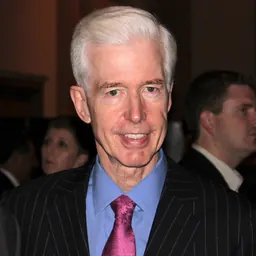
Newly appointed Governor Gray Davis denied Siripongs clemency and rejected the Thai government's offer to take Siripongs back. He stated "Model behavior cannot bring back the lives of the two innocent murder victims." Davis cited the support of the punishment by former Orange County deputy district attorney Jim Tanizaki, who handled the murder case, and Pat Wattanaporn's firstborn children, Vitoon and Vipa Mary Harisdangkul, who stood in conflict with their stepfather and half-brother. A final appeal was denied on February 4, 1999.
Death On February 9, 1999, Siripongs was executed by lethal injection. His last meal consisted of two cans of Lucky Arctic iced tea and two cups of Mission Pride canned peaches. He had no last words. The execution began at 12:04 a.m., with Siripongs pronounced dead at 12:19 a.m. Outside San Quentin State Prison on the night of his execution, anti-death penalty advocates clashed with death penalty supporters. Punches were thrown, causing Marin County police to separate the two groups.
Don’t just read it —
keep it.
Full-length biographies made to live with: read them, listen on the way to work, watch them tonight.
- E-book
- Audio
- Video
Instant download · yours to keep · every purchase keeps this site free
Important facts
People in Jaturun Siripongs's life
Named in this biography and alive at the same time






Contemporaries
People whose lives overlapped Jaturun Siripongs's

Frequently asked questions
Who was Jaturun Siripongs?
Thai national executed in California (1955–1999)
When was Jaturun Siripongs born?
Jaturun Siripongs was born on 15 October 1955 in Thailand.
When did Jaturun Siripongs die?
Jaturun Siripongs died on 9 February 1999 in San Quentin State Prison, San Quentin, California.
What nationality was Jaturun Siripongs?
Jaturun Siripongs was Thai.
Sources & further reading
· Wikipedia: Jaturun Siripongs
Cite this page
APA: Biography.guide. (2026). Jaturun Siripongs. https://biography.guide/jaturun-siripongs/
MLA: "Jaturun Siripongs." Biography.guide, https://biography.guide/jaturun-siripongs/.
Chicago: "Jaturun Siripongs." Biography.guide. https://biography.guide/jaturun-siripongs/.
Data last updated: 2026-09-22 · Spot an error? Report a correction.
Portrait: Wikimedia Commons · author & licence
Page generated 2026-09-27 05:04 UTC