
About Jassim bin Mohammed bin Thani
Lived 1825 – 1913 (aged 87–88). Jassim bin Mohammed bin Thani was a politician.
Jassim bin Mohammed Al Thani (; also known as "The Founder" ; – 17 July 1913), was the founder of the State of Qatar.
Early life Jassim bin Mohammed Al Thani was born around 1825. Raised in Fuwayrit, Qatar, He also funded the printing of many Islamic texts. For instance, in 1892, he provided financing to print 100 copies of Mahmud al-Alusi's book Fathul Mannan: Completion of Laying the Foundation and Response to Brothers Reconciliation and then donated those copies to Muslim academics and students. He also wrote poetry, some of which was the inspiration for a mural by Fatma Al Sharshani.
Battle of Mesaimeer
Jassim bin Mohammed played a significant role in the Battle of Mesaimeer, an armed conflict that occurred in Qatar from 2 to 4 June, 1851. The battle pitted Qatari forces, led by Mohammed bin Thani and Jassim, against the army of Faisal bin Turki, Imam of the Emirate of Nejd, during his attempt at invading Bahrain by way of Qatar. Bahraini forces under Ali bin Khalifa, though nominally allied with Qatar, remained largely uninvolved in the actual fighting and later retreated.
On 3 June –which saw the most intense fighting– Jassim led the Qatari forces into battle and launched a decisive attack against Faisal's army who was encamped in Mesaimeer. The engagement involved both cavalry and infantry, with Jassim reportedly demonstrating considerable personal bravery. According to local accounts, he engaged in single combat with one of Faisal's chief lieutenants, Fares Al Otaibi, ultimately defeating him. Faisal's forces reportedly suffered another defeat on 4 June, forcing them to retreat to their camp. After negotiations between the Wahhabis and Bahrainis the next month, Faisal bin Turki agreed to return dominion over Qatar to Bahrain in exchange for an annual zakat to be paid by Ali bin Khalifa.
Many years after the battle, Jassim wrote a poem commemorating the battle:
Qatari–Bahraini War
In 1867, Bahrain launched a war against Qatar following the "Al Wakrah Incident". In the preceding incident, the Bahraini representative in Qatar confiscated property from members of the Na'im tribe. When the tribesmen protested, the agent had them arrested and imprisoned. The tribal elders appealed to Jassim bin Mohammed Al Thani for assistance, recognizing his growing influence and reputation for justice. Jassim mobilized a general levy of Qatari forces and marched on Al Wakrah. This action resulted in the expulsion of the Bahraini deputy amir, Ahmed bin Mohammed Al Khalifa, who fled by sea to northern Qatar. The Al Khalifa then lured Jassim to visit Bahrain, assuring him that no ill will was harbored towards him. However, upon his arrival, he was imprisoned. Following this, Muhammad bin Khalifa assembled a naval fleet to raid Qatar, sparking the war.
Bahrain succeeded in gaining support from Abu Dhabi, as Doha and Al Wakrah have long been harbors of refuge for Omani seceders, to launch attacks on major Qatari cities in what became known as the Qatari–Bahraini War, causing significant damage. In retaliation, Qatar attacked Bahrain in 1868 in what was known as the Battle of Al Damsah, resulting in the deaths of a thousand men and the sinking of sixty ships. The aftermath of the Battle of Damsah saw the Qatari forces execute a strategic withdrawal, prompting a pursuit by Bahraini troops to the settlement of Al Wakrah. At this location, the Qatari contingent mounted a defense, successfully encircling the Bahraini forces and capturing two of their commanders. The engagement concluded with a negotiated exchange of prisoners, following which Jassim bin Mohammed returned to his seat of power in Doha. Jassim wrote poems about the events leading to his imprisonment.
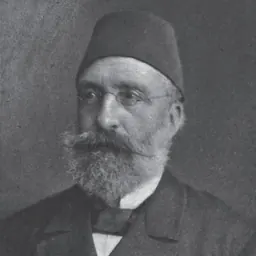
Conflicts with the Ottoman Empire In April 1871, the expedition sent by Midhat Pasha, the Ottoman governor of Baghdad, to Eastern Arabia arrived. In an attempt to secure a landing for Ottoman troops, the Ottomans sent an envoy bearing an Ottoman flag to Sheikh Jassim. He accepted and flew the flag, and by December of that year had authorized the Ottomans to send military equipment and 100 troops to Al Bidda. In January 1872, Qatar was formally incorporated into the Ottoman Empire as a province in Najd with Sheikh Jassim being appointed its kaymakam (sub-governor).
Sheikh Jassim took power on 18 December 1878. It was also the inception of the modern State of Qatar, achieved as a result of Sheikh Jassim's efforts that led to gaining full recognition by both powers of Qatar's independence. Al Thani fell out of favor with the Ottomans after they received complaints from Qataris regarding his oppressions from 1885 to 1886. In a further blow to relations, the Ottomans supported the Ottoman subject Mohammed bin Abdul Wahab who attempted to supplant Al Thani as kaymakam of Qatar in 1888.
Sheikh Jassim soon became a leading figure in the opposition against the Ottoman Empire's attempts to increase its influence in Qatar through its appointment of administrative personnel in Zubarah, Doha, Al Wakrah and Khawr al Udayd, establishment of a customs office and reinforcement of the Ottoman garrison. In early 1892, he resigned as kaymakam of Qatar and stopped paying taxes to the Ottoman Empire in August of that year.
Conflicts with the British Empire Aside from being opposed to the Ottoman Empire's influence, Sheikh Jassim was also opposed to similar pressures from the British Empire. In 1882, in addition to closing their shops, he expelled British Indian pearl traders from Doha. He renounced his jurisdiction of Doha the same year, and members of the Bani Hajer tribe attacked the pearl traders shortly after, resulting in the merchants' withdrawal from the country and the forfeiting of their profits during that period.
At the request of Sheikh Jassim, several members of the Al Bin Ali, an Utub tribe, relocated from Bahrain to Zubarah in 1895 after renouncing their allegiance to the Bahraini emir. The Bahraini emir, fearful that Sheikh Jassim was preparing to launch an invasion, issued a warning to him and informed the political resident in Bahrain of the dispute. Upon being made aware of the proceedings, the British requested the Ottomans, who had been acting in concert with Sheikh Jassim, to abort the settlement. Much to the indignation of the Ottomans, the British sent a naval ship to Zubarah shortly after and seized seven of the Al Bin Ali's boats after the tribe's leader refused to comply with their directive. The Ottoman governor of Zubarah, under the belief that the British were infringing on Ottoman dominion, relayed the events to the Ottoman Porte, who began assembling a large army near Qatif. Sheikh Jassim also congregated a large number of boats near the coast. Subsequently, the governor of Zubarah declared Bahrain as Ottoman territory and threatened that the Porte would provide military support to Qatari tribes who were preparing to launch a naval invasion. This invoked a harsh reprisal from Britain, who, after issuing a written notice, opened fire on Zubarah's port, destroying 44 dhows. The incursion and subsequent Ottoman retreat prompted Sheikh Jassim and his army to surrender on unfavorable terms, in which he was instructed to hoist the Trucial flag at Zubarah. He was also ordered to pay 30,000 rupees.
Conflicts with Abu Dhabi
During Jassim bin Mohammed Al Thani's rule, Qatar experienced significant tensions with the neighboring Emirate of Abu Dhabi, rooted in long-standing territorial disputes and tribal rivalries along their shared border and exacerbated by the complex interplay of Ottoman and British imperial interests in the Gulf region.
Throughout the 1880s, a series of raids and counter-raids escalated tensions between Qatar and Abu Dhabi, starting with the Baynunah, Suwaihan and Al-Marsaf battles in 1881. In 1887, Jassim led an expedition into Khor Al Adaid in southern Qatar, accompanied by Ottoman troops, to assert his claim over the disputed territory. This action prompted strong British diplomatic protests and threats of military intervention from the British Political Resident, Edward Ross.
Hostilities intensified in 1888, following a series of incidents involving tribal defections and retaliatory raids. In March 1888, Jassim launched a substantial offensive against Abu Dhabi territory, resulting in significant material losses for Abu Dhabi, including the destruction of 20 villages and the capture of livestock and inhabitants.
These events led to the Battle of Khannour in January 1889. Jassim assembled a force of between 500 and 1,000 men, supported by limited Ottoman assistance. The Qatari forces advanced into Abu Dhabi territory, capturing the strategic Khannour Fort after a twenty-day siege. Following this victory, Qatari forces conducted extensive raids across Abu Dhabi territory, reaching as far as Al Ain and Al Buraimi.
The battle and subsequent raids had significant implications for the regional balance of power. Although exact casualty figures are disputed, reports suggest that over 500 men from Abu Dhabi's forces were killed.
The aftermath of the Battle of Khannour led to further skirmishes and diplomatic maneuvering between Qatar and Abu Dhabi. In April 1889, Sheikh Zayed bin Khalifa Al Nahyan of Abu Dhabi, assisted by the rulers of Dubai and Muscat and Oman, launched a retaliatory offensive along the Qatari Peninsula and Al-Ahsa, but withdrew after warnings from Ottoman representatives in Qatar. The conflict was eventually resolved in 1893 through an agreement jointly brokered by the British and Ottomans.
Battle of Al Wajbah
In October 1892, an Ottoman army comprising approximately 200 men led by the governor of Basra, Mehmed Hafiz Pasha, was sent to Qatar in response to Sheikh Jassim's refusal to yield to the demands made by the Ottomans, including refusal to pay tax. They arrived in February 1893, with further reinforcements en route from Kuwait. Sheikh Jassim, fearing that he would face death or imprisonment, fled first to Al Daayen, and then to Al Wajbah Fort ( west of Doha) where he was accompanied by several Qatari tribes.
Mehmed sent a letter to Sheikh Jassim demanding that he disband his troops and pledge loyalty to the Ottomans. Sheikh Jassim remained adamant in his refusal to comply with Ottoman authority, and refused to meet with Mehmed himself on the basis of ill health. Instead, he appointed his brother, Ahmed bin Mohammed Al Thani, as his emissary. In March, after a month of back-and-forth parleying, Mehmed lost patience and imprisoned Ahmed and between 13 and 16 prominent Qatari tribal leaders on the Ottoman corvette Merrikh.
He died on the afternoon of 17 July 1913 and was buried in Lusail, a village north of Doha, which is found in the municipality of Al Daayen.
Children
He had a total of 19 sons.
No. Name Position Year of birth Year of death 1 Fahad bin Jassim Al Thani I None Unknown Died whilst young 2 Khalifa bin Jassim Al Thani None 1851 1931 3 Thani bin Jassim Al Thani Sheikh of Al Gharrafa 1856 1943 4 Abdulrahman bin Jassim Al Thani Sheikh of Al Wakrah 1871 1930 5 Abdullah bin Jassim bin Mohammed Al Thani Former Sheikh of Al Rayyan, Ruler of Qatar (1914–1940, 1948–1949) 1880 1957 6 Ali bin Jassim Al Thani I None Unknown Died whilst young 7 Mohammed bin Jassim bin Mohammed Al Thani Sheikh of Umm Salal Mohammed 1881 1971 8 Ghanim bin Jassim Al Thani Unknown Unknown Unknown 9 Ali bin Jassim Al Thani II Sheikh of Umm Salal Ali 1893 1972 10 Fahad bin Jassim Al Thani II None Unknown Died whilst young 11 Fahad bin Jassim Al Thani III Sheikh of Al Kheesa, Lusail, Rumeilah and Adba 1895 12 Abdulaziz bin Jassim Al Thani Sheikh of Al Markhiya 1896 1985 13 Salman bin Jassim Al Thani None Unknown Died while he was born 14 Idris bin Jassim Al Thani None Unknown Died while he was born 15 Mubarak bin Jassim Al Thani None Unknown Died while he was born 16 Salman bin Jassim Al Thani II Sheikh of Dukhan 1899 1984 17 Nasser bin Jassim Al Thani Sheikh of Nasiriya Unknown 1978 18 Sultan bin Jassim Al Thani Sheikh of Umm Al Amad Unknown 1976 19 Ahmed bin Jassim Al Thani Sheikh of Al Khor Unknown 1995
Don’t just read it —
keep it.
Full-length biographies made to live with: read them, listen on the way to work, watch them tonight.
- E-book
- Audio
- Video
Instant download · yours to keep · every purchase keeps this site free
Important facts
Family & relationships
People in Jassim bin Mohammed bin Thani's life
Named in this biography and alive at the same time



Related people
Same field, nearest in time





Contemporaries
People whose lives overlapped Jassim bin Mohammed bin Thani's




Frequently asked questions
Who was Jassim bin Mohammed bin Thani?
Founder of the modern Qatar (1825–1913)
When was Jassim bin Mohammed bin Thani born?
Jassim bin Mohammed bin Thani was born in 1825 in Doha.
When did Jassim bin Mohammed bin Thani die?
Jassim bin Mohammed bin Thani died on 17 July 1913 in Lusail.
What was Jassim bin Mohammed bin Thani's occupation?
Jassim bin Mohammed bin Thani was a politician.
What nationality was Jassim bin Mohammed bin Thani?
Jassim bin Mohammed bin Thani's recorded nationality: Qatar.
Sources & further reading
· Wikipedia: Jassim bin Mohammed bin Thani
· DBpedia: Jassim bin Mohammed Al Thani
Cite this page
APA: Biography.guide. (2026). Jassim bin Mohammed bin Thani. https://biography.guide/jassim-bin-mohammed-bin-thani/
MLA: "Jassim bin Mohammed bin Thani." Biography.guide, https://biography.guide/jassim-bin-mohammed-bin-thani/.
Chicago: "Jassim bin Mohammed bin Thani." Biography.guide. https://biography.guide/jassim-bin-mohammed-bin-thani/.
Data last updated: 2026-09-26 · Spot an error? Report a correction.
Page generated 2026-09-27 05:13 UTC