
About Janet Scudder
Lived 1869 – 1940 (aged 70). Janet Scudder was an American sculptor, suffragist, writer, artist and painter.
alt= Brookgreen Gardens - sculpture garden: Seated Faun by Janet Scudder, 1924. Signed on left of base Brookgreen Gardens - sculpture garden: Seated Faun by Janet Scudder, 1924. Signed on left of base
Janet (October 27, 1869 – June 9, 1940), born Netta Deweze Frazee Scudder, was an American sculptor and painter from Terre Haute, Indiana, who is best known for her memorial sculptures, bas-relief portraiture, and portrait medallions, as well as her garden sculptures and fountains. Her first major commission was the design for the seal of the New York Bar Association around 1896. Scudder's Frog Fountain (1901) led to the series of sculptures and fountains for which she is best known. Later commissions included a Congressional Gold Medal honoring Domício da Gama (Brazil's ambassador to the United States) and a commemorative medal for Indiana's centennial in 1916. Scudder also displayed her work at numerous national and international exhibitions in the United States and in Europe from the late 1890s to the late 1930s. Scudder's autobiography, Modeling My Life, was published in 1925.
Scudder received art training at the Art Academy of Cincinnati in 1887–89 and 1890–91 and the Art Institute of Chicago in 1891–92. In addition, she worked as an assistant to Lorado Taft during preparations for the World's Columbian Exposition in Chicago, in 1892–93, and with Frederick W. MacMonnies in Paris, France in 1894–96, while continuing her art studies at the Académie Vitti and the Académie Colarossi. Scudder was a member of New York State Woman Suffrage Association, the art committee of the National American Woman Suffrage Association, and in 1920, was elected an associate of the National Academy of Design. Scudder was named a Chevalier of the French Legion of Honor in 1925 for her relief work as a Red Cross volunteer in France during World War I.
Scudder was the recipient of several awards and prizes for her artwork, including a Bronze Medal, World's Columbian Exposition, 1893; a Bronze Medal, Louisiana Purchase Exposition, 1904; a Silver Medal, Panama–Pacific International Exposition, 1915; and a Silver Medal, International Exposition, 1937, among others. Her work is represented in the collections of the Musée d'Orsay in the Musée d'Art Moderne de la Ville de Paris in France, and in the United States at the Library of Congress, the Metropolitan Museum of Art, the Art Institute of Chicago, the Peabody Institute, Brookgreen Gardens, the Huntington Library, Art Gallery and Botanical Gardens, the Indianapolis Museum of Art; the Indiana State Museum, the Indiana Historical Society, the Swope Art Museum, and the Richmond Art Museum.
Early life and education Netta Deweze Frazee Scudder was born on October 27, 1869, in Terre Haute, Indiana, to Mary (Sparks) and William Hollingshead Scudder. "Nettie" as she was called by her family was the fifth of seven children and had a childhood marred by tragedy. Her father was a confectioner who was active in community affairs. Her mother died at the age of thirty-eight, when "Nettie" Scudder was five years old. Four of Scudder's siblings died before they reached adulthood. Scudder's father, a blind grandmother, and Hannah Hussey (the family maid, cook, and housekeeper) raised the surviving children. Her father later married a woman whom Scudder disliked.
Scudder enjoyed drawing as a child and took Saturday art classes at Rose Polytechnic Institute of Technology (present-day Rose-Hulman Institute of Technology) under the direction of Professor William Ames.
In 1888–89, Scudder returned home to Terre Haute, where the family's hardships continued after the death of one of her brothers, the failure of her father's business, and his death in 1888. To help with household expenses, twenty-year-old Scudder taught woodcarving at a local school, Coates College for Women. Scudder's oldest brother, who was living in Chicago, paid for her return to Cincinnati in 1890 so that she could complete her studies at the academy. In 1891, Scudder moved to Chicago to live with her brother and his family while she attended classes at the Art Institute of Chicago under the direction of John Vanderpoel and Frederick Freer.
Career Early years as a sculptor After her move to Chicago in 1891, Scudder intended to earn a living as a wood carver and was briefly employed in a furniture factory that produced architectural decorations. (Scudder was one of a group of women sculptors and assistants working for Taft who were nicknamed the White Rabbits. For her work at the exposition, Scudder won a bronze medal, as well as US$1,000 from the citizens of Terre Haute, who expected to display her Nymph sculpture at the city's library. Scudder abruptly left MacMonnies's Paris studio in 1896, after a colleague gave her the inaccurate impression that he disapproved of her work. She returned to the United States and tried unsuccessfully to find work as a sculptor in Augustus Saint-Gaudens's studio in New York City.
First major commission Through her friendship with fellow art student Matilda Auchincloss Brownell, whom she met during her trip home from France, and Brownell's father, Silas B. Brownell, the secretary of the New York Bar Association from 1878 to 1916, Scudder secured her first major commission in 1894. The US$750 she received to design a seal for the New York Bar Association provided her with the funds move to a better location in the city. The project also led to opportunities for steady work making plaques, portrait medallions, architectural ornamentation, and funerary urns, as well as sculpting. Scudder was especially adept at bas-relief portraiture, which became a specialty.
Frog Fountain Frog Fountain. Bronze, 1901. In the collection of the Metropolitan Museum of Art
After her visit to Italy, Scudder returned to Paris in 1900 and began making amusing sculptures and fountains featuring lively children, which she called her "water babies." Beginning with Frog Fountain (1901), a figure of a young boy looking down upon frogs, Scudder launched her career as a prolific and successful maker of ornamental garden fountains and sculptures. Scudder brought Frog Fountain to New York City, where architect Stanford White bought a bronzed cast of it for his estate on Long Island. One of the other bronze versions of Frog Fountain made for a garden in the eastern United States was presented to the Woman's Department Club of Indianapolis, Indiana, in 1928. When the group's clubhouse was sold in 1964, the sculpture was donated to the Indianapolis Museum of Art. Two other bronze versions are on the grounds of private residences in Stonington, Connecticut, and Bar Harbor, Maine, but the original plaster of Frog Fountain has been destroyed. Scudder also received a commission from the Indiana Historical Commission to design a commemorative medal for Indiana's centennial in 1916 (the one hundredth anniversary of its admittance as the nineteenth state in the Union).
Exhibitions During the early twentieth century, the height of her career, Scudder's works were exhibited in numerous public museums and at private galleries. Her first solo art show was held in 1913 at Theodore B. Starr galleries in New York City. She also exhibited at the Hoosier Salon in Indiana in 1926, 1927, 1933, and 1934; the International Exposition (Paris), 1937; and at the 1939 New York World's Fair. Her work was also part of the sculpture event in the art competition at the 1928 Summer Olympics.
Other interests Scudder was a feminist and women's suffrage advocate who frequently marched in parades and demonstrations involved with women's issues. She became involved in women's suffrage movement in New York in 1915 and was a member of New York State Woman Suffrage Association. She was also a member of the art committee of the National American Women Suffrage Association.
During World War I, Scudder was active in relief work in France as well as the United States.
Scudder was named a Chevalier (knight) of the French Legion of Honor in 1925 for her wartime service to France.
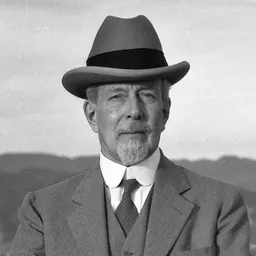
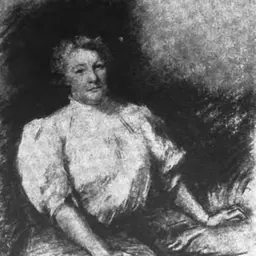
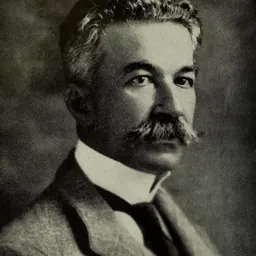
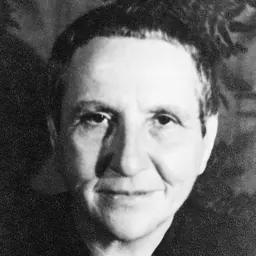
Personal life A frequent traveler between New York and France, Scudder maintained art studios in New York City and in Paris, but preferred to live in Paris where her social circle grew to include Gertrude Stein, Alice B. Toklas, Mildred Aldrich, and Eva Mudocci. After American sculptor Malvina Hoffman arrived in Paris around 1910, she worked for a time as Scudder's studio assistant.
In 1913 Scudder purchased a home at Ville d'Avray on the outskirts of Paris and for several years made it her primary residence. Author Marion Cothren was Scudder's partner in Paris and New York during the final years of her life.
Later years By the 1920s, Scudder's sculptural forms became more "reserved," "rigid," and "stylized," in contrast to the "active, dynamic composition" of her earlier and best-known work. 1898, Honorable Mention, Sun Dial Competition
Public art collections Scudder's work is represented in the collections of the Library of Congress, Washington, D.C.; the Metropolitan Museum of Art, New York; the Art Institute of Chicago, the Peabody Institute, Baltimore, Maryland; Brookgreen Gardens, Murrells Inlet, South Carolina; the Huntington Library, Art Gallery and Botanical Gardens, San Marino, California; the Indianapolis Museum of Art; the Indiana State Museum and the Indiana Historical Society, Indianapolis; Swope Art Museum, Terre Haute, Indiana; the Richmond Art Museum, Richmond, Indiana; the Musée d'Art Moderne de la Ville de Paris (transferred from Musée du Luxembourg), Paris; and the Musée d'Orsay, Paris.
Don’t just read it —
keep it.
Full-length biographies made to live with: read them, listen on the way to work, watch them tonight.
- E-book
- Audio
- Video
Instant download · yours to keep · every purchase keeps this site free
Important facts
People in Janet Scudder's life
Named in this biography and alive at the same time


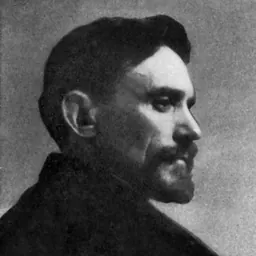

Related people
Same field, nearest in time
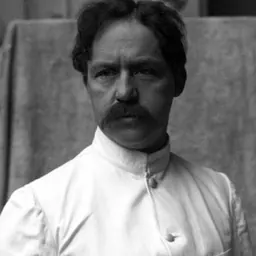

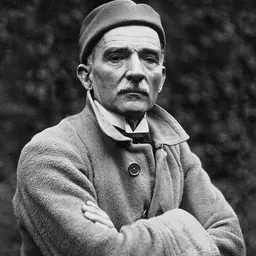
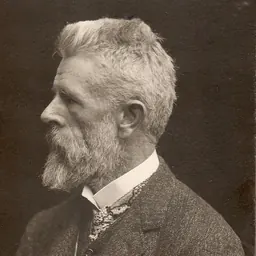

Contemporaries
People whose lives overlapped Janet Scudder's





Frequently asked questions
Who was Janet Scudder?
American sculptor (1869–1940)
When was Janet Scudder born?
Janet Scudder was born on 27 October 1869 in Terre Haute.
When did Janet Scudder die?
Janet Scudder died on 9 June 1940 in Rockport.
What was Janet Scudder's occupation?
Janet Scudder was a sculptor, suffragist, writer, artist and painter.
What nationality was Janet Scudder?
Janet Scudder was American.
Sources & further reading
Cite this page
APA: Biography.guide. (2026). Janet Scudder. https://biography.guide/janet-scudder/
MLA: "Janet Scudder." Biography.guide, https://biography.guide/janet-scudder/.
Chicago: "Janet Scudder." Biography.guide. https://biography.guide/janet-scudder/.
Data last updated: 2026-09-20 · Spot an error? Report a correction.
Page generated 2026-09-27 05:32 UTC