
About Janet Clarke
Lived 1851 – 1909 (aged 57). Janet Clarke was a socialite.
Janet Marion Clarke (; 4 June 1851 – 28 April 1909) was an Australian socialite and philanthropist. She was known to the general public as Lady Clarke, a title which she assumed after her husband's elevation to the baronetage in 1882.
Early life and marriage
Janet Marion Snodgrass was born at Doogalloook, a station on the Goulburn River near Yea, Victoria. She was the daughter of Charlotte Agnes (née Cotton) and Peter Snodgrass. Her father, who died when she was 16, was an affluent landowner and a member of parliament. Her paternal grandfather was Colonel Kenneth Snodgrass, a Scottish-born British Army officer who became a colonial administrator in New South Wales, while her maternal grandfather – the owner of Doogallook – was the naturalist John Cotton.
In 1873, aged 21, Janet married William Clarke, 41-year-old widower for whom she had previously worked as a governess. She was stepmother to the four children from his first marriage, and bore an additional eight children herself (two of whom died young).
In 1874, her husband inherited a substantial fortune from his father, W. J. T. Clarke. He became the largest landowner in the country, and an exceedingly generous philanthropist, for which in 1882 he was raised to the baronetage (the first Australian to be so honoured).
Socialite
In 1876, the Clarkes moved into Rupertswood, a large country mansion they had built near Sunbury. Their city residence was Cliveden, an equally massive mansion in East Melbourne that was completed in 1888. The couple were known for their lavish hospitality, hosting frequent balls, luncheons, dinners, and garden parties. Many singers and musicians got their starts by being asked to perform at these events. During the depression of the early 1890s, Clarke also ran a soup kitchen out of Cliveden.
Community work and philanthropy Clarke was the president of the Melbourne District Nursing Society (later renamed the Royal District Nursing Service) for all but one year between 1889 and 1909. Clarke also served on the boards of the Women's Hospital, the Hospital for Sick Children, and Melbourne Girls' Grammar School. In 1889, she donated £6,000 towards the establishment of the Hostel for Women University Students at Trinity College, Melbourne. Clarke's funeral was held at St Paul's Cathedral and officiated by Lowther Clarke, the Archbishop of Melbourne. Throngs of wellwishers lined the streets during the funeral procession. She was buried at the Melbourne General Cemetery next to her husband, who had predeceased in 1897. He was succeeded in the baronetage by Rupert Clarke, the oldest son from his first marriage.
A memorial fund was established after Clarke's death, the proceeds of which were used to build a memorial rotunda in Melbourne's Queen Victoria Gardens (opened in 1913).
Don’t just read it —
keep it.
Full-length biographies made to live with: read them, listen on the way to work, watch them tonight.
- E-book
- Audio
- Video
Instant download · yours to keep · every purchase keeps this site free
Important facts
Family & relationships
People in Janet Clarke's life
Named in this biography and alive at the same time



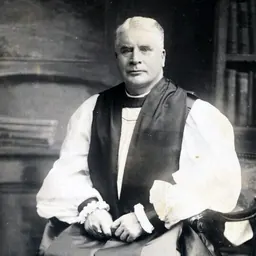
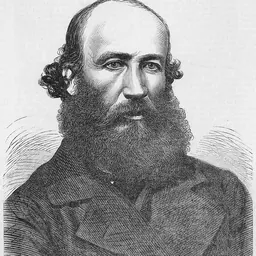

Related people
Same field, nearest in time
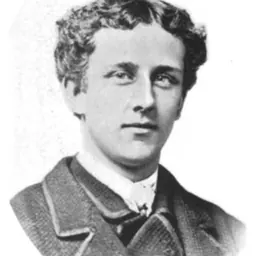
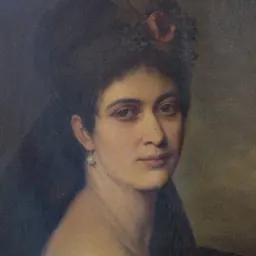

Contemporaries
People whose lives overlapped Janet Clarke's






Frequently asked questions
Who was Janet Clarke?
Australian charity administrator (1851–1909)
When was Janet Clarke born?
Janet Clarke was born on 4 June 1851 in Yea.
When did Janet Clarke die?
Janet Clarke died on 28 April 1909 in East Melbourne.
What was Janet Clarke's occupation?
Janet Clarke was a socialite.
Sources & further reading
Cite this page
APA: Biography.guide. (2026). Janet Clarke. https://biography.guide/janet-clarke/
MLA: "Janet Clarke." Biography.guide, https://biography.guide/janet-clarke/.
Chicago: "Janet Clarke." Biography.guide. https://biography.guide/janet-clarke/.
Data last updated: 2026-09-22 · Spot an error? Report a correction.
Page generated 2026-09-27 05:21 UTC