
Jane Statham
15th-16th c. English gentry
About Jane Statham
Jane Statham was an heiress.
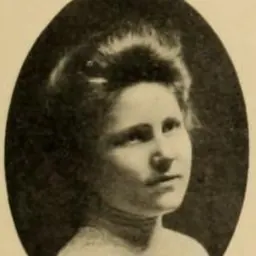
Jane Statham ( 1450/1455 – after 1537) was an English heiress and petitioner for law reform.
Born in the early 1450s, Jane was heiress to the manor of Morley in Derbyshire. Soon after the death of her first husband John Sacheverell at the Battle of Bosworth Field in 1485, Jane was abducted by Henry Willoughby of Wollaton and forcibly married to his brother Richard. Jane was restored to her family, and her forced marriage annulled, after she petitioned Parliament for assistance. Her experience almost certainly triggered a change to the law in England to make abduction of a property-owning woman a felony. Later in life, Jane became the last Prioress of Markyate Priory before it was dissolved in 1536.
Life
Jane Statham (also recorded as Joan Stathum) was heir to her father Henry Statham, lord of the manor of Morley in Derbyshire, who died on 30 April 1480. She was a niece of the lawyer and member of parliament Nicholas Statham.
Jane was married firstly to John Sacheverell, a younger son of the family of Sacheverell of Hopwell. John was killed on 22 August 1485 at the Battle of Bosworth, fighting alongside Richard III in the last charge on Henry Tudor. A brass showing John, Jane and their children, and recording that John died fighting for Richard III, was installed about forty years after his death in Morley Church, and is one of very few memorials referring to the losing side at Bosworth.
As a widow with an underage son in line to inherit estates from both sides of the family, Jane was betrothed very soon after her husband's death at Bosworth to William Zouche of Castle Eton and Hampton Meysey, a near neighbour and suitable stepfather for her son.
The King intervened by appointing an arbitrator between the families (see below) and the marriage was able to be annulled. Jane and William Zouche were married by 18 May 1487. She was still the prioress at the time the priory was dissolved in 1536, and was still alive on 10 February 1537, when she received her first instalment of her pension of 20 marks. The petition probably did not come directly from Jane herself as she was still in her captors' hands.
It is likely that Jane's case, and the plea in her petition for her abductors to be treated as felons, led directly to a change in the law in 1487. A new statute, the , entitled 'An Acte agaynst taking awaye of Women agaynst theire Wills' made abduction and forced marriage (or rape) of property-owning women or heiresses for the purposes of financial gain a felony in England. Those who aided and abetted the abduction or imprisonment were also guilty of a felony in England.
Don’t just read it —
keep it.
Full-length biographies made to live with: read them, listen on the way to work, watch them tonight.
- E-book
- Audio
- Video
Instant download · yours to keep · every purchase keeps this site free
Important facts
Related people
Same field, nearest in time

Frequently asked questions
Who was Jane Statham?
15th-16th c. English gentry
What was Jane Statham's occupation?
Jane Statham was an heiress.
Sources & further reading
Cite this page
APA: Biography.guide. (2026). Jane Statham. https://biography.guide/jane-statham/
MLA: "Jane Statham." Biography.guide, https://biography.guide/jane-statham/.
Chicago: "Jane Statham." Biography.guide. https://biography.guide/jane-statham/.
Data last updated: 2026-09-20 · Spot an error? Report a correction.
Page generated 2026-09-27 05:03 UTC