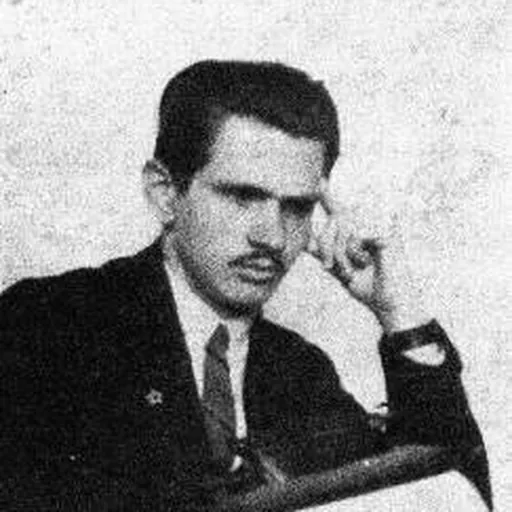
About Jan Fethke
Lived 1903 – 1980 (aged 77). Jan Fethke was a Polish and German film director, writer, esperantist, screenwriter, director and film screenwriter.
Jan FethkeJan Fethke (26 February 1903 – 16 December 1980) was a German-Polish film director and, under the pen name Jean Forge, a successful author. He also was a famous proponent of the language Esperanto.
Life Born in Oppeln, Silesia, Jan Fethke attended Oppeln's grammar school. Together with his brothers Stefan and Edmond, Fethke learned Esperanto in 1919, when aged sixteen. After leaving grammar school, he edited the periodical Esperanto Triumfonta for several years.
Between 1923 and 1924 studied at Technical University of Danzig and worked for a local newspaper before moving to Berlin.
In 1921, aged 18, he penned his first novel, the German language Der ausgestopfte Papagei (The Stuffed Parrot). After 1923, he wrote his novels in Esperanto and used the pseudonym Jean Forge. His most important Esperanto works are Abismoj (Abysses, 1923), Saltego trans jarmiloj (A Leap across the Millennia, 1924) and Mr. Tot Aĉetas Mil Okulojn (Mr. Tot Buys a Thousand Eyes, 1931), which have been translated into several languages. His books were inventive, rich in ideas, and a witty representative of enjoyable light literature with a talent for psychological observation and a precise knowledge of effects.
After moving to Berlin in 1928, Fethke worked as a writer and assistant for Ufa. His most successful films were Mutter Krausens Fahrt ins Glück (Mommy Krause's Trip into Happiness) and Jenseits der Straße (On the Far Side of the Street), for which he wrote the screenplay. At Ufa, he also made the acquaintance of Fritz Lang, who later used his Mr. Tot novel for his last film, The Thousand Eyes of Dr. Mabuse (1960).
He also continued his work in Esperanto. In 1932 began to teach courses in Sweden, using the Cseh-method. In 1934 he dubbed the German film Morgen beginnt das Leben (Life will Start Tomorrow) into Esperanto and, under the title Morgaŭ ni komencos la vivon, exhibited during the 26th World Esperanto Congress in Stockholm.
After the Second World War, Fethke achieved fame as a film director in Poland. In 1960, he moved to West Berlin.
He was a collaborator of the review Literatura Mondo (Literary World) and many other periodicals.
Selected works
Novels
Abismoj (Abysses), 1923 Saltego trans Jarmiloj (A Leap across the Millennia), 1924 Mr. Tot Aĉetas Mil Okulojn (Mr. Tot Buys a Thousand Eyes), 1931
Collection of novellas La verda raketo ("The green rocket") 1961 Mia verda breviero ("My green prayer book"), 1974
Films Mother Krause's Journey to Happiness, 1929 (screenplay). Beyond the Street (1929) (screenplay together with Willy Döll). Schön ist es, verliebt zu sein, 1933/34 (screenplay). Carlos schönstes Abenteuer, 1934 (screenplay). Morgaŭ ni komencos la vivon, an Esperanto version of Morgen beginnt das Leben, 1934 (dubbing). , 1935 (screenplay). , 1935 (screenplay). The Cat in the Bag (1935) (screenplay) Two Joasias (1935) (screenplay) American Adventure (1936) (screenplay) Papa się żeni, 1936 (screenplay) The Haunted Manor (1936) (screenplay) Dodek na froncie, 1936 (screenplay) The Leper, 1936 (screenplay) Count Michorowski 1937 (screenplay) Three Troublemakers (1937) (screenplay) Robert i Bertrand, 1938 (screenplay) Zapomniana melodia, 1938 (directed together with Konrad Tom) Bogurodzica, 1939 (director) Przez łzy do szczęścia, 1939 (director, screenplay) Złota Maska, 1939/40 (director, screenplay) To Happiness Through Tears (1941) (director) Bravo, Little Thomas, 1945 (director). Ulica graniczna, 1948 (screenplay) Załoga, 1951 (director, screenplay) A Matter to Settle, 1953 (director, screenplay) Irena do domu!, 1955 (director). Der schweigende Stern (Milcząca gwiazda), 1959 (screenplay), an East German-Polish co-production.
Don’t just read it —
keep it.
Full-length biographies made to live with: read them, listen on the way to work, watch them tonight.
- E-book
- Audio
- Video
Instant download · yours to keep · every purchase keeps this site free
Important facts
People in Jan Fethke's life
Named in this biography and alive at the same time
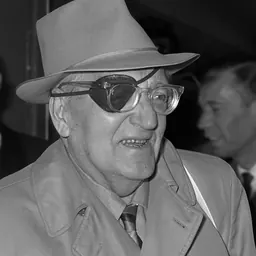

Related people
Same field, nearest in time
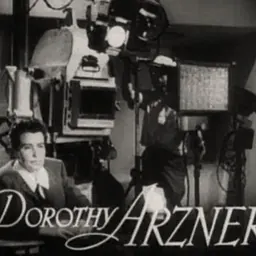

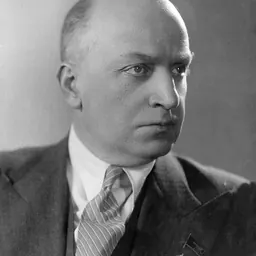

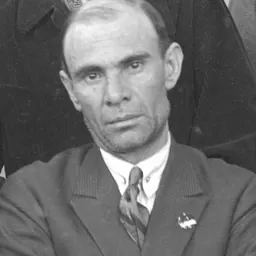

Contemporaries
People whose lives overlapped Jan Fethke's
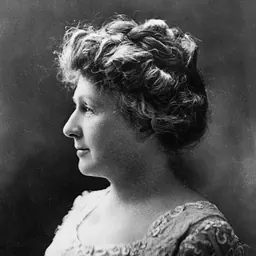
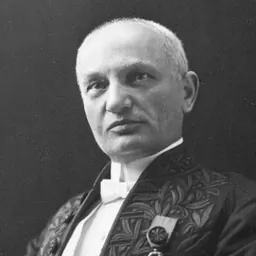
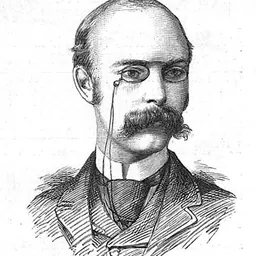
Frequently asked questions
Who was Jan Fethke?
German-Polish film director
When was Jan Fethke born?
Jan Fethke was born on 26 February 1903 in Opole.
When did Jan Fethke die?
Jan Fethke died on 16 December 1980 in Berlin.
What was Jan Fethke's occupation?
Jan Fethke was a film director, writer, esperantist, screenwriter, director and film screenwriter.
What nationality was Jan Fethke?
Jan Fethke was Polish and German.
Sources & further reading
Cite this page
APA: Biography.guide. (2026). Jan Fethke. https://biography.guide/jan-fethke/
MLA: "Jan Fethke." Biography.guide, https://biography.guide/jan-fethke/.
Chicago: "Jan Fethke." Biography.guide. https://biography.guide/jan-fethke/.
Data last updated: 2026-09-21 · Spot an error? Report a correction.
Portrait: Wikimedia Commons · author & licence
Page generated 2026-09-27 05:00 UTC