
About Jan de Beer
Lived 1475 – 1528 (aged 52–53). Jan de Beer was a painter.
The Nativity (attributed), showing de Beer's typical dramatic lighting. Jan de Beer, formerly known as the Master of the Milan Adoration (c. 1475 – 1528) was a Flemish painter, draughtsman and glass designer active in Antwerp at the beginning of the 16th century. He is considered one of the most important members of the loose group of painters active in and around Antwerp in the early 16th century referred to as the Antwerp Mannerists. Highly respected in his time, he operated a large workshop with an important output of religious compositions.
Life Jan de Beer was born around 1475 as the son of the painter Claes de Beer. His place of birth was in or near Antwerp. Claes de Beer and his family are known to have had possessions in Ekeren near Antwerp. Jan de Beer completed his apprenticeship with Gillis van Everen, a painter with a large workshop in Antwerp. Then he probably worked several years as the assistant of van Everen.
Jan de Beer became a master of the Antwerp Guild of St Luke in 1504. He was an alderman of the Guild in 1509 and in 1515 he was elected its dean, a position he held until at least 1519.
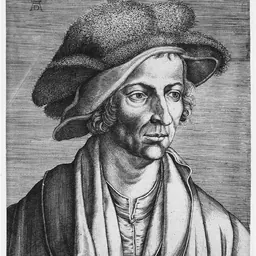
Jan de Beer was linked with other prominent painters of the Antwerp School such as Quentin Matsys. Jan de Beer and Matsys were invited to judge in a dispute over the quality of a painted and carved altarpiece commissioned for the town of Dunkirk in 1509. De Beer and Metsys were both fellow aldermen of the Antwerp Guild of Saint Luke. Another artist with whom he was linked was the leading landscape painter Joachim Patinir and the two artists may have collaborated on commissions.
In 1508, Jan de Beer married the brewer's daughter Katline Weygers. The couple settled on Kipdorp in Antwerp and at around 1509, had a son called Aert or Arnould. Aert was, like his father, a painter and glass designer but died at a young age in 1540.
Jan de Beer operated a large workshop and from 1510 he took on pupils to assist him. He contributed to the temporary decorations for the Joyous Entry of Archduke Charles V, the later Holy Roman Emperor. He also worked on the decoration of the float that represented the Antwerp Chamber of rhetoric De Violieren in the parade during the 'landjuweel' (land jewel, a competition between various Chambers of rhetoric) in Mechelen. They also show a preference for a changing palette. Their compositions are typically shock-full with agitated figures in exotic, extravagant clothes. The compositions typically include architectural ruins. The architecture is initially Gothic but later Renaissance motifs become dominant. Many of the panels or triptychs produced by the Antwerp Mannerists depicted scenes of the Nativity of Jesus, usually situated at night, the Adoration of the Magi and the Crucifixion.
Jan de Beer's work shares the characteristics of the work of the other representatives of Antwerp Mannerism. Like them, Jan de Beer and his workshop painted religious works and altarpieces. A majority of the works deal with scenes related to the Nativity of Jesus by night and the Adoration of the Magi. While the Antwerp Mannerists often used standardised models in their works, Jan de Beer demonstrated that it was still possible to achieve a high level of individuality within these conventionalized forms. His work distinguishes itself through its refined colourism and emotional and psychological depth. This theory is not universally accepted. The external sides of the wing panels depict the Annunciation in grisaille, the prologue of the scenes depicted inside. The work found its way to Venice where it may have been located in the convent of Santa Maria Maddalena delle Covertite alla Giudecca or the church of Santa Maria dei Servi. The triptych had previously been attributed to Albrecht Dürer, Lucas van Leyden and Herri met de Bles before it was returned to Jan de Beer by Friedländer.
The triptych had an important influence on Venetian painting in the 1520s, particularly on the work of Lorenzo Lotto and Girolamo Savoldo. These Italian artists were especially fascinated by the effects of supernatural light that illuminated de Beer's nocturnal scenes.
The triptych was made according to the dictates of the 'modern devotion' movement, a religious movement calling for apostolic renewal through genuine pious practices such as humility, obedience and simplicity of life. The triptych's visual programme was intended to prompt the faithful, through the contemplation of major episodes in the life of the Holy Family, to follow the Christian lifestyle.
The triptych's three scenes are linked together only by a thematic point of view: the landscape, the light effects and the proportions of the figures are different in the three scenes. It is because of these differences within the compositional ensemble that the hypothesis was formed of a close collaboration of Jan de Beer with another master, referred to as the Master of Amiens, in the execution of the two side panels.
Drawings
His drawings are principally preparatory studies for paintings, designs and cartoons for glass windows and works on canvas that served as a possible example for temporary decorations during festive occasions.
Don’t just read it —
keep it.
Full-length biographies made to live with: read them, listen on the way to work, watch them tonight.
- E-book
- Audio
- Video
Instant download · yours to keep · every purchase keeps this site free
Important facts
more
Jan De BeerPeople in Jan de Beer's life
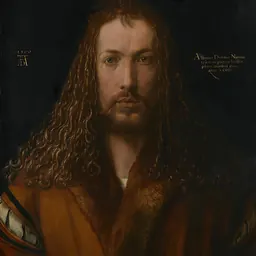
Named in this biography and alive at the same time

Related people
Same field, nearest in time



Contemporaries
People whose lives overlapped Jan de Beer's




Frequently asked questions
Who was Jan de Beer?
draughtsman, painter (1475-1528)
When was Jan de Beer born?
Jan de Beer was born in 1475 in Antwerp.
When did Jan de Beer die?
Jan de Beer died in 1528 in Antwerp.
What was Jan de Beer's occupation?
Jan de Beer was a painter.
What nationality was Jan de Beer?
Jan de Beer's recorded nationality: County of Flanders.
Sources & further reading
· DBpedia: Jan de Beer (painter)
Cite this page
APA: Biography.guide. (2026). Jan de Beer. https://biography.guide/jan-de-beer/
MLA: "Jan de Beer." Biography.guide, https://biography.guide/jan-de-beer/.
Chicago: "Jan de Beer." Biography.guide. https://biography.guide/jan-de-beer/.
Data last updated: 2026-09-20 · Spot an error? Report a correction.
Page generated 2026-09-27 05:23 UTC