
James Williamson
British photographer and filmmaker
About James Williamson
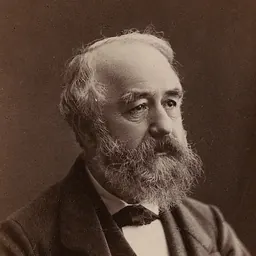
Lived 1855 – 1933 (aged 77). James Williamson was a British and Scottish film director, screenwriter, cinematographer, film producer, photographer and actor.
James A. Williamson (8 November 1855 – 18 August 1933) was a Scottish photographer and a key member of the loose association of early film pioneers dubbed the Brighton School by French film historian Georges Sadoul. He is best known for The Big Swallow, a trick film with innovative use of extreme close-up, as well as Fire! and Stop Thief! (both 1901), dramas with continuity established across multiple shots.
Biography Early life and career Williamson was born in Pathhead near Kirkcaldy, Fife, and raised in Edinburgh, where he trained to be a master chemist. He moved to London in 1868, where he was an apprentice to a pharmacist and to Eastry, Kent in 1877, where he bought his own pharmacy and got married. He was also a keen amateur photographer who sold photographic apparatus and chemical supplies in his shop and became an agent for Kodak. The property, previously owned by the photographer S. Grey of Well & Grey, was later renumbered 156 Church Road and currently bears a commemorative plaque to Williamson's achievements unveiled as part of the centenary of cinema celebrations in 1996. in time for inclusion in the Hove Camera Club's annual exhibition in November 1896, and again in November 1897. That summer he also filmed the procession and rehearsal procession for the coronation of King Edward VII. Williamson and his family moved to London, and his premises at Cambridge Grove were sold to Charles Urban's Natural Color Kinematograph Company. That year he also patented a projector which inserted title slides into projected films. Williamson briefly returned to production in 1913 with a newsreel service which closed down shortly after the outbreak of World War I.
By this time Williamson Kinematographic Company assets included a processing plant in Barnet and a factory in Willesden, where the famous Williamson's 'Topical' cameras along with a variety of other apparatus widely used in professional British film-making at the time were manufactured. During the war the company pioneered the development of aerial photography, producing gun-mounted reconnaissance cameras to photograph aerial battles. It also developed an innovative photogrammetry camera for scientific and military use, and a photo-finish camera for horse-racing.
On 18 August 1933, Williamson died at his home in Richmond, Surrey of a heart attack.
Legacy The Williamson Kinematograph Company continued to make a range of cameras, processing and printing equipment and continued its pioneering work in aerial reconnaissance during the World War II.
The pioneering film work of James Williamson, as well as Esme Collings and George Albert Smith, was commemorated in the 1966 BBC Television programme It Began in Brighton, produced by Melvyn Bragg and directed by Tristram Powell, and in the 1968 Brighton Festival.
In 1996, as part of the celebration of the centenary of film, the work of Williamson and the other Brighton pioneers was commemorated by the unveiling of plaques, including one on Williamson's former premises in Church Street, an exhibition held at the University of Brighton Gallery and Hove Museum and the publication of Hove Pioneers and the Arrival of Cinema by John Barnes, Ine van Dooren and Frank Gray.
Selected filmography Date Title Credited as Notes Cinematographer Producer Writer Director 1896(?) Devil's Dyke Fun Fair Actuality of workers and visitors to fun fair at Devil's Dyke, Sussex. 1897(?) On the West Pier Actuality of visitors to West Pier, Brighton. 1898 The Clown Barber Trick film about a barber who removes a customer's head to shave it. Early Fashions on Brighton Pier Actuality of people promenading on Brighton Pier. Washing the Sweep Comedy featuring a chimney sweep and two washerwomen. 1900 Attack on a China Mission Four-shot drama, featuring a reverse cut, set during the Boxer Rebellion. 1901 Are You There? Comedy about a young man's interrupted call to his girlfriend. The Big Swallow Three-shot trick film, with extreme close-up, of a camera and operator being swallowed. Cricket Actuality of W.G. Grace and Prince Ranji at batting practice. Fire! Five-shot dramatic narrative featuring firemen at work. The Magic Extinguisher Trick film featuring magician and conical extinguisher. The Puzzled Bather and his Animated Clothes Trick film featuring a bather unable to remove his clothes. Stop Thief! Early chase film about a tramp who steals some meat. 1902 Ladies CyclistsStaged performance of synchronised female cyclists. The Little Match SellerDrama based on classic Hans Christian Andersen fable. Professor Reddish Performing his Celebrated Bicycle Dive from Brighton West Pier Actuality of stunt performer Professor Reddish at West Pier, Brighton. A Reservist, Before the War, and After the War Multi-shot drama about the negative effects of a soldier's war service. The Soldier's Return Multi-shot drama about a soldier returning from war. 1904 Dear Boys Come Home for the Holidays Comedy, featuring Williamson, about two mischievous boys. The Old Chorister Drama, using superimposition, about an old man's reminiscence. 1905 Brown's Half Holiday Comedy about a reluctant husband's failed attempts at DIY home improvement. An Interesting Story Comedy about a man distracted by his book. Our New Errand Boy Chase comedy, featuring Williamson, about a young errand boy. Two Little Waifs Drama about a little boy rescued from kidnappers by a gypsy girl. 1906 Flying the Foam and Some Fancy Diving Trick film adapted from earlier actuality of stunt performer Professor Reddish and high divers at West Pier, Brighton. Rival Barbers Comedy about mistaken identity. 1908 £100 Reward Drama about a dog that earns a reward for solving a burglary. 1910 The History of a Butterfly: A Romance of Insect Life Natural history film about the life-cycle of the butterfly.
Don’t just read it —
keep it.
Full-length biographies made to live with: read them, listen on the way to work, watch them tonight.
- E-book
- Audio
- Video
Instant download · yours to keep · every purchase keeps this site free
Important facts
People in James Williamson's life
Named in this biography and alive at the same time




Related people
Same field, nearest in time
Contemporaries
People whose lives overlapped James Williamson's



Frequently asked questions
Who was James Williamson?
British photographer and filmmaker (1855-1933)
When was James Williamson born?
James Williamson was born on 8 November 1855 in Kirkcaldy.
When did James Williamson die?
James Williamson died on 18 August 1933 in London Borough of Richmond upon Thames.
What was James Williamson's occupation?
James Williamson was a film director, screenwriter, cinematographer, film producer, photographer and actor.
What nationality was James Williamson?
James Williamson was British and Scottish.
Sources & further reading
· DBpedia: James Williamson (film pioneer)
Cite this page
APA: Biography.guide. (2026). James Williamson. https://biography.guide/james-williamson-film-director/
MLA: "James Williamson." Biography.guide, https://biography.guide/james-williamson-film-director/.
Chicago: "James Williamson." Biography.guide. https://biography.guide/james-williamson-film-director/.
Data last updated: 2026-09-20 · Spot an error? Report a correction.
Page generated 2026-09-27 05:20 UTC