
About James Wigram
Lived 1793 – 1866 (aged 72–73). James Wigram was a British judge, politician, barrister and jurist.
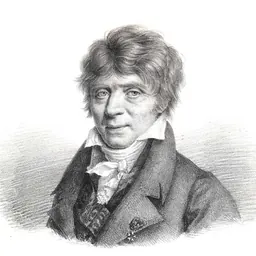
Sir James Wigram, FRS (1793–1866) was an English barrister, politician and judge.
Life He was the third son of Eleanor Wigram and Sir Robert Wigram, 1st Baronet, and younger brother name of Sir Robert Fitzwygram, 2nd Baronet in 1832; another brother was Joseph Cotton Wigram. Born at his father's residence, Walthamstow House, Essex, on 5 November 1793, James was educated privately and at Trinity College, Cambridge, where he graduated B.A. in 1815, gained a fellowship two years later, and proceeded M.A. in 1818. Admitted a student of Lincoln's Inn on 18 June 1813, he was called to the bar there on 18 November 1819.
In practice in the Court of Chancery, Wigram built up a career. In Michaelmas vacation 1834 he was made King's Counsel, and, in 1835 became a bencher of Lincoln's Inn.
Supported by his wife's family interest, Wigram fought an election for Leominster on Tory principles in 1837, but was defeated at the poll. He was, however, returned for the borough without opposition at the next general election, on 28 June 1841.
On 28 October 1841 Wigram was raised to the bench under the act for the better administration of justice (5 Vict. c. 5), which provided for the appointment of a second Vice-Chancellor of England. He was sworn a member of the Judicial Committee of the Privy Council on 15 January 1842, and received the customary knighthood the same month.
Wigram was compelled by ill-health, resulting in the total loss of sight, to retire from the bench in Trinity vacation 1850, when he was granted a pension of £3,500 a year. He died on 29 July 1866.
Notable judicial decisions
Wigram's two most famous decisions were probably: Foss v Harbottle (1843) 2 Hare 461 (and the eponymous "rule in Foss v Harbottle"), and Henderson v Henderson (1843) 3 Hare 100
He was also the judge at first instance in Foley v Hill (1848) 2 HLC 28.
Works Wigram was the author of two legal works, Examination of the Rules of Law respecting the Admission of Extrinsic Evidence in aid of the Interpretation of Wills (1831, four editions), and Points in the Law of Discovery (1836). They led him into correspondence with Joseph Story.
Family On 28 October 1818 Wigram married Anne (d. 1844), daughter of Richard Arkwright of Willersley Castle, Derbyshire, and granddaughter of Sir Richard Arkwright. Her family owned property in the neighbourhood of Leominster in Herefordshire. He left a family of four sons and five daughters.
Don’t just read it —
keep it.
Full-length biographies made to live with: read them, listen on the way to work, watch them tonight.
- E-book
- Audio
- Video
Instant download · yours to keep · every purchase keeps this site free
Important facts
People in James Wigram's life
Named in this biography and alive at the same time



Related people
Same field, nearest in time
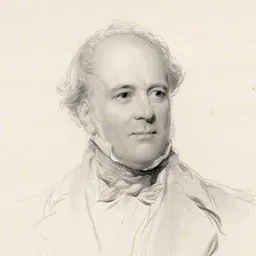

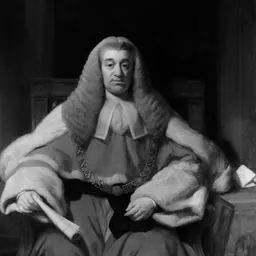
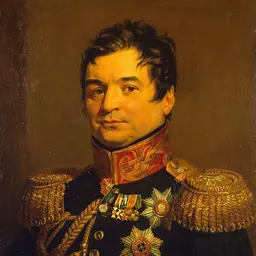
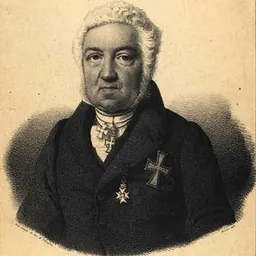
Contemporaries
People whose lives overlapped James Wigram's




Frequently asked questions
Who was James Wigram?
English barrister, politician and judge
When was James Wigram born?
James Wigram was born in 1793.
When did James Wigram die?
James Wigram died in 1866.
What was James Wigram's occupation?
James Wigram was a judge, politician, barrister and jurist.
What nationality was James Wigram?
James Wigram was British.
Sources & further reading
Cite this page
APA: Biography.guide. (2026). James Wigram. https://biography.guide/james-wigram/
MLA: "James Wigram." Biography.guide, https://biography.guide/james-wigram/.
Chicago: "James Wigram." Biography.guide. https://biography.guide/james-wigram/.
Data last updated: 2026-09-20 · Spot an error? Report a correction.
Page generated 2026-09-27 05:17 UTC