
About James Thomson
Lived 1825 – 1896 (aged 70–71). James Thomson was a Canadian cabinetmaker, council member and mayor.
James Thomson, born in 1825 in Tain, Scotland, and died on August 14, 1896, in Montreal, Canada, was a Scottish-born Canadian cabinetmaker, interior designer, merchant and local Canadian politician. He notably served as mayor of the municipality of Saint-Lambert from 1882 to 1886.
James Thomson produced custom-made furniture for, among others, Rideau Hall, the residence of Sir Hugh Allan, Ravenscrag, the residence of George Stephen, and various residences belonging to the family of John Redpath.
Biography James Thomson was born in 1825 in Tain, Scotland. He emigrated to Canada as a "young boy" and settled in Toronto, Ontario. He apprenticed as a cabinetmaker with the cabinetmaking and interior decorating firm Jacques & Hay, where he worked before becoming a foreman. This partnership ended in 1850. Upon Haigh's death in September 1855, he partnered with cabinetmaker George McKeand, thus creating McKeand, Thomson & Co. The factory, located in a four-story brick building, employed eighty-five workers and produced worth of furniture annually. Around 1862, James partnered with George Kellond, a sculptor he had met during his time in Quebec City. This partnership dissolved around 1864. Around 1865, James established his factory and warehouse on Saint Jacques Street and became "a serious competitor of the Hiltons at Montreal provincial exhibitions. Indeed, he presented to the judges and visitors furniture of such exquisite craftsmanship as that of John and William Hilton". In 1869, he obtained the necessary capital from Hugh Allan to build a brand-new factory at the intersection of Craig and Saint-François-Xavier Streets. During the 1870s and 1880s, he gradually brought his sons, James A. and Charles Thomson, into the management of the business. Around 1888, the company moved its showrooms to Guy Street.
In 1890, illness forced James Thomson to retire from his business and delegate its management to his sons, James A. (an accountant) and Charles Thomson (a cabinetmaker). On February 17, 1890, he sold his Saint-Lambert residence, known as Maplehurst, and moved to Richmond Square (the intersection of Richmond and Saint-Antoine Streets) in Montreal. On July 9, 1890, W. A. Caldwell was appointed curator of James Thomson's estate. His sons and a former employee, cabinetmaker George H. Randall, continued the business under the name "James Thomson & Co.", which now specialized in office, warehouse, and store furniture, but not exclusively. This company ceased operations around 1899. James Thomson died on August 14, 1896, in Montreal.
Political life Around 1875, James Thomson and his family moved to Saint-Lambert. He was then elected municipal councillor and remained so until 1882. He was successively re-elected to this position in 1883, 1884 and 1885.
Personal life In August 1857, James Thomson married Marianne Stitt. On August 3, 1877, one of his daughters, Jane Thomson, died at the age of twelve following an accident: while trying to pick berries, a stone was dislodged and fell on the young girl. His wife, Marianne Stitt, died on July 6, 1889, at the age of 55. Édouard Bertrand, cabinetmaker. John Drummond, cabinetmaker.
Provincial Exhibition (Industrial Department) September 15-17, 1863 Montreal (Crystal Palace) Shelf, Diploma and 1st prize.
Provincial Exhibition (Industrial Department) September 26-29, 1865 Montreal (Crystal Palace) Bedroom furniture set, 1st prize; Billiard table, honorable mention; Walnut dining table, 1st prize; Sideboard, 2nd prize; Shelf, special prize; Etc.
World's Fair April 1 - November 3, 1867 Paris, France Table: "The table's body is made of finely carved black walnut. The mirror-polished top is composed of a wide variety of woods in diverse hues, inlaid and arranged in foliage motifs, etc., creating a brilliantly lustrous effect. Considered a piece of exceptional quality, it will undoubtedly be a striking addition to the World's Fair, showcasing the expertise of our Canadian artisans in the art of ornamental furniture."
Dominion Exhibition (Industrial Department) September 14 - 24, 1880 Montreal (Crystal Palace) Dining room sideboard, 1st prize; Dining room chairs; Carved wooden fireplace mantel, 1st prize; Japanese style chair, honorable mention; Armchair, 1st prize; Card game table; Wooden clock stand; Wardrobe; Etc.
Colonial and Indian Exhibition May 4 - October 15, 1886 South Kensington (United Kingdom) N.B. Although James Thomson's company produced furniture specifically for this exhibition, it ultimately did not participate. Dining room furniture set: "The sideboard stands over 12 feet in height and is 10 feet 6 inches long; it is in quartered oak with a center piece of plate glass with bevelled edge. Here and there, in just the right spot, are to be seen heavy oak finishings, deeply and richly carved, while the relief wood is of pollack oak, the frame and finish being entirely of Canadian oak, the moulding all hand carved and of the chastest designs. The dining table is 18 x 5 feet and is also in oak, heavily carved and trussed in curved moulding with iron slides. The buffet is of the same design as the sideboard; the whole being in the much admired renaissance style. The chairs, ten in number, were richly finished in morocco over heavy oak. There was also made a heavy inlaid centre table in black ebony, inlaid with brass, copper and mother of pearl, which forms the centre, while surrounding this is to be seen, in contrast, white medals set in mahogany and white wood. The finishings are of old fashioned chases brass, the table throughout being of Louis XVI style. The cost of the whole set cannot be les than $ 4,000".
List of works
Below is a non-exhaustive list of known works by James Thomson's company:
1860s: Part of the furnishings for the residence of J. Gordon Makenzie (3 Prince of Wales Terrace, Montreal). 1860s: Part of the furnishings for the residence of Robert and Jane Pilkington (8 Holyrood Place, McGill College Avenue). 1860s: Part of the furnishings for the Montreal Club (125 Great St. James Street, Montreal). 1860s-70s: Furnishings for the residence of Hugh Allan, known as Ravenscrag. Circa 1869: Part of the furnishings for Rideau Hall. 1860s-70s: Furnishings for the residence of John Redpath, known as "Terrace Bank". 1870s-80s: Part of the furnishings from the residence of Robert Kane (394 Saint-Antoine Street, Montreal). 1870s: Part of the furnishings from the residence of Hector Hébert (320 Lagauchetière Street, Montreal) 1870s: Part of the furnishings from the residence of J. H. Wilkins (122 Shuter Street, Montreal). 1870s: Part of the furnishings from the residence of Henry H. Atwater (45 Belmont Street, Montreal) 1870s: Part of the furnishings from the residence of D. Butters (749 Dorchester Street, Montreal). 1870s-80s: Part of the furnishings from the residence of the Honourable John Hamilton, Canadian Senator (917 Sherbrooke Street, Montreal). 1870s-80s: Part of the furnishings from the residence of Robert A. Smith, of the Hugh & Andrew Allan Shipping Company ("Allan Line"). 1870s-80s: Part of the furnishings from the residence of E. A. Bernard, Esquire (944 Dorchester Street, Montreal). 1870s-80s: Part of the furnishings from the residence of John Cowan (90 Sainte-Famille Street, Montreal). 1870s-80s: Part of the furnishings from the residence located at 1821-1823 Notre-Dame Street, Montreal. 1870s-80s: Part of the furnishings from the residence of James McDougall, Esquire, located at 808 Palace Street, Montreal. Around 1871: Design of some of the furnishings for James Goulden's pharmacy on Saint-Laurent Street, Montreal. Around 1879: Some of the furnishings for the steamship SS. Sarmatian of the Hugh & Andrew Allan Shipping Company (“Allan Line”). Between 1880 and 1884: Some of the furnishings for the George Stephen House. Around 1885: All the furnishings for the official Canadian government railway car, known as the Ottawa, of the Prince Edward Island Railway.
Notes and references
Don’t just read it —
keep it.
Full-length biographies made to live with: read them, listen on the way to work, watch them tonight.
- E-book
- Audio
- Video
Instant download · yours to keep · every purchase keeps this site free
Important facts
People in James Thomson's life
Named in this biography and alive at the same time


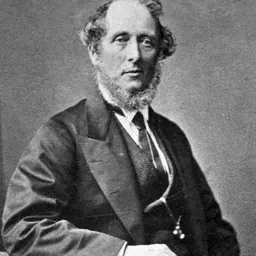
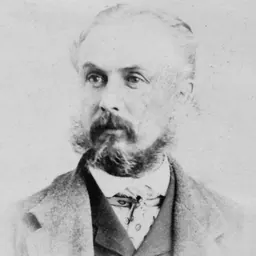

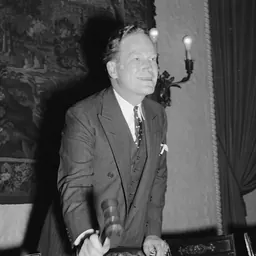

Related people
Same field, nearest in time



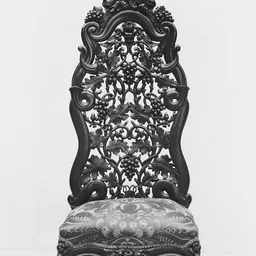
Contemporaries
People whose lives overlapped James Thomson's




Frequently asked questions
Who was James Thomson?
cabinetmaker and upholsterer
When was James Thomson born?
James Thomson was born in 1825 in Tain.
When did James Thomson die?
James Thomson died on 14 August 1896 in Montreal.
What was James Thomson's occupation?
James Thomson was a cabinetmaker, council member and mayor.
What nationality was James Thomson?
James Thomson was Canadian.
Sources & further reading
· DBpedia: James Thomson (cabinetmaker)
Cite this page
APA: Biography.guide. (2026). James Thomson. https://biography.guide/james-thomson/
MLA: "James Thomson." Biography.guide, https://biography.guide/james-thomson/.
Chicago: "James Thomson." Biography.guide. https://biography.guide/james-thomson/.
Data last updated: 2026-09-20 · Spot an error? Report a correction.
Page generated 2026-09-27 05:25 UTC