
About James Spens
Lived 1853 – 1934 (aged 81). James Spens was a British cricketer and army officer.
Major-General James Spens (30 March 1853 — 19 August 1934) was a British Army officer and an English first-class cricketer. Spens began playing cricket whilst at school, and after joining the Army played at first-class level for Hampshire and the Marylebone Cricket Club in the 1880s and 1890s. He served with distinction during the Second Boer War and later commanded a military district in British India and a Territorial division in the United Kingdom. He retired shortly before the outbreak of the First World War, but returned to service to command the 12th (Eastern) Division, then a training depot and a military district in Egypt.
Early military career and cricket The son of the Royal Engineer James Spens senior, he was born in March 1853 at Sabathu in British India. He was educated in England at Haileybury and Imperial Service College, where he represented the college cricket team from 1868 to 1870. From there, he attended the Royal Military College at Sandhurst, graduating into the 85th Regiment of Foot (Bucks Volunteers) as a sub-lieutenant in May 1872. Two years later in June 1874, he was promoted to lieutenant, antedated to the date of his initial commission. After joining the army, Spens played both cricket and rackets for army teams, including a match at Lord's in 1887. He was a high scorer, at one point in 1882 hitting 386 in a match. Following the war, he was promoted to captain in July 1883, at which point he was serving with the King's Shropshire Light Infantry. A further promotion to major followed in April 1886, with Spens being appointed an instructor of tactics at Sandhurst in September of the same year. On debut, he scored his maiden first-class half century with a score of 60. Wisden described him as "a free hitter, a clever medium paced round-arm bowler and a very smart cover point [fielder]". Spens was sent to South Africa following the outbreak of the Second Boer War in October 1899. He initially commanded the 2nd Battalion, King's Shropshire Light Infantry (KSLI), followed by a promotion to the local rank of colonel and command of an infantry brigade in January 1901. He was lastly placed in command of a mobile column in 1901–1902. He was promoted to the brevet rank of colonel during the war, and mentioned in dispatches several times (including by Major General Lord Kitchener on 23 June 1902). For his service in the war Spens was appointed a Companion of the Order of the Bath in the April 1901 South Africa Honours list. He received the actual decoration from King Edward VII at Buckingham Palace on 24 October 1902, for whom he also an aide-de-camp to. but was back in full service as commander of the Allahabad District in India in August 1903 and the 21st Bareilly Brigade in India in March 1906. He was promoted to major general in December 1906.
He was made general officer commanding (GOC) of the Lowland Division in the Territorial Force (TF) in March 1910, taking over from Brigadier General Henry Kelham. He relinquished command and retired from the army in July 1914.
On the outbreak of the First World War just a few weeks later, however, Spens was recalled to service, and given command of the newly raised 12th (Eastern) Division of the New Armies in August 1914. He commanded it through its training in England, relinquishing command to the younger Major General Frederick Wing, who unlike Spens had recent combat experience on the Western Front, in March 1915 before it was sent overseas, and in April was appointed to take over command of the ANZAC Training Depot in Egypt. He remained here until November, when he became GOC Cairo District. Spens left Cairo in April 1916.
In later life, he was politically aligned to the British Fascists. Spens died at Folkestone on 19 June 1934.
Don’t just read it —
keep it.
Full-length biographies made to live with: read them, listen on the way to work, watch them tonight.
- E-book
- Audio
- Video
Instant download · yours to keep · every purchase keeps this site free
Important facts
People in James Spens's life
Named in this biography and alive at the same time
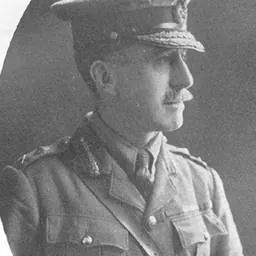


Related people
Same field, nearest in time
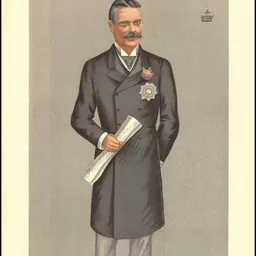


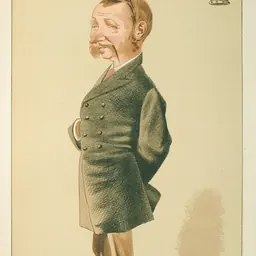


Contemporaries
People whose lives overlapped James Spens's



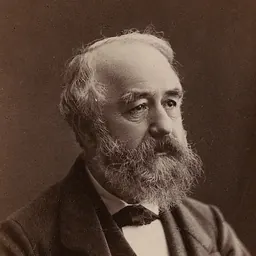


Frequently asked questions
Who was James Spens?
cricketer (1853-1934)
When was James Spens born?
James Spens was born on 30 March 1853 in Sabathu.
When did James Spens die?
James Spens died on 19 June 1934 in Folkestone.
What was James Spens's occupation?
James Spens was a cricketer and army officer.
What nationality was James Spens?
James Spens was British.
Sources & further reading
· DBpedia: James Spens (British Army officer)
Cite this page
APA: Biography.guide. (2026). James Spens. https://biography.guide/james-spens-cricketer/
MLA: "James Spens." Biography.guide, https://biography.guide/james-spens-cricketer/.
Chicago: "James Spens." Biography.guide. https://biography.guide/james-spens-cricketer/.
Data last updated: 2026-09-20 · Spot an error? Report a correction.
Page generated 2026-09-27 05:09 UTC