
James Shouldice
Canadian politician
About James Shouldice
Lived 1850 – 1925 (aged 74).
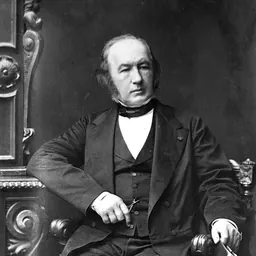
James Shouldice (November 5, 1850 – May 9, 1925) was a Canadian politician, rancher and philanthropist. He was active in Ontario politics during the first half of his life, though he is best known today for his contributions to the development of Calgary in the early twentieth century.
Early life, occupations and marriage Shouldice was born November 5, 1850 to an Irish Methodist family in Chatsworth, Ontario. His parents had emigrated during the Great Migration of Canada, a period in which Canada's colonial government encouraged British and Irish settlers to relocate to Upper Canada. In 1853, the Shouldice family relocated to Bruce County to take advantage of farmland made available to settlers by the government. In adulthood, he entered the family business of ranching,
In 1879, he married Mary Purdue, the Quebec-born daughter of a reverend. Between 1881 and 1898, the couple had ten biological children: five sons and five daughters. Shouldice was elected as the reeve of Elderslie between 1892 and 1896. He remained involved with the party, attending its 1899 December meeting and delivering a speech. By this time, however, he was experiencing poor health, culminating in the decision for he and Mary to relocate with their children to Alberta. James relocated to the farm first, and Mary followed with their children in early 1901. The Shouldices maintained a property in Calgary that they used as a base when the children were in school, or taking piano and voice lessons. A small hamlet developed in the area that came to bear his name.
Shouldice operated the Gleichen farm for the rest of his life, remaining personally involved in its day-to-day operations until his death in 1925. He was one of the first Albertans to breed Hereford cattle, developing a reputation for exhibiting them at trade shows around the province. While the 1910s saw a period of low precipitation in the Prairies, Shouldice received press attention in 1910 for growing "splendid oats" on his lands using dryland techniques. He lost to Liberal incumbent Ezra Riley, who received 770 votes to Shouldice's 525.
Riley resigned his seat in June 1910 to protest Arthur Sifton, who had become Premier in the wake of the Alberta and Great Waterways Railway scandal. Riley was ultimately unsuccessful, losing to Liberal candidate Archibald J. McArthur. In the end, Shouldice contested the nomination against Ezra Riley's brother, Harold Riley. The couple financially supported the church's charitable operations throughout the rest of their lifetimes, and the Calgary Herald reported that they donated "generously" to the local chapter of the YMCA. They hoped the municipality would convert it into a park for the enjoyment of its residents, stipulating that the City should install a streetcar route connecting the land to Louise Bridge. By 1917, weeds were pervasive, and the ground had not been levelled to introduce a sports pitch as Shouldice and McKay had hoped. In January 1918, Shouldice negotiated a four-year lease of the land back from the City, to sublet plots of the park for agriculture and to level the land himself. Today, the park is run by the City, offering soccer, baseball, and tennis facilities across 28 hectares. Calgary's municipal government agreed to introduce streetcar services to the area by the end of 1911.
Shouldice's neighbour over the Bow River was John Hextall, founder of the community of Bowness. In 1913, Shouldice partly financed the construction of Hextall Bridge, which facilitated early streetcar transit links between Bowness and Calgary. Today, a road bridge provides vehicular access between Montgomery to Bowness, though Hextall Bridge remains in use by pedestrians and cyclists. In 1943, the Canadian Post Office refused to grant the community near Calgary a post office of its own, as there was already a Shouldice post office in the original hamlet. In 1963, Montgomery was absorbed by Calgary. In 1911, he began seeking financial support to become the founding Principal of an institute of higher education, Mount Royal College (today Mount Royal University). In November that year, Shouldice and his neighbour Mackay became two of Mount Royal College's earliest and most significant donors, contributing 50 acres of downtown land to the project. The college had been open for three months at the time of the donation, operating out of temporary quarters known as 'The Barn.'
While Shouldice's 1911 land donation contributed to the successful establishment of the college, Calgary experienced a real estate crash in 1913. The Shouldice Residence was located uphill, overlooking Shouldice Terrace, close to what is today the junction of Home Road and 52 Street in Montgomery. The building was demolished in 1974 due to concerns that it was a threat to the stability of the slope upon which it was located.
Death In January 1925 Shouldice experienced heart problems while on vacation in California. News of his passing subsequently generated "a sense of personal loss" among thousands of Calgary's residents, even those who "never knew him personally." Kerby, founding principal of the college (Mount Royal) that had received Shouldice's support, performed the eulogy. Though it is unknown how Willis entered the Shouldice's care, the arrangement proved permanent: she moved to Alberta with them in 1901. His conduct during the second Battle of Cambrai earned him a Military Cross for bravery. He served as a private in the First World War, then as a recruitment physician during the Second World War. and opened Shouldice Hospital in 1945.
Third-eldest daughter Gertrude Ethel Lawrie (née Shouldice) (November 14, 1888 – October 6, 1981) worked as a teacher between 1911 and 1917, when she became engaged to Robert Lawrie. The couple joined the war effort that year. One of her pupils in 1916 was Francis Winspear, who went on to fund the Francis Winspear Centre for Music in Edmonton. Winspear, along with three classmates, held a reunion dinner with Lawrie in 1956, partly crediting her for their success.
Don’t just read it —
keep it.
Full-length biographies made to live with: read them, listen on the way to work, watch them tonight.
- E-book
- Audio
- Video
Instant download · yours to keep · every purchase keeps this site free
Important facts
People in James Shouldice's life
Named in this biography and alive at the same time


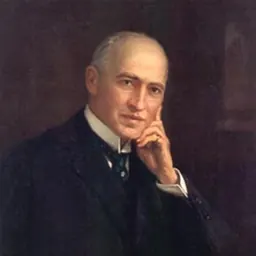


Contemporaries
People whose lives overlapped James Shouldice's
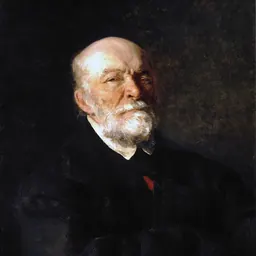

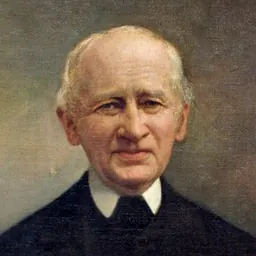
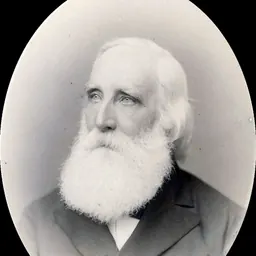
Frequently asked questions
Who was James Shouldice?
Canadian politician (1850–1925)
When was James Shouldice born?
James Shouldice was born on 5 November 1850.
When did James Shouldice die?
James Shouldice died on 9 May 1925.
Sources & further reading
Cite this page
APA: Biography.guide. (2026). James Shouldice. https://biography.guide/james-shouldice/
MLA: "James Shouldice." Biography.guide, https://biography.guide/james-shouldice/.
Chicago: "James Shouldice." Biography.guide. https://biography.guide/james-shouldice/.
Data last updated: 2026-09-20 · Spot an error? Report a correction.
Page generated 2026-09-27 05:26 UTC