
About James Levine
Lived 1943 – 2021 (aged 77). James Levine was an American conductor, pianist and musician, known for Fantasia 2000 and Metropolitan Opera.
James Lawrence Levine ( ; June 23, 1943 – March 9, 2021) was an American conductor and pianist. He was music director of the Metropolitan Opera from 1976 to 2016, and conducted 2,577 Met performances. At the end of his career, his reputation was tarnished by allegations of sexual misconduct stretching back half a century.
Levine debuted on the piano at age 10 as a soloist with the Cincinnati Symphony Orchestra. He studied under Walter Levin, Rudolf Serkin, and Rosina Lhévinne before enrolling at Juilliard School of Music, where he studied conducting with Jean Paul Morel. He graduated in 1964, and became an apprentice to George Szell with the Cleveland Orchestra. He debuted as a conductor at the Metropolitan Opera in 1971.
Levine held leadership positions with the Ravinia Festival, the Munich Philharmonic, and the Boston Symphony Orchestra. In 1980 he started the Lindemann Young Artists Development Program, and trained singers, conductors, and musicians for professional careers.
Levine took an almost two-year health-related hiatus from conducting from 2011 to 2013, during which time he held artistic and administrative planning sessions at the Met, and led training of the Lindemann Young Artists. He retired as the Met's full-time Music Director following the 2015–16 season to become Music Director Emeritus, retaining oversight of his young artist program and continuing some conducting activities.
Levine had a brother, Tom, who was two years younger, who followed him to New York City from Cincinnati in 1974, and with whom he was very close. He employed Tom as his business assistant, looking after his affairs, arranging his rehearsal schedules, fielding queries, scouting out places to live, meeting with accountants, and accompanying Levine on trips to Europe. Tom was also a painter. His younger sister, Janet, is a marriage counselor.
Levine began to play the piano as a small child. On February 21, 1954, at age 10, he made his concert debut as soloist playing Felix Mendelssohn's Piano Concerto No. 2 at a youth concert of the Cincinnati Symphony Orchestra. He subsequently studied music with Walter Levin, first violinist in the LaSalle Quartet. In 1956 he took piano lessons with Rudolf Serkin at the Marlboro Music School in Vermont. The next year he began to study piano with Rosina Lhévinne at the Aspen Music School.
Levine graduated from Walnut Hills High School, a magnet school in Cincinnati. He entered the Juilliard School of Music in New York City in 1961, and took courses in conducting with Jean Morel. He graduated from Juilliard in 1964, and joined the American Conductors project connected with the Baltimore Symphony Orchestra.
Levine lived in The San Remo on Central Park West in New York City.
Career Early career From 1964 to 1965, Levine served as an apprentice to George Szell with the Cleveland Orchestra. He then served as the Orchestra's assistant conductor until 1970. That year, he also made debuts as guest conductor with the Philadelphia Orchestra at its summer home at Robin Hood Dell, the Welsh National Opera, and the San Francisco Opera. From 1965 to 1972 he concurrently taught at the Cleveland Institute of Music. In the summers, he worked at the Meadow Brook School of Music in Michigan and at the Ravinia Festival in Highland Park, Illinois, the summer home of the Chicago Symphony Orchestra. During that time, the charismatic Levine developed a devoted following of young musicians and music lovers. to lead the Chicago Symphony Orchestra and Chorus in Mahler's Second Symphony for the Ravinia Festival's opening concert of their 36th season. This concert began a long association with the Chicago Symphony Orchestra. From 1973 to 1993 he was music director of the Ravinia Festival, succeeding the late Kertész. He made numerous recordings with the orchestra, including the symphonies and German Requiem of Johannes Brahms, and major works of Gershwin, Holst, Berg, Beethoven, Mozart, and others. In 1990, at the request of Roy E. Disney, he arranged the music and conducted the Chicago Symphony Orchestra and Chorus in the soundtrack of Fantasia 2000, released by Walt Disney Pictures. From 1974 to 1978, Levine also served as music director of the Cincinnati May Festival.
Metropolitan Opera
Levine made his Metropolitan Opera debut a few weeks before he turned 28, on June 5, 1971, leading a June Festival performance of Puccini's Tosca. After further appearances with the company, he was named its principal conductor in February 1972. He became its music director in 1975. In 2005, Levine's combined salary from the Boston Symphony Orchestra and the Met made him the highest-paid conductor in the country, at $3.5 million.
During Levine's tenure, the Metropolitan Opera orchestra expanded its activities into recording and concert series for the orchestra and chamber ensembles from the orchestra at Carnegie Hall. Levine led the Metropolitan Opera on many domestic and international tours. Levine was paid $2.1 million by the Met in 2010.
Following a series of injuries that began with a fall, Levine's health problems led to his withdrawal from many Metropolitan Opera engagements. After a May 2011 performance of Wagner's Die Walküre, Levine formally withdrew from all engagements at the Met. After two years of physical therapy, he returned to conducting with a May 2013 concert with the Metropolitan Opera Orchestra at Carnegie Hall. On September 25, 2013, Levine conducted his first Met performance since May 2011, in a revival production of Mozart's Così fan tutte. He was scheduled to conduct three productions at the opera house and three at Carnegie Hall in the 2013–14 season.
On April 14, 2016, Met management announced that Levine would step down from his position as music director at the end of the 2015–16 season. The Met paid him $1.8 million for the 2015–16 season. He assumed the new title of Music Director Emeritus, which he held until December 2017, when in the wake of allegations that he had sexually abused four young men, the Met suspended its relationship with him and canceled all his scheduled performances with the company.
In all, he conducted 2,577 performances at the Met, more than any other conductor and second only to tenor Charles Anthony for the most appearances with the company by an individual artist.
Boston Symphony Orchestra Levine first conducted the Boston Symphony Orchestra (BSO) in April 1972. In October 2001, he was named its music director effective with the 2004–05 season, with an initial contract of five years, becoming the first American-born conductor to head the BSO.
One unique condition that Levine negotiated was increased flexibility of the time allotted for rehearsal, allowing the orchestra additional time to prepare more challenging works. After the start of his tenure, the orchestra also established an "Artistic Initiative Fund" of about $40 million to fund the more expensive of his projects.
One criticism of Levine during his BSO tenure is that he did not attend many orchestra auditions. A 2005 article reported that he had attended two out of 16 auditions during his tenure up to that time. Levine responded that he has the ability to provide input on musician tenure decisions after the initial probationary period, and that it is difficult to know how well a given player will fit the given position until that person has had a chance to work with the orchestra: "My message is the audition isn't everything."
Another 2005 report stated that during Levine's first season as music director, the greater workload from the demands of playing more unfamiliar and contemporary music had increased physical stress on some of the BSO musicians. Levine and the players met to discuss this, and he agreed to program changes to lessen these demands. He received general critical praise for revitalizing the orchestra's quality and repertoire since the beginning of his tenure.
Levine experienced ongoing health problems, starting with an onstage fall in 2006 that resulted in a torn rotator cuff and started discussion of how long Levine's tenure with the BSO would last. In April 2010, in the wake of his continuing health problems, it emerged that Levine had not officially signed a contract extension, so that he was the BSO's music director without a signed contract. On March 2, 2011, the BSO announced Levine's resignation as music director effective September 2011, after the Orchestra's Tanglewood season.
Working on a commission from Levine and the BSO, the composer John Harbison dedicated his Symphony No. 6 "in friendship and gratitude" to him, whose premature departure from the orchestra prevented him from conducting the premiere.
After allegations of his abusing a number of young men came out in December 2017 the BSO said Levine "will never be employed or contracted by the BSO at any time in the future".
Conducting in Europe Levine's BSO contract limited his guest appearances with American orchestras, but he still conducted regularly in Europe, with the Vienna Philharmonic, Berlin Philharmonic, and at the Bayreuth Festival. Levine was a regular guest with the Philharmonia of London and the Staatskapelle Dresden. Beginning in 1975 he conducted regularly at the Salzburg Festival and the annual July Verbier Festival. From 1999 to 2004, he was chief conductor of the Munich Philharmonic, and was credited with improving the quality of instrumental ensemble during his tenure.
Work with students Levine initiated the Lindemann Young Artists Development Program at the Metropolitan Opera in 1980, a professional training program for graduated singers with, today, many famous alumni.
Levine was conductor of the UBS Verbier Festival Orchestra, the student resident orchestra at the annual summer music festival in Verbier, Switzerland, from 1999 through 2006. It was Levine's first long-term commitment to a student orchestra since becoming music director at the Met.
After becoming music director of the Boston Symphony Orchestra, Levine also served as music director of the Tanglewood Music Center, the BSO's acclaimed summer academy at Tanglewood for student instrumentalists, singers, composers, and conductors. He was awarded the Lotus Award ("for inspiration to young musicians") from Young Concert Artists. Anthony Tommasini wrote in The New York Times in 2016: "The aspiring singers in the Met's young artist development program, one of many important ventures Mr. Levine started, must understand how lucky they are to have, as a teacher and mentor, a musician who even in his 20s worked at the Met with giants like Jon Vickers and Renata Tebaldi."
Health problems and death Levine experienced recurrent health issues beginning in 2006, including sciatica and what he called "intermittent tremors".
Levine withdrew from the majority of the Tanglewood 2008 summer season because of surgery required to remove a kidney with a malignant cyst.
On September 29, 2009, it was announced that Levine would undergo emergency back surgery for a herniated disk. He missed three weeks of engagements.
In March 2010, the BSO announced that Levine would miss the remainder of the Boston Symphony season because of back pain. The Met also announced, on April 4, 2010, that he was withdrawing from the remainder of his performances for the season. According to the Met, Levine was required to have "corrective surgery for an ongoing lower back problem". He returned to conducting at the Met and the BSO at the beginning of the 2010–11 season, but in February 2011 canceled his Boston engagements for the rest of the season.
In the summer of 2011, Levine underwent further surgery on his back. In September 2011, after he fell down a flight of stairs, fractured his spine, and injured his back while on vacation in Vermont, the Met announced that he would not conduct at the Met at least for the rest of 2011.
After two years of surgery and physical therapy, Levine returned to conducting for the first time on May 19, 2013, in a concert with the Metropolitan Opera Orchestra at Carnegie Hall. Levine conducted from a motorized wheelchair, with a special platform designed to accommodate it, which could rise and descend like an elevator. The same type of platform was present in the Met orchestra pit for his September 2013 return performance. As New York magazine reported: "The conductor states flatly that the condition is not Parkinson's disease, as people had speculated in 'that silly Times piece.'"
On December 2, 2017, it was publicly revealed that an October 2016 police report detailed that Levine had allegedly molested a male teenager for years. The accuser later played bass in the St. Paul Chamber Orchestra for decades and became a professor.
A second accuser said that during that same summer, Levine had sexual contact with a 17-year-old student and that Levine then initiated with the teenager a number of sexual encounters that have since haunted him.
A third accuser, a violinist and pianist who grew up in Illinois near the Ravinia Music Festival, a summer program for aspiring musicians of which Levine was music director from 1971 to 1993, said Levine sexually abused him beginning when the accuser was 16 years old (and Levine was in his 40s) in 1986.
On December 4, 2017, a fourth man, who later had a long career as a violinist in the New Jersey Symphony Orchestra, said he had been abused by Levine beginning in 1968, when he was 20 years old and attending the Meadow Brook School of Music.
In response to the December 2017 news article, the Met announced that it would investigate the sexual abuse allegations dating to the 1980s that were set forth in the 2016 police report. On December 3, after two other accusers came forward with allegations of abuse, the Met suspended its ties with Levine, and canceled all upcoming engagements with him.
For its part, the Ravinia Festival, in April 2017, six months after the criminal investigation of Levine began, created an honorific title for Levine—"Conductor Laureate"—and signed him to a five-year renewable contract to begin in 2018. On December 4, 2017, however, the Ravinia Festival severed all ties with Levine, and terminated his five-year contract to lead the Chicago Symphony Orchestra there.
The Boston Symphony Orchestra said Levine "will never be employed or contracted by the BSO at any time in the future". On December 7, in New Plymouth, New Zealand, the cinema chain Event Cinemas abruptly canceled the screening of a Met production of Levine conducting Mozart's Die Zauberflöte.
On December 8, Fred Child, host of the classical music radio show Performance Today, wrote that Levine "is accused of inflicting grievous harm to living members of our musical community. Out of respect for these people and their wounds, I choose not to broadcast performances featuring Mr. Levine on the podium."
Classical music blogger, former Village Voice music critic, and Juilliard School faculty member Greg Sandow said he had been contacted by three men over the years who said that Levine had abused them, and that reports of sexual abuse by Levine had been "widely talked about" for 40 years. Sandow added: "Everybody in the classical music business at least since the 1980s has talked about Levine as a sex abuser. The investigation should have been done decades ago." Some anonymous longtime Met employees said rumors about Levine's sexual behavior had been circulating since at least 1977.
Pulitzer Prize–winning music critic Justin Davidson wrote on the culture website of New York magazine, "James Levine's career has clearly ended" and "I'm not sure the Met can survive Levine's disgrace." Similarly, drama critic Terry Teachout of The Wall Street Journal wrote an article called "The Levine Cataclysm; How allegations against James Levine of sexual misconduct with teenagers could topple the entire Metropolitan Opera". The Washington Post music critic Anne Midgette noted: "The Met has known about these allegations for at least a year, and are only investigating them now that they are public", and opined on her Facebook page that the Met has "quite probably spent years protecting its star conductor from just this kind of allegation".
The Metropolitan Opera Orchestra applauded the courage of the four men who came forward with accusations that Levine had abused them.
Five days after news of the accusations by the four men broke, Levine called the claims "unfounded". The accusers stood by their claims, with one saying, "I will take a lie-detector test. Will he?" Six days later, music critic Arthur Kaptainis wrote in the Montreal Gazette that Levine's denial "had little effect".
Met response and lawsuit
On March 12, 2018, the Metropolitan Opera announced that Levine had been fired. The Met's investigation found Levine had "engaged in sexually abusive and harassing conduct towards vulnerable artists in the early stages of their careers".
Levine sued the Metropolitan Opera in New York State Supreme Court for breach of contract and defamation on March 15, 2018, three days after the company fired him, seeking more than $5.8 million in damages. The Met denied Levine's allegations.
The Metropolitan Opera and Levine announced a settlement on undisclosed terms in August 2019. In September 2020, the size of the payout was indirectly exposed by annual disclosure statements required for nonprofits; Levine had received $3.5 million in the settlement. It is speculated he was able to negotiate such a large settlement due to the lack of a morals clause in his contract with the Met.
Recordings
Levine made many audio and video recordings. He recorded extensively with many orchestras, and especially often with the Metropolitan Opera. His performance of Aida with Leontyne Price, her last in opera, was preserved on video and may be seen at the Met's own online archive of performances. Of particular note are his performances of Wagner's complete Der Ring des Nibelungen. A studio recording made for Deutsche Grammophon from 1987 to 1989 is on compact disc, and a 1989 live performance of the Ring is available on DVD. He also appears on several dozen albums as a pianist, collaborating with such singers as Jessye Norman, Kathleen Battle, Christa Ludwig, and Dawn Upshaw, as well as performing the chamber music of Franz Schubert and Francis Poulenc, among others.
Levine was featured in the animated Disney film Fantasia 2000. He conducted the Chicago Symphony Orchestra in the soundtrack recording of all the music in the film (with the exception of one segment from the original 1940 Fantasia). Levine is also seen in the film talking briefly with Mickey Mouse, just as his predecessor Leopold Stokowski did in the original film.
Discography
Videography Mozart: La clemenza di Tito (1980), Vienna Philharmonic, Deutsche Grammophon, 00440-073-4128 Richard Strauss: Elektra (1981), Deutsche Grammophon, 0-44007-34111-7 Mozart: Idomeneo (1982), Deutsche Grammophon, 00440-073-4234 Richard Strauss: Der Rosenkavalier (1982), Met Opera, 8-1135-70133-0-4 Verdi: La Traviata (1983), Deutsche Grammophon, 00440-073-4364 Verdi: Ernani (1983), Deutsche Grammophon, 0-044007-432280 The Metropolitan Opera Centennial Gala (1983), Deutsche Grammophon, 00440-073-4538 Bizet: Carmen (1989), Deutsche Grammophon, 0-44007-30009-1 Wagner: Der Ring des Nibelungen (1990), Deutsche Grammophon, 0-44007-30439-6 Das Rheingold, Deutsche Grammophon, 0-44007-30369-6 Die Walküre, Deutsche Grammophon, 0-44007-30499-6 Siegfried, Deutsche Grammophon, 0-44007-30379-6 Götterdämmerung, Deutsche Grammophon, 0-44007-30409-6 Mozart: The Magic Flute (1991), Deutsche Grammophon, 0-44007-30039-8 The Metropolitan Opera Gala 1991, Deutsche Grammophon, 00440-073-4582 Verdi: Falstaff (1992), Deutsche Grammophon, 0-44007-34532-0 Verdi: Stiffelio (1993), Deutsche Grammophon, 0-44007-34288-6 James Levine's 25th Anniversary Metropolitan Opera Gala (1996), Deutsche Grammophon, B0004602-09 Verdi: Aida (2000), Deutsche Grammophon, 0-44007-30019-0 Verdi: Un ballo in maschera (2002), Deutsche Grammophon, 0-44007-30299-6 Verdi: Simon Boccanegra (2002), Deutsche Grammophon, 0-44007-30319-1 Richard Strauss: Ariadne auf Naxos (2002), Deutsche Grammophon, 0-44007-34010-3 Beethoven: Fidelio (2003), Deutsche Grammophon, 0-4407-30529-4 Puccini: Turandot (2003), Deutsche Grammophon, 0-44007-30589-8 Verdi: Rigoletto (2004), Deutsche Grammophon, 0-44007-30939-1 Wagner: Tristan und Isolde (2004), Deutsche Grammophon, 0-44007-30449-5 Wagner: Die Meistersinger von Nürnberg (2004), Deutsche Grammophon, 00440-073-0949 Verdi: Nabucco (2005), Deutsche Grammophon, 0-44007-30779-3 Verdi: Don Carlo (2005) Deutsche Grammophon, 0-44007-34085-1 Verdi: La forza del destino(2005), Deutsche Grammophon, 0-44007-34076-9 Puccini: La bohème (2005), Deutsche Grammophon, 0-44007-34025-7 Donizetti: L'elisir d'amore (2005), Deutsche Grammophon, 0-44007-34021-9 Mozart: Don Giovanni (2005), Deutsche Grammophon, 0-44007-34010-3 Mozart: Idomeneo, (2006), Deutsche Grammophon, 0-44007-34234-3 Verdi: Luisa Miller (2006), Deutsche Grammophon, 0044007340271 Wagner: Tannhäuser (2006), Deutsche Grammophon, 0-44007-34171-1 Wagner: Lohengrin (2006), Deutsche Grammophon, 0-44007-34176-6 Zandonai: Francesca da Rimini (2007), Deutsche Grammophon, 0-44007-34313-5 Berlioz: Les Troyens (2007), Deutsche Grammophon, 0-44007-34310-4 Alban Berg: Lulu (2011), Sony Music, 0886979100992 Mozart: The magic flute, Sony Music, 0886979101395 Mascagni: Cavallera rusticana (2011), Sony Music, 0886979100893 Donizetti: Don Pasquale (2011), Deutsche Grammophon, 0-44007-34635-8 Wagner: in Der Ring des Nibelungen (2012), Deutsche Grammophon, 0-44007-34771-3 : Das Rheingold (2010), Deutsche Grammophon, 0-44007-34841-3 Die Walküre (2011), Deutsche Grammophon, 0-44007-34848-2
Honors Among the awards listed in his Met biography are: 1980 – Manhattan Cultural Award 1982 – first of eight Grammy Awards 2003 – Kennedy Center Honors 2005 – Award for Distinguished Service to the Arts from the American Academy of Arts and Letters 2006 – Opera News Award 2009 – Award in the Vocal Arts from Bard College 2009 – Ditson Conductors Award from Columbia University 2010 – National Endowment for the Arts Opera Honoree 2010 – George Peabody Award from Peabody Conservatory at Johns Hopkins University 2010 – elected an honorary member of the American Academy of Arts and Letters
Don’t just read it —
keep it.
Full-length biographies made to live with: read them, listen on the way to work, watch them tonight.
- E-book
- Audio
- Video
Instant download · yours to keep · every purchase keeps this site free
Important facts
People in James Levine's life
Named in this biography and alive at the same time


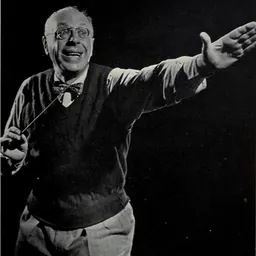
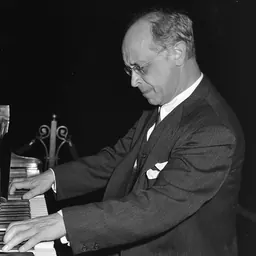

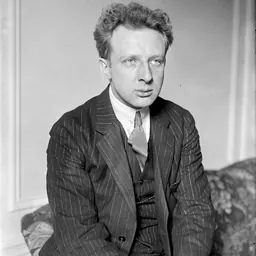

Related people
Same field, nearest in time



Contemporaries
People whose lives overlapped James Levine's


Frequently asked questions
Who was James Levine?
American conductor and pianist (1943–2021)
When was James Levine born?
James Levine was born on 23 June 1943 in Cincinnati.
When did James Levine die?
James Levine died on 9 March 2021 in Palm Springs.
What was James Levine's occupation?
James Levine was a conductor, pianist and musician.
What was James Levine known for?
James Levine was known for Fantasia 2000 and Metropolitan Opera.
What nationality was James Levine?
James Levine was American.
Sources & further reading
Cite this page
APA: Biography.guide. (2026). James Levine. https://biography.guide/james-levine/
MLA: "James Levine." Biography.guide, https://biography.guide/james-levine/.
Chicago: "James Levine." Biography.guide. https://biography.guide/james-levine/.
Data last updated: 2026-09-22 · Spot an error? Report a correction.
Page generated 2026-09-27 05:34 UTC