
James Lee Clark
American murderer
About James Lee Clark
Lived 1968 – 2007 (aged 38). James Lee Clark was an American.
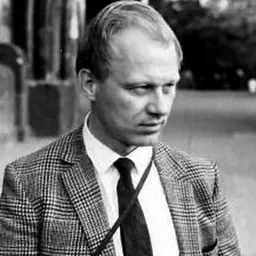
James Lee Clark (May 13, 1968 – April 11, 2007) was an American murderer with an intellectual disability whose controversial execution by the state of Texas sparked international outcry. The controversy involved the argument that his execution violated the U.S. Supreme Court ruling in Atkins v. Virginia, which held that executions of intellectually disabled criminals is cruel and unusual punishment, which is prohibited by the Eighth Amendment.
Clark and his accomplice, James Richard Brown, were charged with capital murder for the June 7, 1993, killing of 16-year-old Jesus Garza, and the robbery, rape and murder of 17-year-old Shari Catherine "Cari" Crews in Denton County, Texas. However, Clark was never tried for the Garza murder, and Brown was found guilty of only the robbery charge, for which he was sentenced to 20 years.
Early life Clark was born in Caddo Parish, Louisiana. Court documents revealed that his father disappeared the day he found out Clark's mother was pregnant. Testimony from a psychologist at his appeals hearing stated that Clark told him he had his first drink when he was seven years old and was commonly drunk by the age of 13, at which point he also began to smoke cannabis regularly. After failing two grades and being placed in special education classes he dropped out of school in the ninth grade. At the Gainesville State School, Clark was able to complete his GED and was released at the age of 18 to find his mother had abandoned him, wanting nothing more to do with him.
Murder of Catherine Crews and Jesus Garza On June 4, 1993, Clark and Brown participated in breaking into vehicles, stole a shotgun and a rifle, and went in search of someone to rob. In the early morning hours of June 7, 1993, they came upon Crews and Garza at Clear Creek near Denton, Texas, and the following day their bodies were pulled from the water.
That same morning, paramedics and police officers responded to a call of a gunshot victim at a local service station. Upon arrival they found Brown with a serious shotgun wound to the leg, attended by Clark, who claimed they had been attacked by a robber who shot Brown while they were fishing at Three Rivers Bridge. However, no evidence was found at that scene to support the claim of the crime, or that anyone had been present on the location or fishing at that time. Both suspects were covered with white sand consistent with the banks of Clear Creek. Confronted with this evidence, Brown led police to Garza's body. Subsequent investigation discovered that Brown had actually shot himself at point-blank range in the act of assaulting the teens. located in Aubrey, Texas. There police discovered the stock to the sawed-off rifle, which was a match to the rifle found in the creek, as well as ammunition and evidence that, days prior to the murder, Clark and Brown had purchased ammunition for the murder weapon.
DNA evidence provided by Clark matched evidence taken from Crews' body, proving that Clark had sexually assaulted her. Additionally, blood determined to be that of Brown, Crews and Garza was found splattered on Clark's shoes. Clark filed an appeal asserting he had been denied effective assistance of counsel because his original trial attorneys, Richard Podgorski and Henry Paine, made no opening arguments, called no witnesses for guilt or innocence in either the trial or penalty phase, and did not perform adequate discovery, having made no attempt to contact or interview any members of Clark's family or other relevant persons from his past.
After interviewing Clark for two hours and 16 minutes, during which Allen did not perform any standardized tests to determine Clark's IQ, Allen determined that Clark was indeed faking his retardation by intentionally presenting himself as less intelligent to avoid execution. He cited the fact that Clark's prison cell contained copies of newspaper articles, crossword puzzles and a copy of the Charles Dickens book A Tale of Two Cities. It was ultimately revealed that none of the puzzles had been completed, the articles were about the Atkins case and had been sent to him from people outside the prison as gifts. Clark had stated that he had never read the book.
The defense then hired their own doctor to do an assessment of Clark, choosing Dr. Denis Keyes, whose expert studies had been cited in the actual Atkins ruling. Keyes examined Clark over two sessions lasting a total of seven and a half hours, administering the Kaufman Adolescent and Adult Intelligence Test and the Vineland Adaptive Behavior Scale, and found that Clark had an IQ of 68. Keyes stated, "Individuals with mental retardation typically have severe deficits in judgment potential, and are simply unable to understand the consequences of their behaviors. People with mental retardation have several characteristics; among these are defective intellectual capacity, shorter attention spans, poor memory, poor planning ability, lack of ability to appreciate the consequences of their actions, severe learning problems, marked deficits in adaptive skill areas, and limited ability to learn from previous experience. James's background confirms problems with virtually every one of the above characteristics." On November 20, after a three-day hearing, Gabriel rejected the findings of both Keyes and Denkowski and accepted those of Allen, None-the-less, Judge Gabriel declared Clark fit for execution.
That same day, Texas Governor Rick Perry refused to commute the death sentence. and at 6:17 p.m., James Lee Clark was executed in the Walls Unit of Huntsville Prison by means of lethal injection. He requested no final meal. When asked if he had any final words he gave a nervous chuckle and stated, "Uh, I don't know. Um, I don't know what to say. I don't know …" He then seemed to notice the witnesses in the gallery and added, "I didn't know anybody was there," he laughed again and said, "Howdy." The lethal cocktail of medications were administered, and Clark made a gurgling sound and became still.
Don’t just read it —
keep it.
Full-length biographies made to live with: read them, listen on the way to work, watch them tonight.
- E-book
- Audio
- Video
Instant download · yours to keep · every purchase keeps this site free
Important facts
People in James Lee Clark's life
Named in this biography and alive at the same time






Contemporaries
People whose lives overlapped James Lee Clark's



Frequently asked questions
Who was James Lee Clark?
American murderer
When was James Lee Clark born?
James Lee Clark was born on 13 May 1968 in Caddo Parish.
When did James Lee Clark die?
James Lee Clark died on 11 April 2007 in Huntsville Unit in Texas.
What nationality was James Lee Clark?
James Lee Clark was American.
Sources & further reading
Cite this page
APA: Biography.guide. (2026). James Lee Clark. https://biography.guide/james-lee-clark/
MLA: "James Lee Clark." Biography.guide, https://biography.guide/james-lee-clark/.
Chicago: "James Lee Clark." Biography.guide. https://biography.guide/james-lee-clark/.
Data last updated: 2026-09-20 · Spot an error? Report a correction.
Page generated 2026-09-27 05:10 UTC