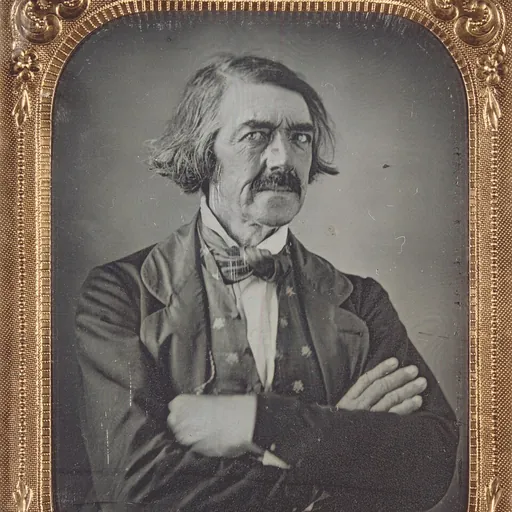
About James Kirker
Lived 1793 – 1852 (aged 58–59). James Kirker was an American explorer.
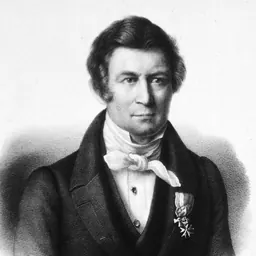
James Kirker (1793–1852) was an Irish-born American privateer, soldier, mercenary, merchant, Mountain man, and scalp hunter. He is best known for his contracts with the Mexican government to enslave, kill and scalp Apache Indians. thumb
Early life
Kirker was born in Killead, County Antrim, Northern Ireland, to an Ulster Scots family, but left for New York City, United States, at the age of 16 to avoid conscription in the Royal Navy. In an ironic twist, he became a "legal" American privateer to raid British ships off the East Coast of the United States in the War of 1812. He was a privateer for a year, but returned to New York in 1813 and married Catherine Donigan and had a son, James B. Kirker. In 1817, Kirker abandoned his family to go to St. Louis, Missouri with several kinsmen. In St. Louis, Kirker worked as a merchant.
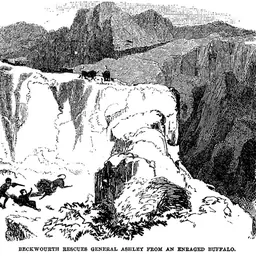
In 1822, Kirker joined a William Henry Ashley fur trapping expedition up the Missouri River. In 1824, he followed the Santa Fe Trail to New Mexico and spent winters during the next decade trapping and trading beaver pelts in the southern Rocky Mountains. He began working at the Santa Rita mine near Silver City, New Mexico in 1826 and escorted wagon trains of copper to Chihuahua, Mexico. In 1833, without divorcing his first wife, he married Rita Garcia and in 1835 he became a Mexican citizen. The couple had three sons and a daughter. The core group of his force was about 25 men, called "Sahuanos" (Shawnees) which included Anglos, Mexicans, escaped Black slaves and Shawnee, Delaware, and Creek Indians, including his second in command, a Shawnee named Spybuck.
Kirker's first operation in 1840 was to kill 10 Apache men and take 20 women and children prisoners from a group that had begun peace negotiations with Mexican authorities. He continued to have some successes killing and capturing Apache, but Apache raids increased in 1841 rather than decreased. Kirker was reemployed in 1846 and he and local Mexicans were responsible for a massacre of 130 peaceful Apache at Galeana, Chihuahua. Kirker claimed that he had followed the trail of stolen livestock to the Apache encampment. However, the bankrupt Chihuahua government could not afford to continue paying Kirker and offered him instead a commission as Colonel in the Mexican Army. Kirker turned down the offer. In ill repute and with the Mexican–American War inflaming public opinion against Anglo-Americans, Kirker fled Mexico. He was declared an enemy of the state with a 10,000 peso price on his head. and Kirker Pass are named after him, with controversy arising by 2022 about using his names after the slaughter he committed. He died in 1852.
Footnotes
Don’t just read it —
keep it.
Full-length biographies made to live with: read them, listen on the way to work, watch them tonight.
- E-book
- Audio
- Video
Instant download · yours to keep · every purchase keeps this site free
Important facts
People in James Kirker's life
Named in this biography and alive at the same time

Related people
Same field, nearest in time


Contemporaries
People whose lives overlapped James Kirker's





Frequently asked questions
Who was James Kirker?
American frontiersman
When was James Kirker born?
James Kirker was born in 1793 in Killead.
When did James Kirker die?
James Kirker died in 1852 in Contra Costa County.
What was James Kirker's occupation?
James Kirker was an explorer.
What nationality was James Kirker?
James Kirker was American.
Sources & further reading
Cite this page
APA: Biography.guide. (2026). James Kirker. https://biography.guide/james-kirker/
MLA: "James Kirker." Biography.guide, https://biography.guide/james-kirker/.
Chicago: "James Kirker." Biography.guide. https://biography.guide/james-kirker/.
Data last updated: 2026-09-23 · Spot an error? Report a correction.
Portrait: Wikimedia Commons · author & licence
Page generated 2026-09-27 05:07 UTC