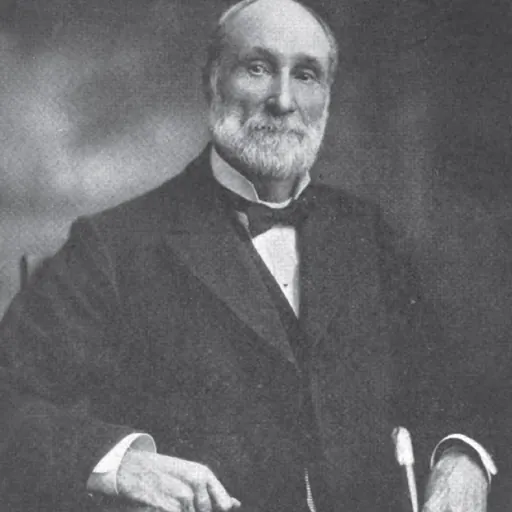
About James Kennedy Patterson
Lived 1833 – 1922 (aged 89). James Kennedy Patterson was a British writer.
James Kennedy Patterson (March 26, 1833 – August 15, 1922) was an academic who served as the first president of the University of Kentucky. His family immigrated from Scotland to Indiana in 1842 when he was nine years old. He pursued what meager educational opportunities were available in his new home, and eventually attended Hanover College, where he earned a Bachelor of Arts degree in 1856 and a Master of Arts degree in 1859. He briefly taught at Stewart College in Clarksville, Tennessee, but left the area when the Civil War forced the college to suspend operations. He became the principal at Transylvania Academy (part of what is now Transylvania University) in Lexington, Kentucky, in 1861. When Transylvania was merged with Kentucky University and the newly formed Kentucky Agricultural and Mechanical College in 1865, Patterson became a professor at the new institution, and was eventually given charge of the constituent Agricultural and Mechanical College.
Financial difficulties and denominational differences affected the separation of the Agricultural and Mechanical College from Kentucky University in 1878, and Patterson became the president of the independent Agricultural and Mechanical College. He lobbied the Kentucky General Assembly to pass a property tax to benefit the college in 1880, and successfully defended the tax against repeal in 1882 and against attacks on its constitutionality before the Kentucky Court of Appeals. Patterson continued to expand the resources and the curriculum of the college, and in 1908, he oversaw its transition to university status. At that time, the university was known as "State University: Lexington, Kentucky"; today it is the University of Kentucky. Patterson continued as president until his retirement in 1910.
During his career, Patterson was afforded many academic laurels. He was appointed as a delegate to the International Congress of Geographical Sciences in 1869 and to the British Association for the Advancement of Science in 1890. He was chosen as a fellow of the Royal Historical Society and the Society of Antiquaries of Scotland, and received numerous honorary degrees from various institutions of higher learning. Patterson died August 15, 1922. Patterson Hall, a dormitory at the University of Kentucky originally built for women but now coed, and the Patterson Office Tower, the university's administration building, are both named in his honor.
Early life and family James Kennedy Patterson was born in the Gorbals parish of Glasgow, Scotland on March 26, 1833. He was the eldest of five sons born to Andrew and Janet (Kennedy) Patterson, who were both from Presbyterian families associated with the Covenanter movement. All five brothers pursued careers as academics. In 1842, when he was nine years old, Patterson's family immigrated to the United States, settling in Bartholomew County, Indiana, near the city of Madison. While there, he was associated with the Beta Theta Pi fraternity. In 1875, his alma mater, Hanover College, presented him with an honorary Doctor of Philosophy degree. In 1900, he secured funding from the General Assembly for the construction of a gymnasium and a hall for female students, and in 1904, the General Assembly increased its annual contribution to the college's endowment by $15,000. When all other fundraising methods had been exhausted, Patterson resorted to securing a personal loan to cover the college's operating expenses.
In 1903, Patterson served as the president of the Association of Agricultural Colleges. As he continued to expand the curriculum of the college, he drew criticism from some of the state's citizens for moving the institution away from its roots as an agricultural and mechanical college and more toward becoming a liberal arts institution. In 1908, the General Assembly officially recognized the institution's transition to a university, and upon Patterson's recommendation, its name was changed to State University: Lexington, Kentucky. Today, it is known as the University of Kentucky.
Patterson continued as president for two years after the college was reclassified as a university; he retired in 1910. In his four decades as president, the institution grew from a single building – a private residence converted for academic use – to a campus consisting of 17 buildings and a farm. The institution's income had also risen from $9,900 annually when Patterson became president to $150,000 annually by the time of his retirement. As part of the terms of his retirement, he was allowed to continue attending board and faculty meetings, represent the university on the state and national level, and reside in the campus house built for the president. He was also allowed to serve as an advisor to the incoming president.
Later life and death
Numerous honors were conferred on Patterson after his retirement. In 1910, the University of Vermont awarded him an honorary Doctor of Laws degree. He was elected to the National Geographic Society, the American Historical Association, and the American Academy of Political and Social Science. He was also a trustee for the American Civic Alliance. In 1911, he was invited to deliver the commencement address at Clemson Agricultural College (now Clemson University) and an address on "The Bible as a Factor in Modern Civilization" at his alma mater, Hanover College.
Patterson died August 15, 1922, and was buried in Lexington Cemetery. The women's dormitory constructed during his tenure, as well as the administration building and a local roadway, were named in his honor. In 1934, a statue of Patterson was erected near the university administration building.
Don’t just read it —
keep it.
Full-length biographies made to live with: read them, listen on the way to work, watch them tonight.
- E-book
- Audio
- Video
Instant download · yours to keep · every purchase keeps this site free
Important facts
People in James Kennedy Patterson's life
Named in this biography and alive at the same time
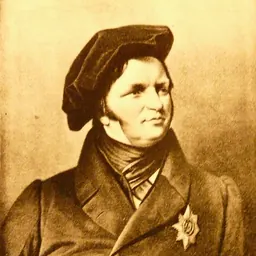
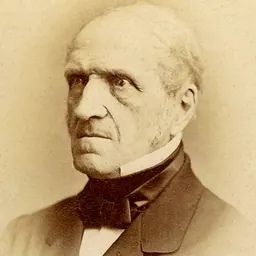
Related people
Same field, nearest in time

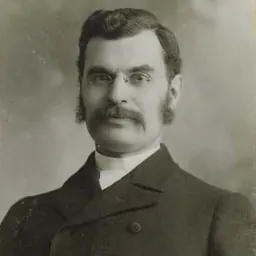
Contemporaries
People whose lives overlapped James Kennedy Patterson's



Frequently asked questions
Who was James Kennedy Patterson?
British academic (1833–1922)
When was James Kennedy Patterson born?
James Kennedy Patterson was born on 26 March 1833 in Gorbals.
When did James Kennedy Patterson die?
James Kennedy Patterson died on 15 August 1922.
What was James Kennedy Patterson's occupation?
James Kennedy Patterson was a writer.
What nationality was James Kennedy Patterson?
James Kennedy Patterson was British.
Sources & further reading
· Wikipedia: James Kennedy Patterson
· DBpedia: James Kennedy Patterson
Cite this page
APA: Biography.guide. (2026). James Kennedy Patterson. https://biography.guide/james-kennedy-patterson/
MLA: "James Kennedy Patterson." Biography.guide, https://biography.guide/james-kennedy-patterson/.
Chicago: "James Kennedy Patterson." Biography.guide. https://biography.guide/james-kennedy-patterson/.
Data last updated: 2026-09-20 · Spot an error? Report a correction.
Page generated 2026-09-27 05:09 UTC