
About James Jackson
Born 1954. James Jackson is a British geologist and geophysicist.
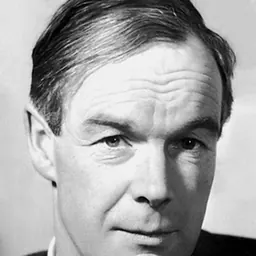
James Anthony Jackson CBE FRS (born 12 December 1954) is Emeritus Professor of Active Tectonics and formerly head of Bullard Laboratories, and Head of the Department of Earth Sciences, Cambridge University. He made his name in geophysics, using earthquake source seismology to examine how continents are deformed. His central research focus is to observe the active processes shaping our continents.
Education and career
Jackson was born and raised in India, which probably established his interest in all aspects of Asia, which is where much of his current research has been concentrated. He was sent back to boarding school in the UK for his education.
Jackson attended the University of Cambridge from 1973 graduating with a 1st Class degree in geology in 1976. Then, under the tutelage of Dan McKenzie at the Bullard Laboratories, Cambridge, he received his PhD in 1980. His research was within geophysics and used earthquakes to study the processes that produce the major surface features of the continents, such as mountain belts and basins. It included field work with seismometers in Iran and with the Seismic Discrimination Group at the Massachusetts Institute of Technology.
Communicating about the implications of his research for resilience against earthquakes, and about geophysics and earthquakes, to both societies at large and organisations has been an important part of his work. In 1995 he gave the televised Royal Institution Christmas Lectures. In 2023 he was a guest on the BBC Radio 4 programme The Life Scientific.
Current research
Using evidence from earthquakes, remote sensing, geodesy and geomorphology he is able to observe, quantitatively, the geometry and rates of deformation processes while they are active. where he is associate director.
Selected publications
Jackson, J.A. 1982, "Seismicity, normal faulting, and the geomorphological development of the Gulf of Corinth ( Greece): the Corinth earthquakes of February and March 1981.", Earth and Planetary Science Letters, vol. 57, no. 2, pp. 377–397. McKenzie, D. & Jackson, J. 1983, "The relationship between strain rates, crustal thickening, palaeomagnetism, finite strain and fault movements within a deforming zone.", Earth & Planetary Science Letters, vol. 65, no. 1, pp. 182–202. Jackson, J. & McKenzie, D. 1984, "Active tectonics of the Alpine- Himalayan Belt between western Turkey and Pakistan.", Geophysical Journal – Royal Astronomical Society, vol. 77, no. 1, pp. 185–264. Jackson, J. & McKenzie, D. 1988, "The relationship between plate motions and seismic moment tensors, and the rates of active deformation in the Mediterranean and Middle East", Geophysical Journal – Royal Astronomical Society, vol. 93, no. 1, pp. 45–73. Ambraseys, N.N. & Jackson, J.A. 1990, "Seismicity and associated strain of central Greece between 1890 and 1988", Geophysical Journal International, vol. 101, no. 3, pp. 663–708. Taymaz, T., Jackson, J. & McKenzie, D. 1991, "Active tectonics of the north and central Aegean Sea", Geophysical Journal International, vol. 106, no. 2, pp. 433–490. Jackson, J. 1994, "Active tectonics of the Aegean region", Annual Review of Earth and Planetary Sciences, vol. 22, pp. 239–271. Jackson, J., Norris, R. & Youngson, J. 1996, "The structural evolution of active fault and fold systems in central Otago, New Zealand: Evidence revealed by drainage patterns", Journal of Structural Geology, vol. 18, no. 2–3, pp. 217–234. Ambraseys, N.N. & Jackson, J.A. 1998, "Faulting associated with historical and recent earthquakes in the Eastern Mediterranean region", Geophysical Journal International, vol. 133, no. 2, pp. 390–406. Maggi, A., Jackson, J.A., McKenzie, D. & Priestley, K. 2000, "Earthquake focal depths, effective elastic thickness, and the strength of the continental lithosphere", Geology, vol. 28, no. 6, pp. 495–498. Jackson, J. 2002, "Strength of the continental lithosphere: Time to abandon the jelly sandwich?", GSA Today, vol. 12, no. 9, pp. 4–10.
Awards
Entrance Exhibition, Queens' College, 1973 Foundation Scholar, Queens' College, 1975 Harkness Prize, University of Cambridge, 1976 Shell International Petroleum Scholarship, 1976–1979 President's Award, Geological Society of London, 1985 Sedgwick Prize, University of Cambridge, 1986 & 1990 Royal Institution Christmas Lecture on Planet Earth, An Explorer's guide, 1995 Bigsby Medal, Geological Society of London, 1997 Joly Lecture, Trinity College, 2000 Bullerwell Lecture, British Geophysical Association, 2000 Mallet-Milne Lecturer, Society of Earthquake & Civil Engineering Dynamics, 2001 Fellow of the Royal Society (FRS), 2002 Fellow of the American Geophysical Union, 2003 The Science Council recognised him as "one of the UK's 100 leading practising scientists" of 2014. Commander of the Order of the British Empire (CBE), 2015 Wollaston Medal, 2015
Don’t just read it —
keep it.
Full-length biographies made to live with: read them, listen on the way to work, watch them tonight.
- E-book
- Audio
- Video
Instant download · yours to keep · every purchase keeps this site free
Important facts
People in James Jackson's life
Named in this biography and alive at the same time



Related people
Same field, nearest in time






Contemporaries
People whose lives overlapped James Jackson's




Frequently asked questions
Who is James Jackson?
British geologist (born 1954)
When was James Jackson born?
James Jackson was born on 12 December 1954 in India.
What is James Jackson's occupation?
James Jackson is a geologist and geophysicist.
What nationality is James Jackson?
James Jackson is British.
Sources & further reading
· DBpedia: James Jackson (geophysicist)
Cite this page
APA: Biography.guide. (2026). James Jackson. https://biography.guide/james-jackson-geologist/
MLA: "James Jackson." Biography.guide, https://biography.guide/james-jackson-geologist/.
Chicago: "James Jackson." Biography.guide. https://biography.guide/james-jackson-geologist/.
Data last updated: 2026-09-20 · Spot an error? Report a correction.
Page generated 2026-09-27 05:27 UTC