
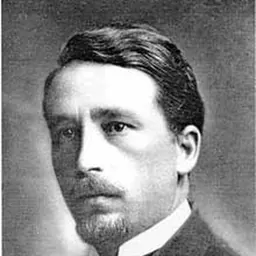
James Jabara
American flying ace
About James Jabara
Lived 1923 – 1966 (aged 43). James Jabara was an American air force officer.
James "Jabby" Jabara (10 October 1923 – 17 November 1966) was the first American and United States Air Force jet ace. Born in Oklahoma, he lived in Kansas where he enlisted as an aviation cadet at Fort Riley after graduating from high school. Jabara attended four flying schools in Texas before he received his pilot's wings and was commissioned as a second lieutenant. Jabara flew two tours of combat duty in Europe during World War II as a North American P-51 Mustang pilot, and scored 1.5 air victories against German aircraft.
Jabara flew his first jet aircraft in 1948, the USAF Lockheed F-80 Shooting Star before transitioning to the USAF North American F-86 Sabre. Jabara used this aircraft to shoot down multiple Soviet-built MiG-15 jets during the Korean War. He achieved his first confirmed air victory of the war on 3 April 1951. A month later he was credited with his fifth and sixth victories, making him the first American jet ace in history. He eventually scored 15 victories, giving him the title of "triple ace". Jabara was ranked as the second-highest-scoring U.S. ace of the Korean War. He received the Distinguished Service Cross, Silver Star, Distinguished Flying Cross, Air Medal, and the British Distinguished Flying Cross for his accomplishments in combat.
Jabara next held a series of commands at various Air Force bases across the United States. He flew the Lockheed F-104 Starfighter and later the Convair B-58 Hustler. In 1966, while on leave from service in Vietnam, Colonel Jabara was traveling with his family in two cars to their new home when his daughter crashed the car she was driving and he was riding in, killing them both. They were buried together at Arlington National Cemetery. In recognition of his contributions to military aviation, an airport outside of Wichita, Kansas was named in his honor. Each year the United States Air Force Academy alumni association bestows the Jabara Award upon an Academy graduate whose aerospace accomplishments demonstrate superior performance.
Early life Jabara was born in Muskogee, Oklahoma, of Lebanese descent; his father, John, and mother came from Marjayoun, a town in Southern Lebanon.
Jabara joined the Boy Scouts, eventually becoming an Eagle Scout. At an early age, he was set on becoming a pilot, "I used to read articles about [Eddie] Rickenbacker and all these novels you read about air combat, and I guess from the sixth grade it was my ambition to be a fighter pilot." He worked at his parents' grocery store and graduated from Wichita North High School in Wichita, Kansas in May 1942. Standing five feet, five inches (165 cm) tall, Jabara was short for a potential fighter pilot (and was reportedly required to wear corrective eyewear In an attempt to improve his eyesight for flying, he ate 20 carrots a day in the mistaken belief that this would improve his vision. After attending four flying schools in Texas, he received his pilot's wings and a commission as second lieutenant at Moore Field, Texas in October 1943. Jabara with his wife, Nina, had four children: James William (b. 1949), Carol Ann (b. 1950), Cathy (b. 1952), and Jeanne (b. 1957).
World War II Jabara sitting in the cockpit of his P-51 during World War II c. 1944 During World War II, the Allied forces fought German aircraft across the European Theater. The Allies used several fighter aircraft, including the North American P-51 Mustang. Jabara was assigned to two tours of combat duty as a P-51 pilot across Europe. His first tour lasted from January to October 1944 with the 363d Fighter Group of the Ninth Air Force. On his first mission he was assigned to attacking German railroad targets in Belgium. In another incident, while Jabara engaged a German aircraft, they collided in mid-air, and when both pilots safely floated to the ground, they met and shook hands. and four on the ground. He received a Distinguished Flying Cross with one Oak Leaf Cluster for his 1.5 victories as well as an Air Medal with 18 Oak Leaf Clusters. Jabara achieved his first confirmed victory on 3 April 1951 when 12 F-86 Sabres took on 12 MiG-15s in MiG Alley, a region in northwestern North Korea. and a fourth on 22 April- the fifth of his career making him an ace. Jabara voluntarily transferred to the 335th Fighter-Interceptor Squadron when the 334th was rotated back to the United States.
On 20 May, two flights of F-86 Sabres encountered multiple MiG-15s in MiG Alley, and through radio communications, two additional flights of F-86 Sabres joined the battle, including Jabara. In preparation for the oncoming battle, Jabara and the other F-86 Sabre pilots were ordered to jettison their auxiliary fuel tanks to improve their maneuverability. Jabara's right fuel tank failed to separate from his wing, and protocol required he return to base as the aircraft would be impeded by the extra weight and imbalance, and limit his potential to match off with a MiG. His fifth and sixth victories made Jabara the first American in history to use jet aircraft to become an ace. The Americans said the 20-minute air battle had included 36 F-86 Sabres against nearly 50 MiG-15s (Russian data shows 30 MiGs), and the American pilots recorded Jabara's two victories and another pilot's "probable". Jabara later stated in an interview, "That was my bag for the day, and it made me feel pretty good to know that I was the first jet ace in the history of aerial warfare [sic]." Korean mission of an eventual 163; he was awarded a Distinguished Service Cross, the nation's second-highest decoration. Film newsreels included footage of his aircraft and other accolades included his own song ("That Jabara Bird") and a ritual rewarding of his Distinguished Service Cross at a Boston baseball game. he returned for another tour of duty overseas, arriving in Korea in January 1953.
By then a major, on his second tour, Jabara was credited with shooting down nine more MiGs for a total of 15 victories. His 15 victories gave him the title of "triple ace", and his Korean War victories were all against MiG-15s. He received a Silver Star, as well as another Distinguished Flying Cross for his additional air victories.
After Korea
Jabara returned to the United States in July 1953,
In 1965, Jabara was given command of the 31st Tactical Fighter Wing at Homestead Air Force Base, Florida. He returned on leave to Homestead about a week after the mission. Jabara sustained head injuries and was pronounced dead on arrival at a Delray hospital, and Carol Anne died two days later. A memorial service was held for Jabara at Homestead Air Force Base with a missing man formation fly-by. Jabara and his daughter were buried together in a single grave at Arlington National Cemetery.
His grandson, 2d Lt Nicholas Jabara, USAF, a 2001 graduate of the United States Air Force Academy, was killed during pilot training in a T-37 accident at Laughlin AFB, Texas on 31 January 2002.
Legacy An airport just northeast of Wichita, Kansas, was named the Colonel James Jabara Airport in his honor. Each year since 1968, the United States Air Force Academy alumni association bestows the Jabara Award upon the Academy graduate whose accomplishments demonstrate superior performance in fields directly involved with aerospace vehicles. The James Jabara Memorial Foundation was founded by a friend of Jabara, and the foundation constructed a statue of him at the Air Force Academy in Colorado Springs, Colorado in 2004.
In 1950, the Air Force Association (AFA) named him "Most Distinguished Aviator of the Year" and in 1957, was named by AFA as one of 25 U.S. men "who had done the most to promote aviation through the years".
Awards and decorations During World War II, Colonel Jabara was awarded the Distinguished Flying Cross with one Oak Leaf Cluster and the Air Medal with 23 Oak Leaf Clusters. While in Korea he received the Distinguished Service Cross and another Oak Leaf Cluster for his Distinguished Flying Cross. He was also awarded the Silver Star for two missions flown on 10 and 12 April 1951, where he shot down two MiGs while defending American bombers. He received the Distinguished Service Cross for shooting down his fifth and sixth MiG victories on 20 May 1951. Another Silver Star was received in 1953 with an Oak Leaf Cluster. The United Kingdom awarded him the British Distinguished Flying Cross for his accomplishments in combat on 1 December 1955.
Command PilotDistinguished Service Cross Silver Star (with Oak Leaf Cluster)Distinguished Flying Cross (with 6 Oak Leaf Clusters and "V" Device)Air Medal (with 20 Oak Leaf Clusters)Air Medal (with 3 Oak Leaf Clusters)Air Force Commendation MedalPresidential Unit CitationAmerican Campaign MedalEuropean-African-Middle Eastern Campaign Medal (with 4 Service Stars)World War II Victory MedalArmy of Occupation MedalNational Defense Service Medal (with Service Star)Korean Service Medal (with 3 Service Stars)Vietnam Service MedalAir Force Longevity Service Award (with four Oak Leaf Clusters)Marksmanship RibbonDistinguished Flying Cross (British)Republic of Korea Presidential Unit CitationVietnam Gallantry Cross Unit CitationUnited Nations Korea MedalVietnam Campaign Medal (with Silver 1960– Device)Korean War Service Medal
Don’t just read it —
keep it.
Full-length biographies made to live with: read them, listen on the way to work, watch them tonight.
- E-book
- Audio
- Video
Instant download · yours to keep · every purchase keeps this site free
Important facts
People in James Jabara's life
Named in this biography and alive at the same time

Related people
Same field, nearest in time


Contemporaries
People whose lives overlapped James Jabara's

Frequently asked questions
Who was James Jabara?
American flying ace (1923–1966)
When was James Jabara born?
James Jabara was born on 10 October 1923 in Muskogee.
When did James Jabara die?
James Jabara died on 17 November 1966 in Delray Beach.
What was James Jabara's occupation?
James Jabara was an air force officer.
What nationality was James Jabara?
James Jabara was American.
Sources & further reading
Cite this page
APA: Biography.guide. (2026). James Jabara. https://biography.guide/james-jabara/
MLA: "James Jabara." Biography.guide, https://biography.guide/james-jabara/.
Chicago: "James Jabara." Biography.guide. https://biography.guide/james-jabara/.
Data last updated: 2026-09-20 · Spot an error? Report a correction.
Page generated 2026-09-27 05:20 UTC