
James Henry Pullen
British autistic savant
About James Henry Pullen
Lived 1835 – 1916 (aged 80–81).
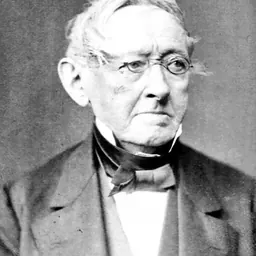
Pullen in a Royal Navy uniform, holding what appears to be a navigational chart. James Henry Pullen (1835–1916), also known as the Genius of Earlswood Asylum, was a British savant, who possibly had aphasia.
Childhood
Pullen was born in Dalston, London in 1835, and grew up on the Balls Pond Road. Both he and his brother William were regarded as deaf, mute and were developmentally disabled. By the age of 7 Pullen had learned only one word, mother, which he pronounced as "muvver". He could, however, lip read, understand gestures, and write intelligible blank verse. As a child, he began to carve small ships out of firewood and draw pictures of them. Pullen was first confined to Essex Hall, Colchester.
Earlswood At the age of 15, in 1850, he was taken to the then new Earlswood Asylum (later called Royal Earlswood Hospital), in Reigate, Surrey. Contemporary account tells that Pullen could not give any answers through speech, but could communicate through gestures. He could read lips and gestures but never learned to read or write beyond one syllable. Pullen's brother William later followed him to Earlswood; a good painter, he died at the age of 35.
Earlswood Asylum tried to teach its patients a number of handicrafts so they could support themselves and the asylum. Pullen continued his handicrafts and became a gifted carpenter and cabinet maker. He would work at workshop at days and draw at night. Most of the drawings were of the corridors of the asylum and he framed them himself. If Pullen could not find a suitable tool, he would make it himself. In addition he would also make practical items, such as bed frames, for the needs of the asylum. that he started in 1870 and spent seven years building; Pullen made all the details, including 5,585 rivets, 13 lifeboats and interior furniture in miniature, himself. In its maiden voyage the model ship sank for lack of buoyancy but Pullen repaired that flaw later. The model was exhibited in the Crystal Palace.
Pullen also built a large, mechanical mannequin, now known as "James Henry Pullen's giant", in the middle of his workshop; he would sit inside it, manipulate its face and appendages and talk through a concealed bugle in its mouth.
Legacy
James Henry Pullen's giant, in the Langdon Down Museum of Learning Disability.
After Pullen's death in 1916, his workshop became a museum of his work until the Royal Earlswood Hospital was closed in 1997. It is now an apartment complex. Pullen's model of SS Great Eastern may be seen, being part of the James Henry Pullen Collection including more of his designs and art work, in the Museum at the Langdon Down Centre, Normansfield, Teddington. In 2018, Pullen's work was the subject of a monographic exhibition at Watts Gallery – Artists' Village. Pullen's model of The State Barge was displayed at the Royal College of Nursing's exhibition A history of care or control? 100 years of learning disability nursing.
Don’t just read it —
keep it.
Full-length biographies made to live with: read them, listen on the way to work, watch them tonight.
- E-book
- Audio
- Video
Instant download · yours to keep · every purchase keeps this site free
Important facts
People in James Henry Pullen's life
Named in this biography and alive at the same time

Contemporaries
People whose lives overlapped James Henry Pullen's





Frequently asked questions
Who was James Henry Pullen?
British autistic savant
When was James Henry Pullen born?
James Henry Pullen was born in 1835.
When did James Henry Pullen die?
James Henry Pullen died in 1916.
Sources & further reading
· Wikipedia: James Henry Pullen
Cite this page
APA: Biography.guide. (2026). James Henry Pullen. https://biography.guide/james-henry-pullen/
MLA: "James Henry Pullen." Biography.guide, https://biography.guide/james-henry-pullen/.
Chicago: "James Henry Pullen." Biography.guide. https://biography.guide/james-henry-pullen/.
Data last updated: 2026-09-20 · Spot an error? Report a correction.
Page generated 2026-09-27 05:30 UTC